

Ever since smartphones became ubiquitous worldwide, traveling to virtually any corner of the globe seems to have become much simpler.
However, after taking a trip to mainland China, I discovered that although the internet weaves the world together, mainland China still keeps a locked door ─── I couldn’t even connect to my own website. Everyone knows the reasons behind this.
I had always suspected this might happen, but couldn’t verify it with certainty. I had even asked two friends traveling to mainland China on business to test whether my website loaded properly. Although both reported normal browsing back then, after my hands-on testing on this trip, it seems their reports must be taken with a grain of salt.
Before heading to mainland China, I had mentally prepared myself for the possibility of being blocked behind the door, and that was precisely what occurred. Still, I made several intriguing observations worth sharing.
First, pages hosted on my GoDaddy server loaded smoothly in mainland China. Checking the server backend revealed that GoDaddy had assigned my hosting space to Singapore, though the connection speed felt somewhat sluggish.
Naturally, Facebook and Twitter (X) were unreachable in mainland China, as was Google Search beyond its simple homepage (quite awkward).
Plurk, on the other hand, functioned completely normally. Although it is a social network, it seemingly enjoyed much more gracious treatment than other tech giants, whether due to its modest market scale, private understandings, or because one of its co-founders is ethnically Chinese.
While Google Search was unavailable, Google Maps and Gmail worked without issues. It appears Chinese authorities primarily care about public-facing content accessible to arbitrary audiences.
As mentioned earlier, I had mentally braced myself for being locked out, so back in my lab I had pre-installed a phone circumvention app (VPN) and designated a Tokyo host as my “good buddy”.
While it worked flawlessly during laboratory tests (obviously), once I set foot on mainland Chinese soil, I realized that even my Tokyo buddy was struggling to survive, and online tutorials were blocked from view (chuckle).
Consequently, during my time in mainland China, much of my venting could only be posted on Sina Weibo and Plurk. Speaking of which, I have to call out Facebook and Twitter: didn’t you notice that the Google+ app worked unexpectedly well? Truly puzzling.
Commercial mobile app services in mainland China are exceptionally advanced, but you had better open a local bank account first (refer to 《China Unicom | Getting a SIM Card in Xiamen: Pitfalls and Tips (For Real-Name Bank Verification)》) to take full advantage of online booking features. In mainland China, the two major international credit card networks are largely ineffective (laughs).
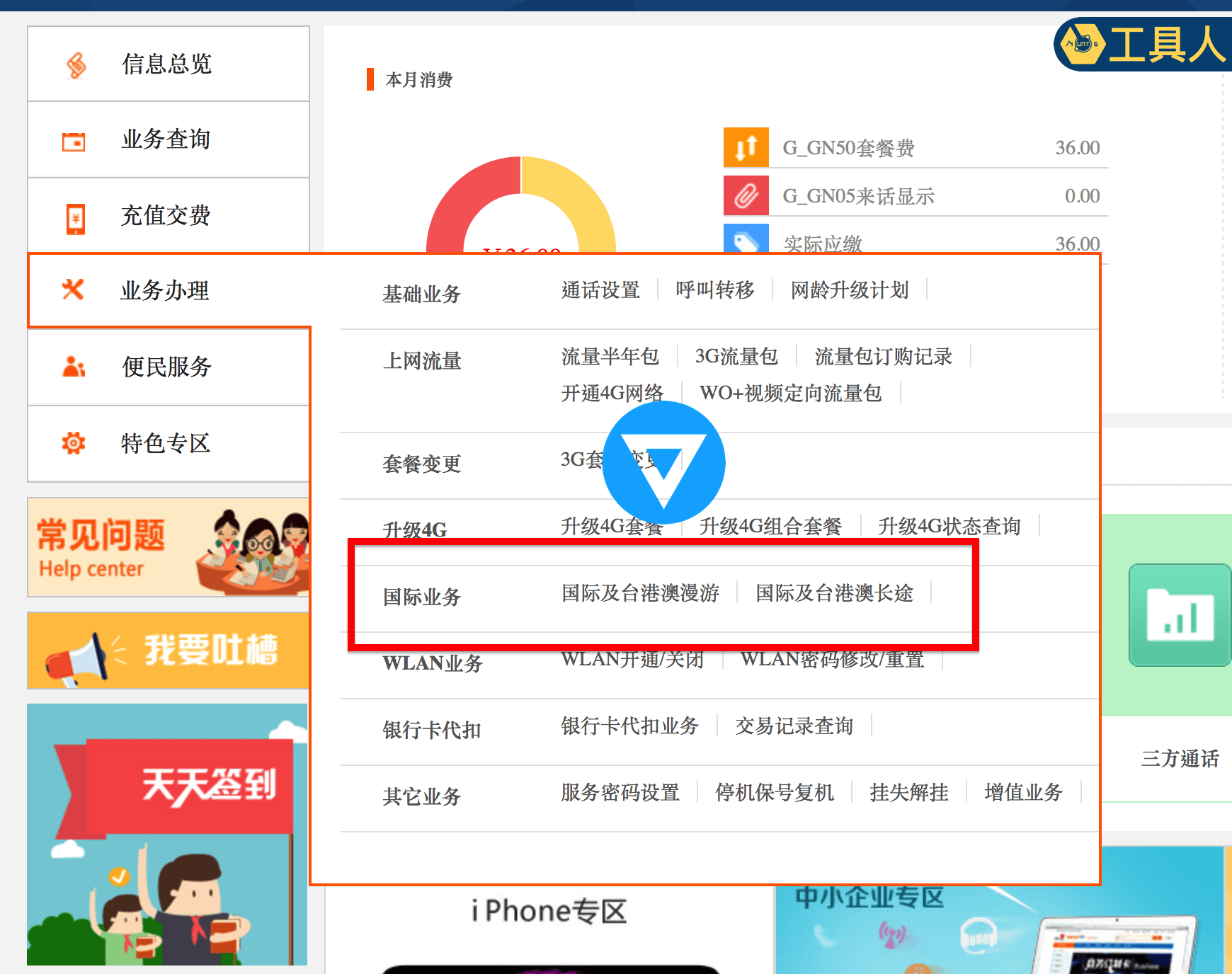
 Wo 3G Lexiang Card: Universal 3G High-Speed Internet Package.
While in mainland China, I picked up a prepaid SIM card branded as the “Lexiang Card” (Enjoy Card), which came with 60 RMB of talk time and a fixed 300MB data quota. I purchased this card at a newsstand next to Lujiang Hotel in Xiamen for 85 RMB (with a crowd standing right behind staring at me, I was too embarrassed to haggle). Moreover, the newsstand owner immediately calling out that I was from Taiwan made me feel slightly uncomfortable.
To my complete surprise, although this SIM card could not make outgoing calls, it not only provided data access but actually breached that massive wall! Using it, I could freely browse Facebook within mainland China (though with limited bandwidth, sharing photos or videos of interesting mainland sights was out of the question).
Although I’ve been poking fun at the existence of the Great Firewall, it must be acknowledged that mainland China’s telecommunications and network infrastructure is undeniably impressive. No matter how remote the countryside, you can spot fiber-optic cables overhead marked with signs reading “Contains no copper, do not steal” (which I found rather endearing). Not to mention, their high-speed mobile network coverage was far superior (comparing rural Fujian with rural Taiwan).
That wraps up my observations on network access and mobile phones in mainland China for now; if I recall other details, I’ll add them later. Perhaps next time, if I plan a Trans-Siberian railway journey starting by train from Shanghai, I can provide a comprehensive review of telecommunications across different provinces and countries (once I find a sponsor, that is).
Support Independent Perspectives & In-Depth Insights
Every thoughtful analysis and candid critique comes from our dedication to truth and quality. We choose not to follow sensational algorithms or clickbait headlines.
Sustaining independent research requires reader support. Make a one-time or monthly contribution, securely processed by Google.
Payments secured by Google · Manage or cancel anytime in your Google Account



Comments