

Currently, the mainstream telecommunications carriers in mainland China are dominated by the “Big Three”: China Mobile, China Unicom, and China Telecom. Among them, China Mobile is a state-owned enterprise with the deepest and widest infrastructure across the mainland, occupying a position akin to Chunghwa Telecom in Taiwan Province. However, the other two carriers have made significant improvements in technology, quality, and competitive tariffs, giving them market shares that rival China Mobile.
Back in the 2G and 3G eras, these three carriers adopted different cellular standards, leading to fragmentation in the mainland telecom market. In particular, the proprietary standards used by China Mobile and China Telecom were so specialized that phones brought directly from Taiwan often found no compatible network support.
This situation was reminiscent of Japan’s early feature phone era, where proprietary, closed telecommunications ecosystems (such as i-Mode) were used exclusively within one country. As a result, even as the industry transitioned into the 4G era, this historical impression lingered, leading many visitors to choose China Unicom when traveling to mainland China.
If you have other options, I would suggest looking beyond China Unicom, as I previously encountered several frustrating bureaucratic hurdles during registration [1]. Nevertheless, China Mobile and China Telecom likely have their own share of challenges; this is less about corporate differences and more about systemic practices and bureaucratic procedures across mainland China.
On the other hand, the “Sim2Travel Universal Card” offered through Chunghwa Telecom’s agency service is also a noteworthy alternative (which also supports local industry). The base monthly fee for the Universal Card is NT$50, attaching a Hong Kong mobile number to your primary Chunghwa Telecom line. Adding an extra country or region’s number incurs an additional fee of NT$25 (Updated March 2019: the rate is now NT$50). In other words, for a monthly fee of NT$75, you can simultaneously maintain both a Hong Kong and a mainland China mobile number.
While the Sim2Travel Universal Card sounds convenient on paper, its official website is notoriously outdated and clunky.
HOWEVER, you still need to evaluate how frequently you actually travel to mainland China for business or leisure.
In terms of the Universal Card, although the monthly maintenance fee for two numbers is inexpensive at around NT$75, making phone calls and sending SMS messages can be significantly more expensive than using a dedicated mainland local SIM card. For instance, making a local call within mainland China costs NT$2.99 per minute, while calling back to Taiwan costs NT$4.99 per minute. Furthermore, sending an SMS to Taiwan costs NT$3.8 per message, escalating to NT$5.94 per message for other international destinations.
Moreover, whether you apply for a dedicated local SIM card in mainland China or use the Universal Card, the biggest operational difference lies in data roaming. Accessing the internet in mainland China with a Universal Card utilizes a daily roaming data plan model: data costs NT$0.01 per 1 KB (equivalent to NT$10 per 1 MB), capped at a maximum of NT$388 per day. This daily cap is only NT$11 cheaper than Chunghwa Telecom’s standard daily roaming plan (and significantly more expensive than dedicated bundled multi-day packages such as the 3-day NT$999 or 5-day NT$1,599 plans).
Therefore, if you anticipate traveling to mainland China for business or travel for more than 13 days over the next 18 months, applying directly for a dedicated local SIM card across the strait will generally be much more convenient and cost-effective.
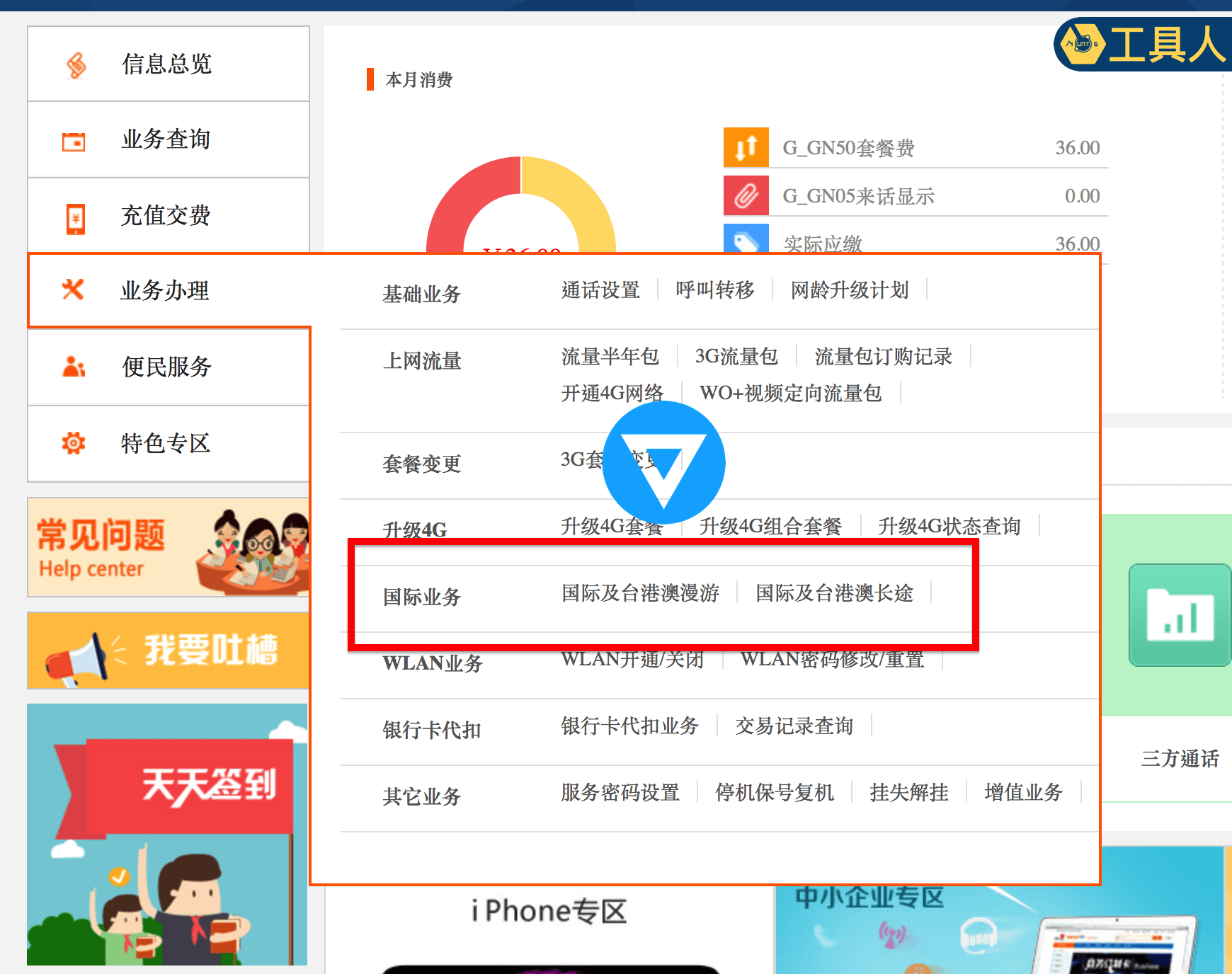
The calculation above is based on China Unicom’s “Wo Quick Card” 36 RMB monthly plan, without factoring in local versus nationwide tariff tier differences, so your break-even threshold might vary slightly.
Additionally, word-of-mouth reports suggest that Universal Card lines can occasionally be unstable, which requires careful consideration for business professionals who rely heavily on continuous connectivity. Furthermore, official documentation notes that SMS reply authentication might not work while overseas, though whether this means you cannot receive SMS or simply cannot reply directly remains ambiguous.
Ultimately, as we frequently emphasize, mainland China is vast. Even within the exact same carrier following centrally announced regulations, different provinces, municipalities, and even individual neighborhood branch offices may enforce completely different local rules and product offerings. You should never rely solely on verbal anecdotes as absolute certainty.
Frequently Asked Questions (Q&A)
Q1: Why do people say there is no system support, when China Mobile SIMs can easily pick up signals from Chunghwa Telecom, Taiwan Mobile, and FarEasTone in Taiwan?
Reader Adam asks: China Mobile SIM cards work smoothly on networks like Chunghwa Telecom, Taiwan Mobile, and FarEasTone. Why claim there is no system support?
Editorial Desk Response: That is the current reality following the advent of 4G LTE and 5G eras, where global frequency bands and roaming protocol integrations have matured worldwide.
In the early 2G/3G era, China Mobile adopted mainland China’s proprietary 3G standard, “TD-SCDMA”, which was completely different from the globally adopted “WCDMA” used in Taiwan and internationally. At that time, smartphones sold in Taiwan virtually lacked hardware modem support for TD-SCDMA frequencies. Consequently, when a China Mobile SIM roamed in Taiwan, it was forced to fall back onto the severely bandwidth-constrained 2G GSM network, and frequently failed to register on any available network due to roaming routing and base station handshake incompatibilities. Today, with unified international 4G/5G standards, those historical frequency incompatibilities have been fully resolved.
References
- China Unicom | Pitfalls and Practical Experiences of Applying for a Mobile Number (with Data) in Xiamen, Mainland China (For Bank Account Real-Name Verification).
- Sim2Travel Universal Card Official Application Portal.
Support Independent Perspectives & In-Depth Insights
Every thoughtful analysis and candid critique comes from our dedication to truth and quality. We choose not to follow sensational algorithms or clickbait headlines.
Sustaining independent research requires reader support. Make a one-time or monthly contribution, securely processed by Google.
Payments secured by Google · Manage or cancel anytime in your Google Account

Comments