
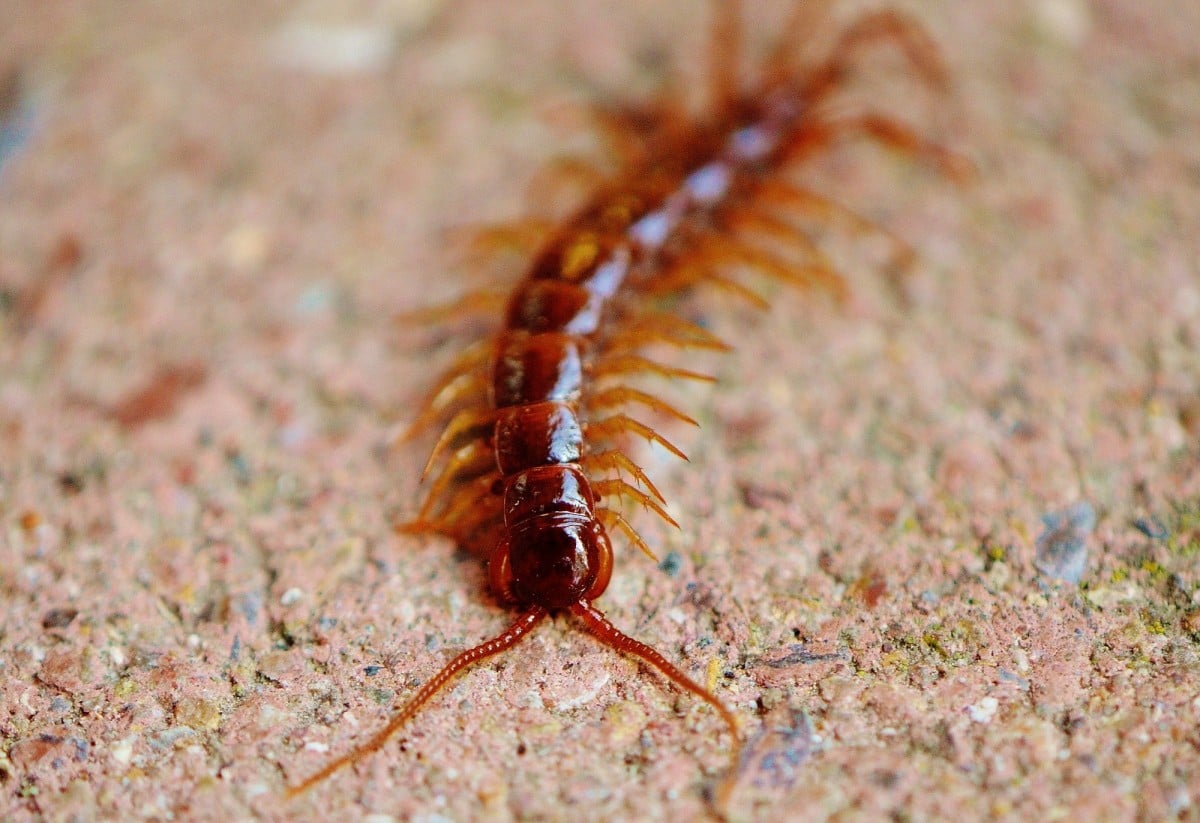
Gleaming with an unnatural waxy sheen and bristling with dozens of scuttling legs that make your skin itch just looking at them, the humble centipede (Chilopoda) is an animal most people can only describe as repulsive.
Domestically, very few hobbyists keep centipedes as pets. Beyond their uninviting appearance, this reluctance largely stems from the widespread misconception that their bites are inevitably fatal.
Today, Joseph will draw upon years of firsthand keeping and breeding experience to introduce these captivating creatures and provide a comprehensive husbandry guide, hoping to dispel some of the lingering prejudices against them.
Basic Introduction to Centipedes
Despite being colloquially called “hundred-leggers” in Chinese, most common centipedes do not actually possess a hundred legs—typical species have around forty. Centipedes feature a pair of antennae on their head, an elongated body divided into multiple segments, and a single pair of walking legs per body segment.
The first pair of appendages behind the head has evolved into pincer-like forelegs with internal venom glands, known colloquially as “toxic fangs” or forcipules. Thus, their venom apparatus is not technically located inside their mouth. Tiny pore openings sit at the tips of these forcipules; when a centipede clamps onto prey, venom is injected directly through these hollow needle-like structures.
The true mouthparts are nestled deep between the bases of these venomous claws, which is why centipedes belong to the class Chilopoda (meaning “lip foot”). The rearmost pair of legs extends backward, trailing behind like long tails; these are specialized terminal legs used for sensory defense and reproduction.
As for how many centipede species exist worldwide or how large they can grow, definitive answers remain elusive. Internet rumors claim certain specimens exceed 60 centimeters in length, though Joseph remains quite skeptical of such extreme figures.
However, I did personally keep a Chinese giant centipede (Scolopendra subspinipes dehaani) measuring 25 to 30 centimeters. She even successfully hatched a clutch of over one hundred spiderlings. Unfortunately, due to my subsequent neglect in separating them in time, the mother ended up consuming all the offspring.
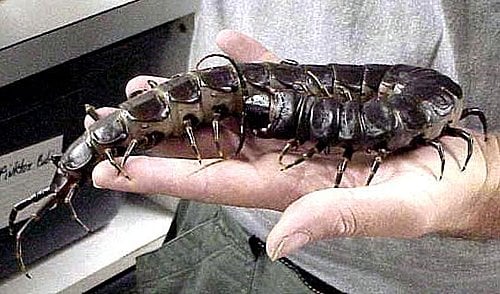 The largest confirmed centipede specimen recorded, measuring nearly 40 cm in length.
Centipede Venom and Toxicity
All centipedes are venomous!
Although persistent urban legends claim people have died from Vietnamese centipede bites, the venom of most centipedes is not lethal to a healthy adult unless severe anaphylactic shock occurs.
Joseph will share an in-depth account of getting envenomated by a Chinese giant centipede in a dedicated article. Although I have kept scorpions, tarantulas, centipedes, pythons, monitor lizards, and horned frogs, the centipede is the single animal I never handle freehand—because the agony of a bite is genuinely worse than death.
4 Key Husbandry Guidelines for Keeping Centipedes
Only a handful of centipede species are commonly traded in the pet markets across Taiwan. Whether native or exotic, their care requirements are largely identical and surprisingly straightforward. Joseph considers them even easier to maintain than scorpions or tarantulas. Key husbandry principles include:
- Substrate Selection: A centipede enclosure must maintain adequate humidity. As long as moisture levels are steady, almost any clean substrate will suffice, provided it is free of artificial fertilizers and pesticides. Joseph frequently uses rehydrated coco fiber (coir bricks) and organic potting soil.
- Enclosure Setup: Add a piece of curved driftwood, cork bark, or even a halved plastic container to provide secure hiding spots. Consistent humidity is vital, so always provide a shallow water dish. Position the enclosure in a dark, quiet location free from vibrations. Centipedes abhor bright light. During molting or egg-brooding, they must never be disturbed; stress will cause a brooding female to consume her entire clutch. After molting, centipedes routinely eat their shed exoskeleton, which is why keepers rarely find intact molts.
- Feeding & Diet: Joseph discovered that centipedes are not strictly carnivorous—they eagerly consume sweet fruit as well. Initially, I fed mealworms, superworms, crickets, and the occasional pinky mouse. Later on, when my home-bred superworm colony accidentally overheated in the sun and died off, and my feeder mice were nearly wiped out by ravenous Pacman frogs, I tossed in slices of Asian pear out of laziness. To my delight, the centipedes relished it just as eagerly.
- Enclosure Maintenance and Handling: Because a centipede’s body is long, fast, and flexible, you cannot simply grab them with planting tweezers like scorpions, nor can you cup them as easily as tarantulas. For transfers, keepers often slide a stiff plastic sheet beneath them. How do you safely manipulate them? Much like handling a venomous snake: use a curved hook tool to support their midsection, while holding long tweezers in your other hand to guide and restrict their movement direction.
Keeping centipedes is truly that simple: a secure, well-ventilated container with an escape-proof lid, clean substrate, a dark hide, stable moisture, and regular feeding—paired with a hands-off approach. Give them the solitude they crave, and they will thrive effortlessly.
Further Reading
Support Independent Perspectives & In-Depth Insights
Every thoughtful analysis and candid critique comes from our dedication to truth and quality. We choose not to follow sensational algorithms or clickbait headlines.
Sustaining independent research requires reader support. Make a one-time or monthly contribution, securely processed by Google.
Payments secured by Google · Manage or cancel anytime in your Google Account



Comments