

For months, I had been eagerly waiting for Apple to unveil its 2015 MacBook lineup. Whether an Air or a Pro, either would do—I was fully prepared to graduate from Windows and make the leap into the Mac ecosystem as soon as the new models dropped.
Update (March 10): Current reports indicate Apple will begin shipping after April 10, though regulatory clearance delays like last year could still affect launch timing.
However, what Apple just announced is a standard 12-inch MacBook that is neither Pro nor Air, with a positioning and hardware spec sheet that leaves me scratching my head.
Previously, Apple’s laptop line was straightforward: if you wanted high performance and a gorgeous high-res display, you chose the Pro; if you prioritized portability and moderate everyday performance, you chose the Air.
With distinct hardware tiers and clear price points (Air starting at NT$28,900, Pro starting at NT$41,900), buyers had an easy choice.
My ideal scenario was a MacBook Air upgraded with a Retina display, perfectly balancing lightness, everyday speed, and stunning visuals.
Instead, Apple launched this wildcard named simply "**MacBook**", turning the lineup into a strange three-way standoff. It puts the Air in an awkward position: while the Air and Pro both received minor spec bumps, the Air has effectively been relegated to Apple’s budget offering—yet it’s no longer the thinnest, lightest "**Air**" in the family.
It feels like in a modeling world already dominated by slender figures, an ultra-thin paperweight model suddenly stepped onto the runway.
Rumors suggest Apple may gradually wind down Air production, meaning we might have to wait until WWDC in June to see if Apple introduces a genuine next-generation redesign (or perhaps a truly low-cost entry laptop).
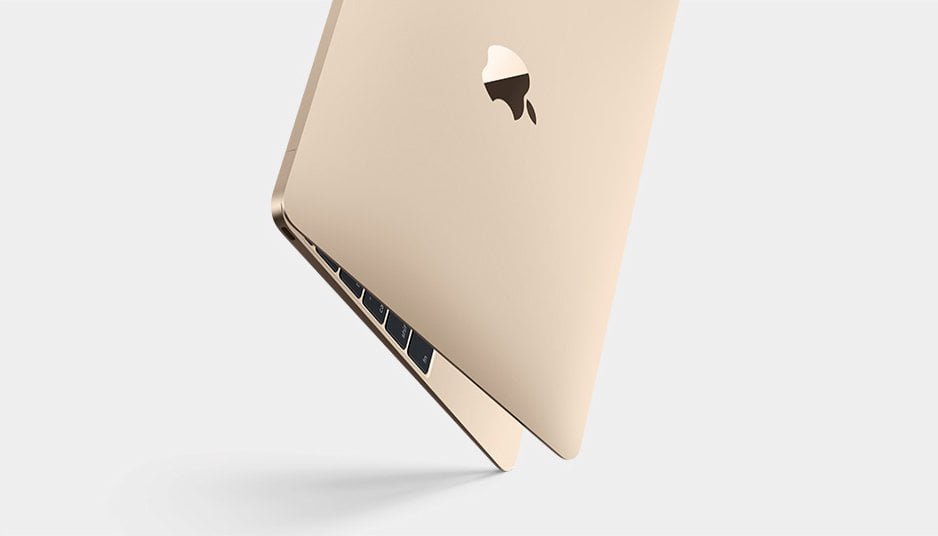 Apple MacBook in Gold
The core engineering innovations of this standard MacBook compared to the Pro and Air center around a fanless design, a butterfly keyboard mechanism that reduces key thickness by 40% compared to traditional scissor switches, an ultra-thin 0.88mm Retina display, a new Force Touch trackpad with pressure sensitivity, a single multifunctional USB-C port, and terraced battery cells designed to pack 35% more battery capacity into the tapered chassis.
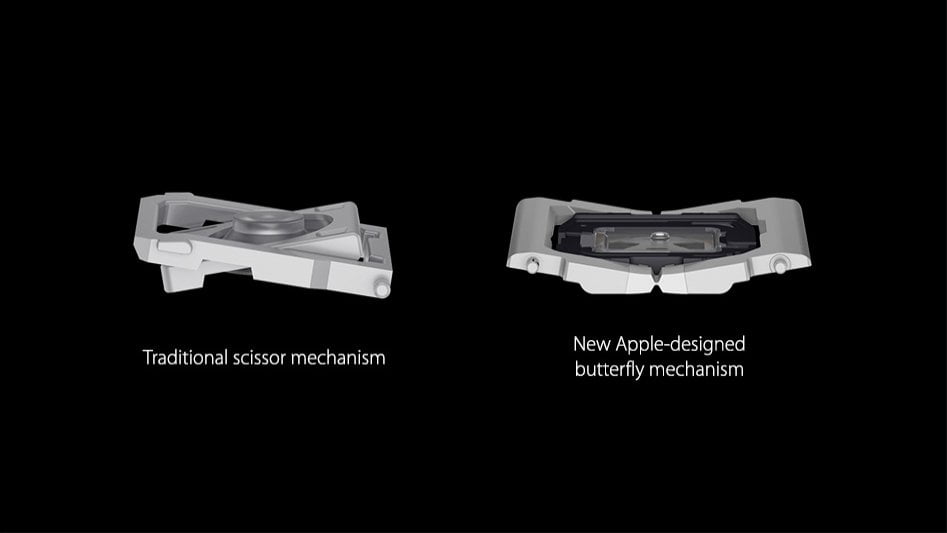 New butterfly keyboard mechanism.
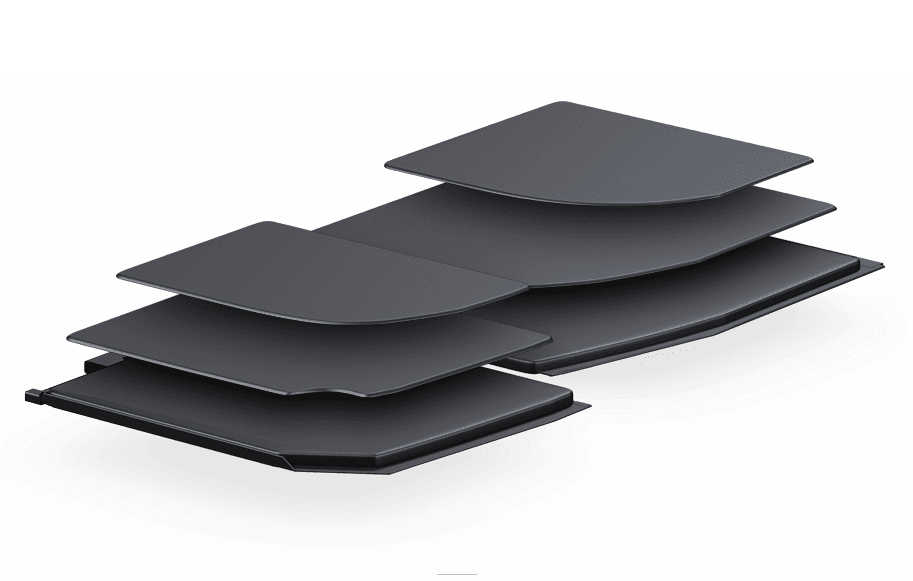 Custom-contoured terraced battery pack fitting the internal chassis.
The fanless design is made possible by Intel’s Core M processor. Drawing just 5W of power, it eliminates the need for cooling fans and heat pipes, allowing the logic board to shrink by roughly 75% (fewer parts, yet higher price tag).
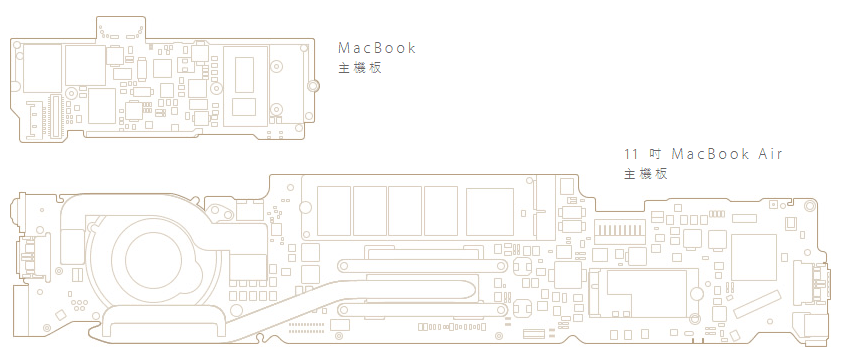 Logic board comparison: MacBook vs. MacBook Air.
Looking at this 2015 MacBook, it weighs a mere 0.92 kg with a fixed 12-inch screen, carrying the exact same starting price tag as the 13-inch MacBook Pro: NT$41,900.
In contrast, the MacBook Air comes in 11-inch and 13-inch sizes weighing 1.08 kg and 1.35 kg—heavier than the new MacBook by 0.16 kg and 0.43 kg respectively, but cheaper by NT$13,000 and NT$10,000.
Note: I refer to it as the “standard MacBook” to differentiate models; officially on the Apple Store, it is simply named “MacBook”.
This creates an amusing decision matrix for anyone shopping for a Mac laptop:
- Looking for the lowest price: Keep buying the MacBook Air.
- Demanding raw performance: Keep buying the MacBook Pro.
- Demanding performance plus stunning visuals: MacBook Pro remains the obvious choice.
- Weighing display quality against price: The MacBook Pro actually looks like better value, bundling far more horsepower alongside Retina.
- Seeking maximum lightness paired with Retina: Buy the 12-inch MacBook.
- Obsessed with extreme portability (and willing to pay NT$13,000 just to shed 0.16 kg): Buy the 12-inch MacBook.
Like the iPhone 6S, aside from hardware refinements, one of the biggest commercial selling points is likely its appeal to luxury markets: it comes in an eye-catching Gold finish (often dubbed "**tycoon gold**"). It feels tailor-made as an executive’s lightweight companion.
Gleaming gold finish, gorgeous Retina panel, and extreme featherweight form factor—undeniably sleek and trendy!
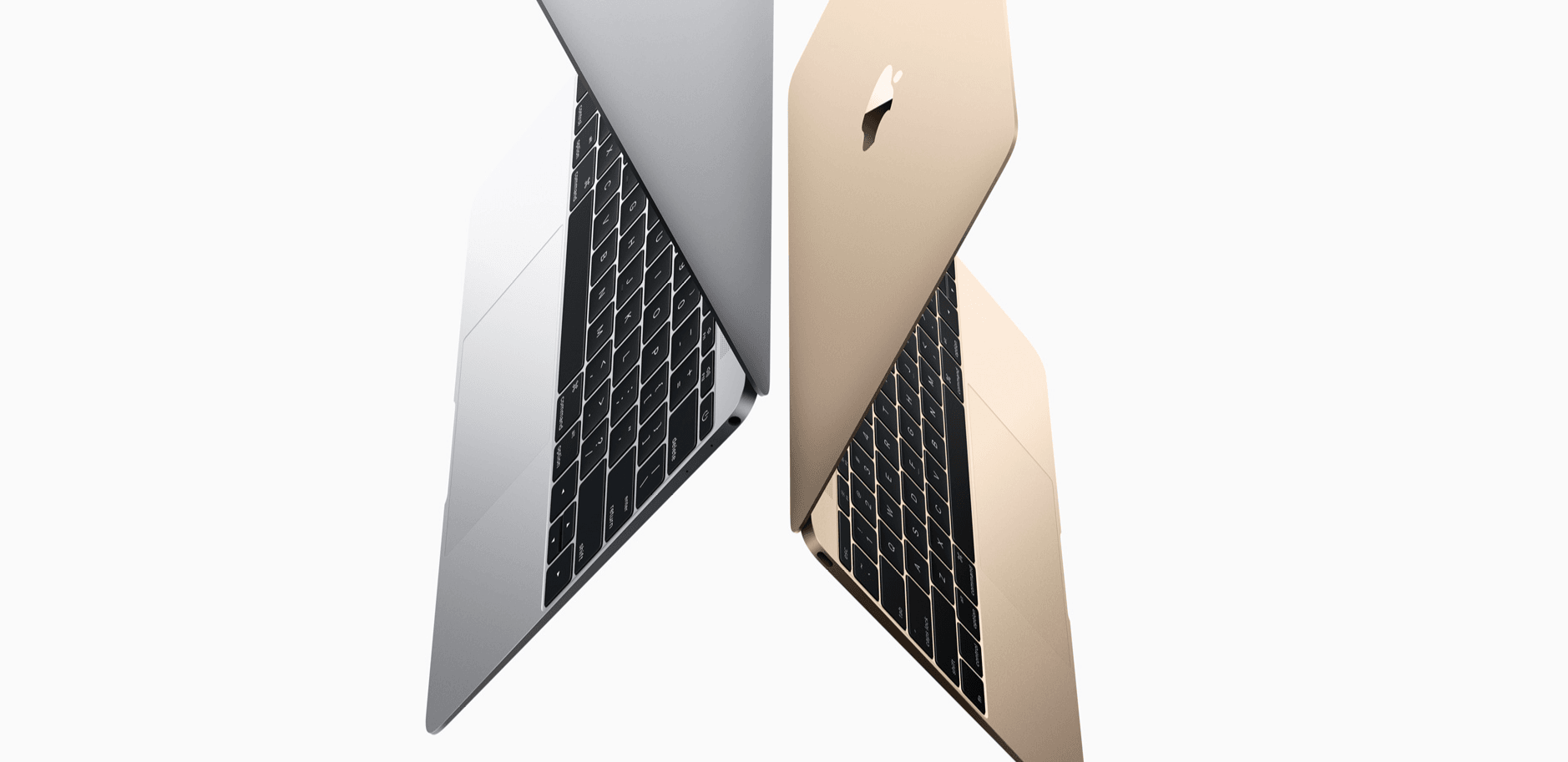 Apple MacBook in Silver and Gold.
We can profile the ideal buyer for this MacBook: someone who demands the absolute lightest laptop, requires silent fanless operation, values low exterior heat, is satisfied with modest performance (compared to the Pro), doesn’t worry about budget, loves the gold finish, and prefers a 12-inch screen. Does that describe you?
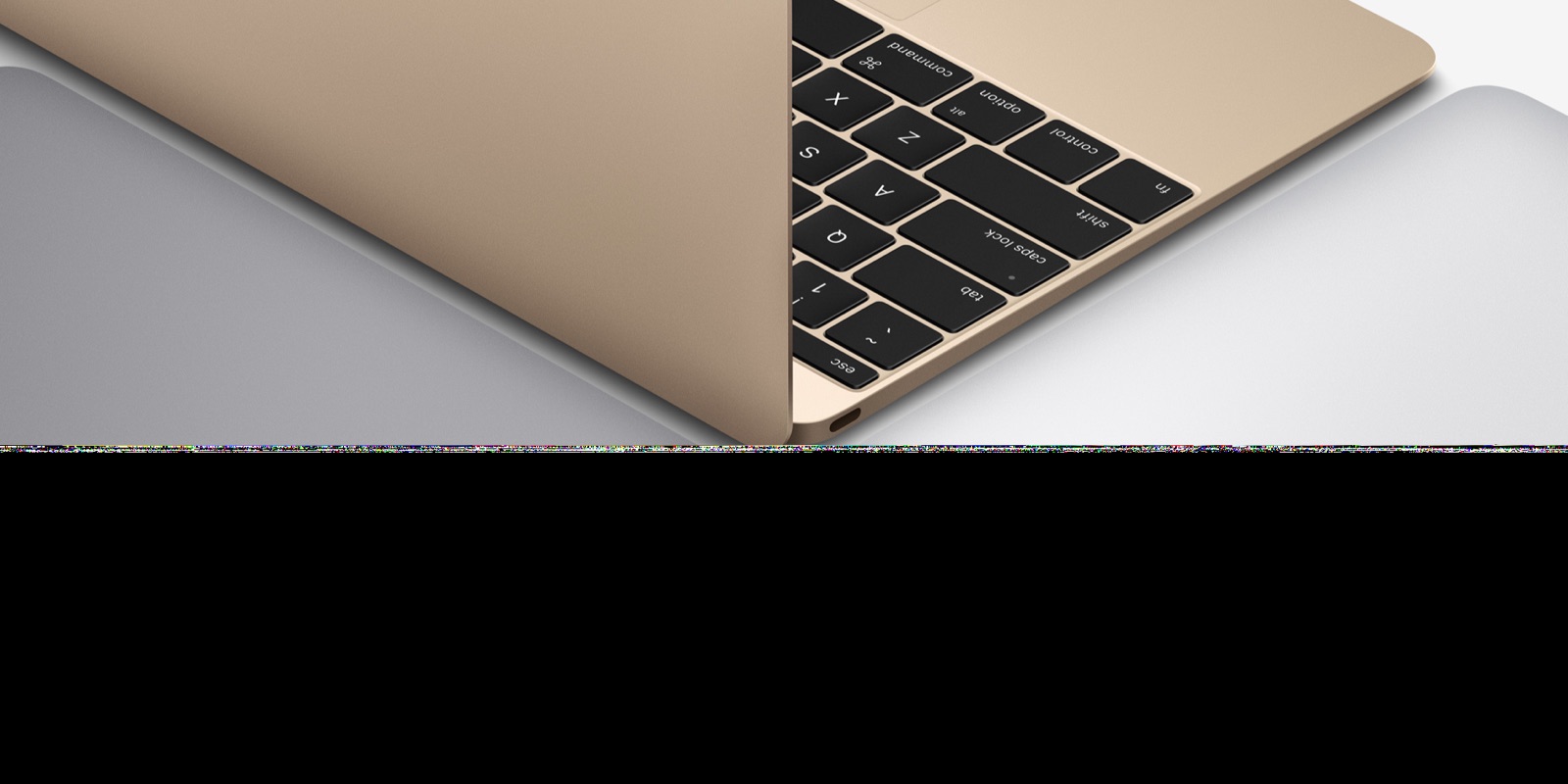 Apple 2015 MacBook (Source: Apple)
The biggest differences between the new MacBook, Air, and Pro—beyond physical dimensions—lie in CPU horsepower and integrated graphics capabilities.
When removing weight from the equation, choosing between the MacBook and the Pro becomes clear: if performance were comparable, the lighter MacBook would win easily. But if performance is critical, the Pro weighs only 1.58 kg—a modest 0.6 kg difference that most daily commuters can comfortably carry.
The Core M processor powering the 12-inch MacBook is built on Intel’s 14nm process. Aimed at ultra-low power consumption, it minimizes heat output while handling basic tasks, making it ideal for fanless laptops and tablets.
Apple opted for higher-tier variants within the Core M lineup. Yet laws of physics apply: mobile ultra-low-voltage processors do not perform miracles, remaining fundamentally suited for lightweight office and browsing workflows rather than heavy creative production.
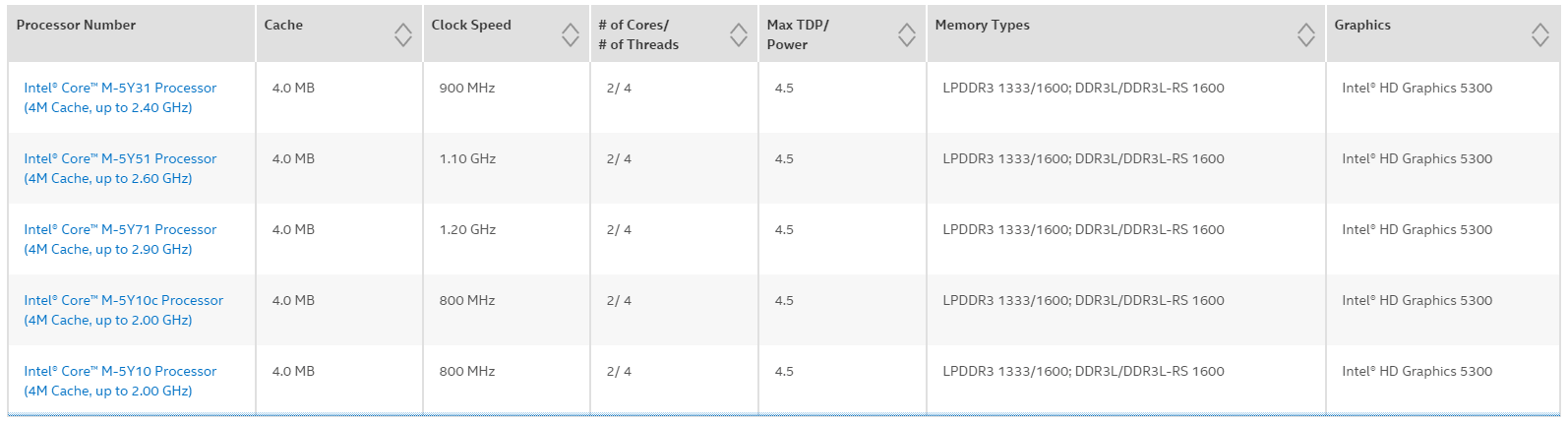 Intel Core M processor lineup.
Interestingly, despite the low-power chip and a 39.7 watt-hour battery, Apple’s official battery life rating matches the 11-inch Air with its 38 Wh battery. Driving that 12-inch high-density Retina panel clearly draws considerable juice.
Quick Buying Guide Across the Mac Laptop Lineup
To help cut through the confusion, here is how the baseline configurations of each series stack up against one another:
- Price: Pro = MacBook > Air
- Performance: Pro > Air > MacBook
- Portability (Lightness): MacBook > Air > Pro
- Power Efficiency: MacBook > Air > Pro
- Integrated Graphics: Pro > Air > MacBook
- Display Quality: Pro > MacBook > Air
Photographers and video editors needn’t stress over this decision: the MacBook Pro remains your only real option.
In summary: buy the Air if budget is your priority; buy the Pro if performance and versatility come first; buy the 12-inch MacBook if ultra-portability and that striking gold finish speak to your style.
Finally, in pursuit of an razor-thin profile, Apple made an audacious design decision: omitting virtually all physical I/O ports in favor of a single USB-C port (alongside Bluetooth and a 3.5mm headphone jack). This single port handles charging, USB 3.1 data transfer, and native DisplayPort/VGA/HDMI video output—all through one lone socket.
 Multifunction USB-C port.
This means you will almost certainly need USB dongles or adapters for external drives, SD cards, presentation projectors, or wired peripherals. Alongside the laptop, Apple introduced the NT$2,590 "**USB-C Digital AV Multiport Adapter**", which splits the single port into USB, HDMI, and power passthrough.
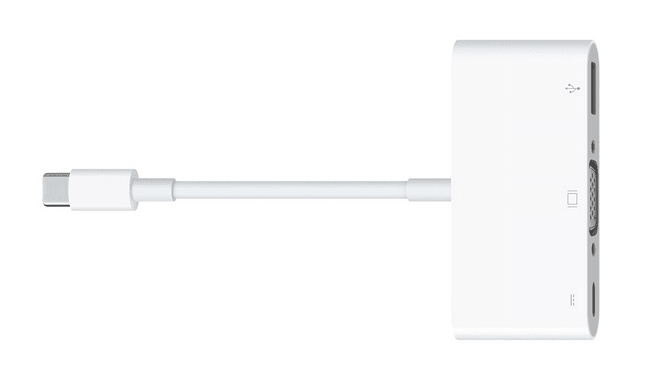
The adapter weighs less than 100 grams, so even with it packed in your bag, the overall setup remains lighter than an Air.
Technical Specifications: 12-inch MacBook (2015)
| Specification | Model A | Model B |
|---|---|---|
| Processor | 1.1GHz dual-core Intel Core M (Turbo Boost up to 2.4GHz) with 4MB shared L3 cache; configurable to 1.3GHz dual-core Intel Core M (Turbo Boost up to 2.9GHz) | 1.2GHz dual-core Intel Core M (Turbo Boost up to 2.6GHz) with 4MB shared L3 cache; configurable to 1.3GHz dual-core Intel Core M (Turbo Boost up to 2.9GHz) |
| Retina Display | 12-inch (diagonal) LED-backlit IPS display; 2304 x 1440 resolution at 226 ppi with support for millions of colors; 16:10 aspect ratio | 12-inch (diagonal) LED-backlit IPS display; 2304 x 1440 resolution at 226 ppi with support for millions of colors; 16:10 aspect ratio |
| Memory | 8GB of 1600MHz LPDDR3 onboard memory | 8GB of 1600MHz LPDDR3 onboard memory |
| Storage | 256GB PCIe-based onboard flash storage | 512GB PCIe-based onboard flash storage |
| Wireless | 802.11ac Wi-Fi (IEEE 802.11a/b/g/n compatible); Bluetooth 4.0 | 802.11ac Wi-Fi (IEEE 802.11a/b/g/n compatible); Bluetooth 4.0 |
| Graphics & Video | Intel HD Graphics 5300; Dual display and video mirroring (supports native resolution on built-in display and up to 3840 x 2160 on external display) | Intel HD Graphics 5300; Dual display and video mirroring (supports native resolution on built-in display and up to 3840 x 2160 on external display) |
| Ports & Expansion | USB-C port supporting: Charging, USB 3.1 Gen 1 (up to 5 Gbps), Native DisplayPort 1.2, VGA and HDMI output via adapters | USB-C port supporting: Charging, USB 3.1 Gen 1 (up to 5 Gbps), Native DisplayPort 1.2, VGA and HDMI output via adapters |
| Camera | 480p FaceTime camera | 480p FaceTime camera |
| Audio | Stereo speakers, dual microphones, 3.5mm headphone jack (supports Apple iPhone headset with remote and mic) | Stereo speakers, dual microphones, 3.5mm headphone jack (supports Apple iPhone headset with remote and mic) |
| Keyboard & Trackpad | Full-size keyboard with 78 (U.S.) or 79 (ISO) individual LED-backlit keys, ambient light sensor; Force Touch trackpad for precise cursor control and pressure-sensing capabilities | Full-size keyboard with 78 (U.S.) or 79 (ISO) individual LED-backlit keys, ambient light sensor; Force Touch trackpad for precise cursor control and pressure-sensing capabilities |
| Battery & Power | Up to 9 hours wireless web, up to 10 hours iTunes movie playback; Built-in 39.7Wh lithium-polymer battery; 29W USB-C power adapter | Up to 9 hours wireless web, up to 10 hours iTunes movie playback; Built-in 39.7Wh lithium-polymer battery; 29W USB-C power adapter |
| Dimensions & Weight | Height: 0.35–1.31 cm (0.14–0.52 in); Width: 28.05 cm (11.04 in); Depth: 19.65 cm (7.74 in); Weight: 0.92 kg (2.03 lbs) | Height: 0.35–1.31 cm (0.14–0.52 in); Width: 28.05 cm (11.04 in); Depth: 19.65 cm (7.74 in); Weight: 0.92 kg (2.03 lbs) |
| Finishes | Silver, Gold, Space Gray | Silver, Gold, Space Gray |
| Price | NT$41,900 | NT$51,900 |
Related Reading
- Apple Store: MacBook
- RAM and storage in modern thin laptops are soldered, making upfront configuration critical.
- Intel Core M Processor architecture overview.
- The Great Dilemma: Apple MacBook Air/Pro vs. Windows Laptop Buying Guide
Support Independent Perspectives & In-Depth Insights
Every thoughtful analysis and candid critique comes from our dedication to truth and quality. We choose not to follow sensational algorithms or clickbait headlines.
Sustaining independent research requires reader support. Make a one-time or monthly contribution, securely processed by Google.
Payments secured by Google · Manage or cancel anytime in your Google Account




Comments