
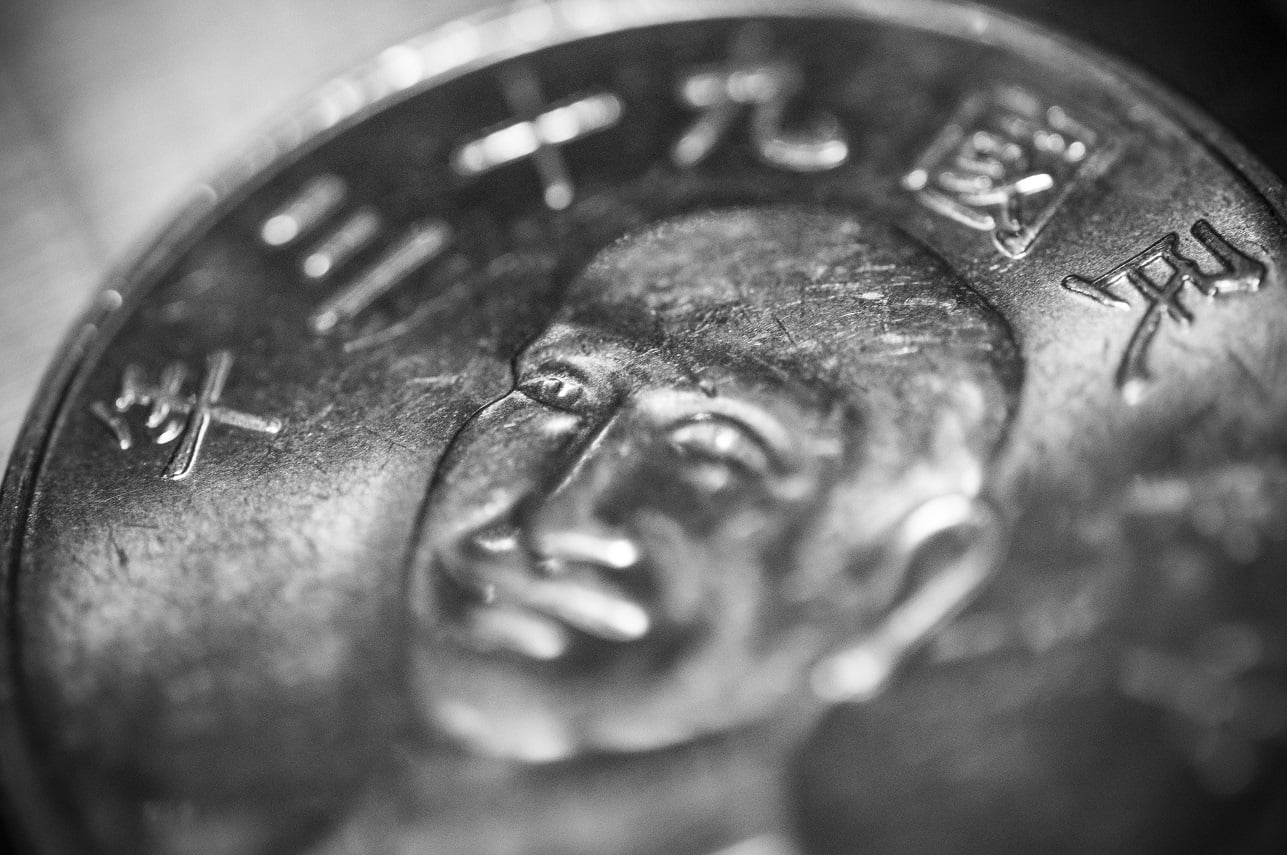
Do you know how much a 10-dollar coin minted in ROC Year 93 (2004) is worth? For a brief window of a few days, the street value of that single 10-dollar coin shot up to NT$690.
It turned out that a well-known yakiniku (barbecue) chain owned by a publicly traded food conglomerate was celebrating its tenth anniversary. Across its 24 branches in Taiwan Province, the restaurant launched a promotion offering 100 meal vouchers valued at NT$690 per branch, redeemable for just a 10-dollar coin. The catch? The promotional rule required the coin to be minted specifically in ROC Year 93 (2004).
ROC Year 93 seemed, on the surface, like an innocent homage to the founding year of their very first store. In reality, that specific year constraint was a clever psychological trick.
In the marketing arena, a strategist’s perceived worth is measured almost entirely by their capacity to manufacture viral buzz.
Consequently, rather than executing a smooth, drama-free promotion for customers, capturing sensationalist headlines in the news media becomes the primary objective. Once mainstream media broadcasts your story, mass crowd engagement follows naturally—and modern media thrives on spectacle and friction.
The initial news story that sparked widespread broadcast was headlined along the lines of “Central Bank Expresses Concern.” Reports claimed that the restaurant’s coin-exchange promotion prompted crowds to flock to commercial banks, exchanging massive rolls of 10-dollar coins, sifting out the coveted 2004 issue, and immediately dumping the remainder back onto bank tellers. The resulting logistical chaos and wasted teller manpower reportedly compelled the Central Bank of the Republic of China to intervene.
Wow—a promotion so disruptive that the Central Bank personally telephoned management urging them to call it off! What an irresistible headline that provoked everyone’s curiosity.
That was precisely when I started noticing the campaign; coverage suddenly mushroomed everywhere across television news and social media feeds.
Looking at Google search data prior to the controversy (Figure 1), prior to August 6 (the Central Bank headline broke on August 7), searches combining the restaurant name with “93” and “10” yielded relevant results only down to the second item on page two—and that second result was merely an obscure Facebook page post.
This reveals that before the Central Bank angle hit the press, the campaign’s organic reach across forums and social channels had been remarkably lukewarm—so low that generating enough public bank runs to trigger central bank intervention seemed mathematically implausible (discussions on major BBS forums like PTT were virtually nonexistent).
If someone suggested this entire episode was an orchestrated PR placement, I would nod and say, “Well, quite possible.” (The real question is: who seeded the sponsored news leak? Did the Central Bank leak the story, or did the restaurant chain leak that the Central Bank had called them?).
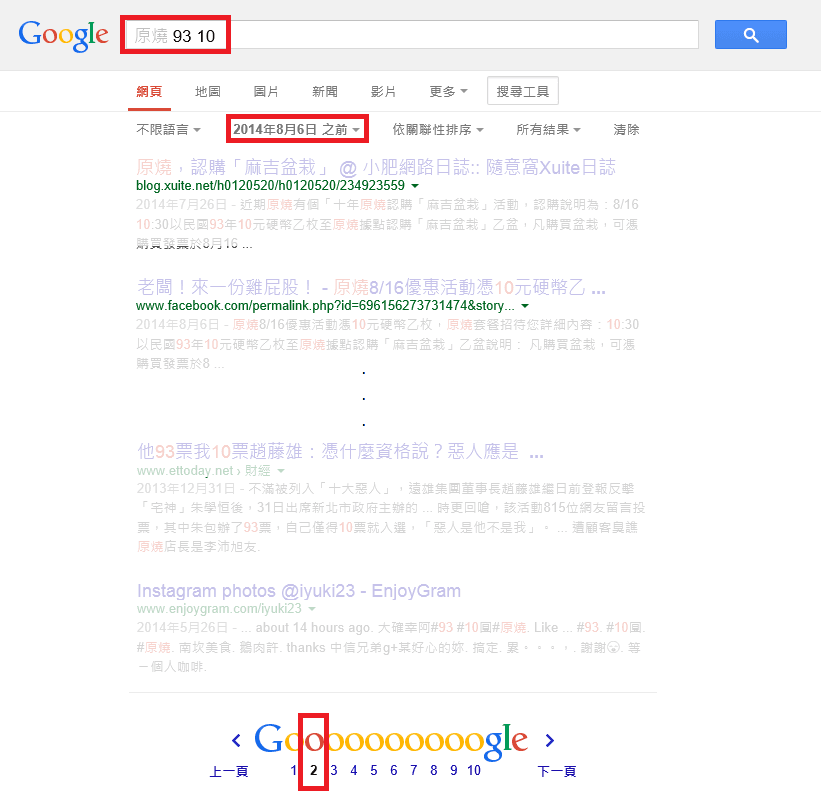 Figure 1: Google search results.
Judging purely by business outcomes, the marketing campaign was an undeniable smash hit.
On August 15, the restaurant surged to the number one trending spot on Google Trends, generating between 20,000 and 50,000 direct searches. Paired with explosive Facebook debates, prime-time television broadcasts, and an estimated physical turnout of 50,000 people at branch doors, the media value generated vastly eclipsed traditional advertising spends.
The chain invested 2,400 meals (valued at NT$690 each, totaling NT$1,656,000 before subtracting gross margins), plus minimal peripheral costs (potted plants and buy-one-get-one coupons), achieving outsized advertising reach on a shoestring budget.
Furthermore, the restaurant announced that the NT$24,000 collected from the 10-dollar coins (100 coins × NT$10 × 24 branches) would be donated entirely to the Child Welfare League Foundation.
Whether donating NT$24,000 or donating the full NT$1,656,000 would have been more admirable is a debate for another day; after all, this was fundamentally a commercial sales promotion.
In this campaign, marketers once again proved how easily crowd behavior can be steered for commercial gain.
The public endured frustration and spent ungodly hours queuing in the summer heat for a chance at a free barbecue meal. From another perspective, the 2,400 individuals who secured the free meals and the 24,000 who walked away with buy-one-get-one coupons still captured tangible value. The remaining 25,000 hopefuls served purely as free extras in a corporate spectacle. But as I often say, that is the nature of commercial promotions (which is why I never participate in them).
A moment of sober reflection makes the reality obvious: only individuals prepared to pitch tents and camp out overnight stood any realistic chance of claiming those 2,400 free sets—and that line undoubtedly included paid queue stand-ins, scalpers, and phantom spot-holders who materialized at the front right before opening.
In that sense, I genuinely respect the tenacity of those who managed to secure free or discounted vouchers; pulling that off demands extraordinary logistical execution.
Afterward, the restaurant issued an apology claiming they had “not anticipated” such massive crowds.
Yet given the elaborate queue number tickets they printed and the contingent buffer of 200 buy-one-get-one coupons per store, claiming they were caught unprepared rings somewhat hollow (the brand claimed it was their first large-scale experiential campaign).
Besides, from a marketer’s perspective, blowing past initial forecasts is the ultimate proof of success (sips hot tea).
Had management genuinely wanted to manage expectations responsibly, they would have either made the promotion unrestricted or maintained at least a 50% surplus allocation at every location.
In closing, we are a contrarian bunch who disdain being manipulated, so don’t expect this article to promote or name the barbecue chain. If brands desire publicity, pay for legitimate ad campaigns rather than exploiting public queues; clumsy viral stunts can easily backfire.
As a side note, an acquaintance on Facebook was among the marketing staff behind this campaign. He proudly shared a prominent attorney’s commentary analyzing the event, with comments congratulating him on its roaring success. If this article named the restaurant chain directly, would he share it as well? On second thought, better not.
Support Independent Perspectives & In-Depth Insights
Every thoughtful analysis and candid critique comes from our dedication to truth and quality. We choose not to follow sensational algorithms or clickbait headlines.
Sustaining independent research requires reader support. Make a one-time or monthly contribution, securely processed by Google.
Payments secured by Google · Manage or cancel anytime in your Google Account



Comments