
Ever since Joseph started airbrushing scale models, people have frequently asked him questions. The most common inquiries usually include:
- They want to paint their models, but don’t know which type of paint to choose.
- Does Joseph recommend hand brushing or airbrushing?
- What equipment is needed if they want to get started with airbrushing?
Joseph often thinks that if he were to answer all these questions in full detail at once, it would take an entire book.
Therefore, Joseph has decided to address these common issues gradually through individual articles.
Today’s article focuses on selecting hobby paints. Fellow hobbyists, read on!
An Overview of Hobby Paints
Looking at the modeling scene in recent years, painting models has become increasingly popular. The variety of paint types and color choices available on the market has also expanded dramatically.
However, selecting suitable model paints and testing each paint’s individual performance requires significant time and money.
That is why Joseph wants to share his painting experience here, hoping to save fellow hobbyists both time and effort.
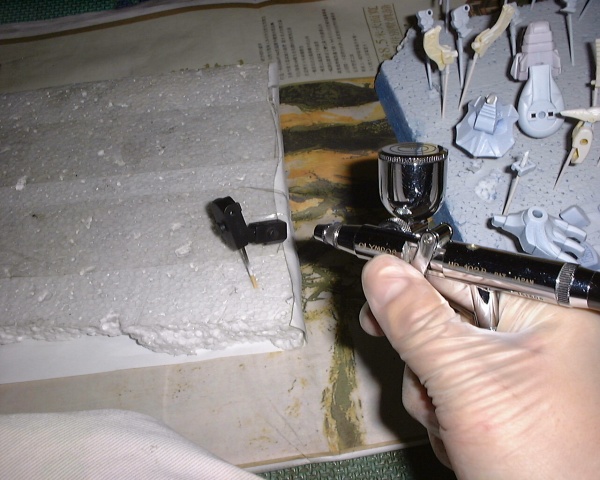
Airbrushing in progress.
If an unpainted snap-fit build is like a person with no clothes, then custom paint is the clothing and accessories worn on the body. Choosing the right paint type and skillfully coordinating them allows your model to achieve a far superior appearance.
There are three primary types of hobby paints in common use, each with distinct characteristics, pros, and cons. Gaining an in-depth understanding of these traits will make painting your models far smoother and more intuitive.
Three Common Hobby Paint Types
Lacquer Paint
Highest toxicity, hardest paint film, and the fastest drying time—taking only 5 to 10 minutes. It also delivers the highest gloss finish once dry, and white lacquer provides exceptional coverage. Its biggest drawback is that metallic pigments have larger particle sizes, requiring specialized metallic thinners to achieve a smoother finish.
Common brands on the market include GAIA, GSI Creos (Mr. Color), and Sianyin.
Joseph is currently most accustomed to using GAIA lacquer paints.
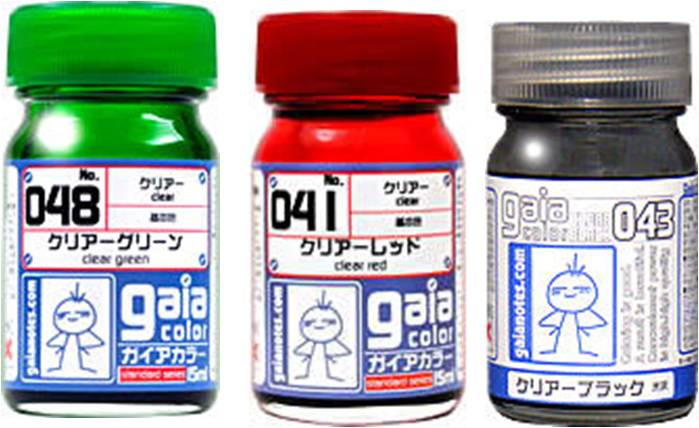
GAIA lacquer paint
Enamel Paint
Moderate toxicity, weaker paint film, and the longest drying time—requiring at least 30 minutes or more. It is ideally suited for hand brushing, panel lining, and weathering washes. The major downside of enamel is that when airbrushed, any scratch on the surface can cause entire sections to flake off. While metallic enamels are not as glossy as lacquers, their metallic flakes are exceptionally fine.
The most common brand on the market is TAMIYA.
Joseph usually reserves enamel paints strictly for washes, panel lining, or detailing large character figures.
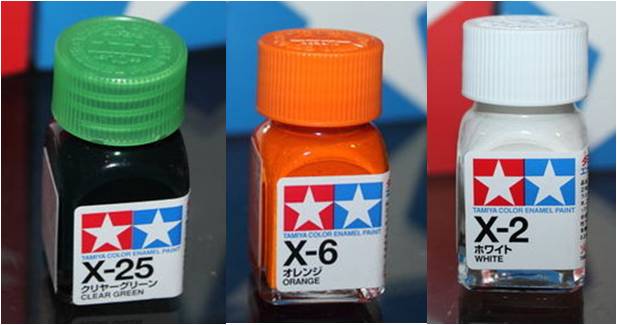
Enamel paint
Acrylic Paint (Water-Based)
Virtually non-toxic and odorless, but has the weakest paint film and a moderate drying time of about 15 to 20 minutes. Flat (matte) acrylics perform wonderfully; if you want to simulate fabric textures, a simple application of this paint yields great results. Its biggest advantage is that before it dries completely, it can be washed off with water. The biggest drawback is that its gloss level cannot match the other two paint types, and the dried surface is vulnerable to sweat from bare hands. Common brands on the market include TAMIYA and GUNZE (Mr. Hobby Aqueous).
Joseph typically uses acrylic paints when painting small figurines.
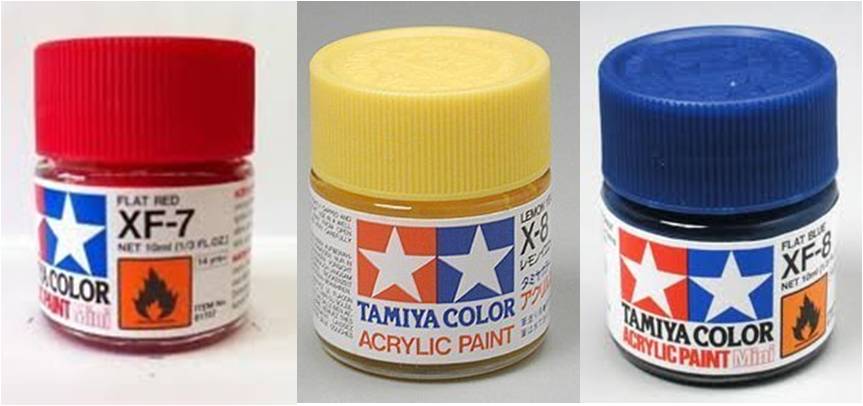
Acrylic paint
Please note: the drying times mentioned above refer to “the time required before applying a second coat.” For model paint to fully cure and harden, it can take several days.
Solvents & Thinners
When fresh out of the bottle, hobby paint is generally very thick and cannot be directly airbrushed. We must dilute it with thinner to ensure smooth spray performance.
Remember: every paint type requires its own dedicated thinner; never mix and match thinners across types.
Even for paints of the same type, if they come from different brands, Joseph still recommends using thinners made by the same brand as the paint.
In Joseph’s experience, cross-mixing model paints with mismatched thinners often leads to clumping during dilution. Even if clumps don’t form immediately, it will severely undermine the adhesion and durability of the finished coat.
GAIA produces a dedicated metallic paint thinner that helps metallic flakes settle into a much finer sheen, which Joseph highly recommends.
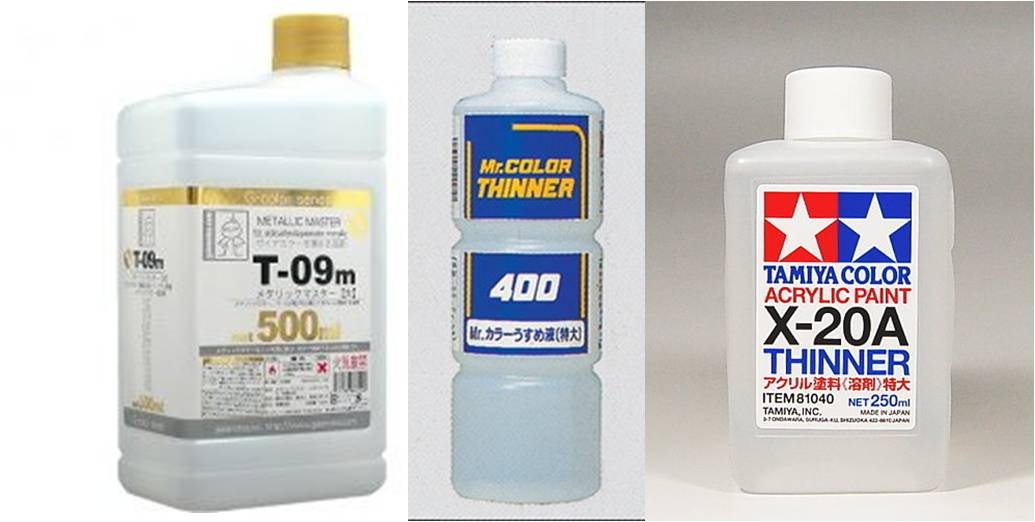
Various thinner brands
Comparison of Hobby Paint Characteristics
- Drying Speed: Lacquer → Acrylic → Enamel
- Durability (Hardness): Lacquer → Enamel → Acrylic
- Aggressiveness / Corrosiveness: Lacquer → Enamel → Acrylic
- Toxicity: Lacquer → Enamel → Acrylic
- Ease of Cleanup: Acrylic → Enamel → Lacquer
Paint Layering and Hierarchy
Different paint types vary in chemical strength. A stronger paint will bite into and damage a weaker paint underneath.
Consequently, if you want to layer multiple types of paint on a single model, getting the sequence wrong can ruin all your hard work.
Here is a handy reference chart summarizing paint compatibility and strength:
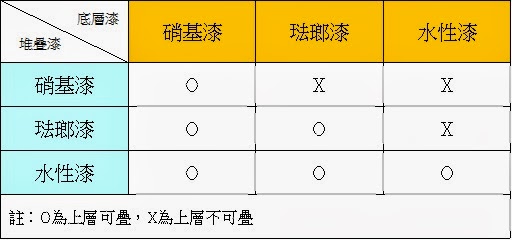
Model paint layering hierarchy chart
The key rule is: regardless of which paint type you use for layering, always ensure the bottom layer is completely dry before spraying a second coat.
With the above guidance, Joseph hopes everyone now has a solid baseline understanding of hobby paints, allowing you to choose the best options for your favorite models.
Joseph will continue publishing in-depth profiles and practical tips for various paints in future articles. Fellow modelers are warmly welcome to discuss and share ideas!
Support Independent Perspectives & In-Depth Insights
Every thoughtful analysis and candid critique comes from our dedication to truth and quality. We choose not to follow sensational algorithms or clickbait headlines.
Sustaining independent research requires reader support. Make a one-time or monthly contribution, securely processed by Google.
Payments secured by Google · Manage or cancel anytime in your Google Account


Comments