
Throughout the study of traditional Feng Shui, masters often introduce the “Thirty Rules of Yang Zhai” (from Shen’s Xuan Kong Feng Shui) as an essential core text. Many practitioners regard these thirty principles as the foundational theoretical pillars of dwelling Feng Shui—the fundamental rules governing diagnosis, auspicious spatial adjustments, and practical environmental analysis.
Committing these thirty rules to memory and reflecting on their practical applications will significantly enhance your understanding of environmental layouts and traditional spatial design.
The Thirty Rules of Yang Zhai
Rule 01: Differences in Spatial Selection Between Urban and Rural Settings
In rural countryside environments, atmospheric Qi disperses widely. Dwelling layouts should ideally capture both mountains and natural water features. In dense urban settings, Qi gathers closely; even without natural waterways, one must assess neighboring rooflines, elevation variances, and street widths or curvatures. Depressions, low-lying areas, wide avenues, and winding streets function as “Water”; straight lines, convex facades, narrow alleys, and elevated high-rises function as “Mountain.”
Rule 02: Flying Stars (Ai Xing)
The Flying Star methodology for living residences (Yang Zhai) shares its foundation with ancestral burial sites (Yin Zhai). It is anchored primarily by the prevailing Period Yun of Qi intake, operated through the conjunction of Sitting Stars, Facing Stars, and Visiting Stars. Yin Zhai emphasizes the Facing Water direction, whereas Yang Zhai prioritizes the Main Door orientation, through which Qi is drawn in. If sparkling bodies of water lie outside the entrance, they exert even greater influence than roadways; prosperity and decline rely on water, balanced through the governance of the stars.
Rule 03: Building Orientation vs. Door Orientation
For newly constructed dwellings, both the overall building orientation and the main entrance orientation are critical. Assess external environmental features first based on the building orientation. If predictions do not align, assess via the main door orientation. Once the building orientation proves accurate, door orientation need not be cross-analyzed; conversely, if the door orientation proves true, building orientation may be set aside.
Rule 04: External Environmental Formations
When evaluating a dwelling, examine mountain and river contours first to determine whether Qi flow forms a harmonious pattern. Next, inspect roadway circulation and external surroundings—such as neighboring roof ridges, decorative arches, flagpoles, mounds, or ancient trees—identifying which star palace they inhabit to distinguish prosperity from decline.
Rule 05: Side Entrances (Off-Center Doors)
The fortune of a dwelling is judged by the Qi admitted at its primary entrance. If a main door opens to the side, evaluate both the door orientation and the primary hall orientation by synthesizing both celestial charts. Auspicious exterior paired with inauspicious interior retains subtle flaws; auspicious interior paired with inauspicious exterior permits modest comfort at best.
Rule 06: Large Houses with Small Entrances
A dwelling and its entrance should be proportional. A grand house with an excessively cramped door is generally disadvantageous. However, if both the house orientation and the door orientation align with prevailing prosperous stars, a smaller entrance causes no harm.
Rule 07: Opening Doors in Alignment with Prospering Stars
To add an auspicious doorway to an older structure, calculate the Flying Stars according to the construction Period of the building. For example, a Period 1 house built on a Ren Sitting / Bing Facing axis with prosperous stars at the rear is not inherently ideal; opening a door in the Jia sector during Period 3 allows the intake of prosperous Qi. This occurs because the initial facing star 3 flew to the Zhen sector, becoming timely upon entering Period 3—rather than relying solely on the base Earth Plate. Opening a Mao door should likewise blend Jia qualities to bridge the shared elemental Qi.
Rule 08: Newly Opened Prosperous Entrances
When an older home opens a newly aligned prosperous main door, assessments can rely directly on the new door orientation rather than the original building orientation. Stoves and bedrooms can likewise be oriented relative to this new doorway. Note: this applies when the new prosperous door becomes the primary entryway and the old entrance is sealed or permanently closed. When opening a secondary side door for auxiliary Qi, preserve unified elemental harmony and evaluate using the building’s original orientation.
Rule 09: Obstructed Auspicious Entrances
If an auspicious doorway faces immediate obstruction by neighboring structures, and an auxiliary low side door is created to redirect flow into the main entrance, this secondary opening acts merely as a pathway conduit; establishing a separate compass chart is unnecessary.
Rule 10: Elevated Ground at the Prosperous Door
Having water outside a prosperous entrance is fundamentally auspicious. However, if the door threshold sits noticeably higher than the home’s foundation, the benefits of prosperous water cannot be absorbed. The same holds true if the threshold rises above the internal courtyard (Ming Tang). An elevated exterior road, however, requires distinct contextual evaluation.
Rule 11: Dark Corridors
Sunless interior hallways accumulate stagnant Yin energy. If Star 2 Black (Illness) or Star 5 Yellow (Misfortune) fly into these zones, occurrences of eerie disturbances are likely; even without these stars, dark passageways remain fundamentally inauspicious.
Rule 12: Placement of the Kitchen Stove
A stove can be positioned across various sectors regardless of vitality, but placing it directly in primary prosperous sectors should be avoided whenever possible. The stove firebox opening (ignition direction) is the primary consideration. Facing Star 1 White creates harmonious Water-Fire balance; facing Star 3 Jade or Star 4 Green creates beneficial Wood-feeding-Fire combinations. Facing Star 8 White produces Fire-generating-Earth (moderately auspicious), while facing Star 9 Purple is secondary, as excessive fire energy can prove overly intense. The firebox must not face Star 6 White or Star 7 Red (Fire counteracts Metal), and strictly avoid Star 2 Black (Illness) and Star 5 Yellow (Epidemics). The orientation refers to the active Flying Star coordinates established during initial construction.
Rule 13: Waste Pits and Livestock Enclosures
Foul or stagnant areas must never sit close to living quarters. Star 5 Yellow visiting such zones triggers pestilence and acute illness, while Star 2 Black invites chronic sickness. Position these facilities far off in declining, retreating sectors.
Rule 14: Additions Built in Subsequent Periods
When wings or outbuildings are added during a subsequent Feng Shui Period without a separate exterior entrance, the entire structure remains governed by its initial construction Period. If an addition features an independent, self-contained entrance, it is treated as a separate Period chart. If the main entrance is reconstructed during the subsequent addition, the entire compound shifts into the later Period.
Rule 15: Star Allocation in Divided Households
When a dwelling constructed in one Period is partitioned into two households during a subsequent Period, continue using the original building’s Natal Chart as the foundation, while using each unit’s private entryway for localized analysis. The core natal blueprint does not shift due to internal partitioning; evaluate each unit according to the specific star configurations covering its occupied zone.
Rule 16: Multiple Families Sharing One Compound
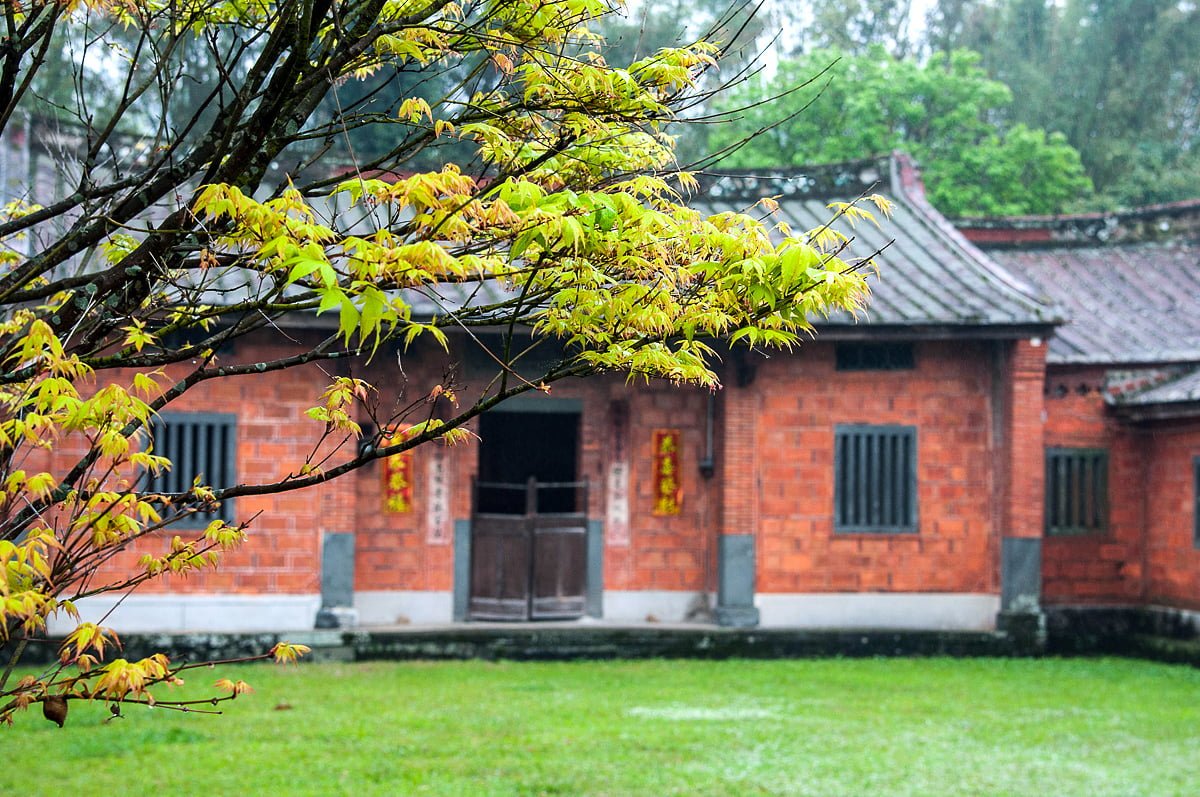
When multiple families reside within a single complex, diagnose each unit using its private door as host and shared communal thoroughfares as function. The proximity, curvature, and vitality of these connecting paths indicate whether incoming Qi fosters harmony or friction.
Rule 17: Partitioned Living Quarters
When a single home establishes an interior apartment with an independent door, evaluate that suite via its own door. However, if the entire building remains interconnected internally, treat it as a single unified residence rather than two distinct dwellings.
Rule 18: Imprisoned Stars Escaping Imprisonment
When the Facing Star flies into the central palace (entering “Imprisonment”), why do multi-courtyard dwellings (with 2, 4, 6, or 8 sections) often avoid actual imprisonment? Because open central courtyards function as Ming Tang where open space acts as Water; when the facing star enters water, it cannot remain trapped. In solid odd-numbered compounds where the center is enclosed by roofed rooms, imprisonment takes full effect—unless active water flows outside along the facing facade.
Rule 19: Commercial Shops
When analyzing retail storefronts, the entrance door is paramount, followed by the cash register counter and the financial shrine. All must harmonize with timely, prosperous stars. If the entrance is auspicious but the register or shrine sits in an adverse sector, discord among partners or unexpected roadblocks will emerge, since all incoming prosperity is received through the front portal.
Rule 20: Elevated Structures in Auspicious and Adverse Sectors
If an auspicious sector features elevated topography or tall adjacent buildings, visiting annual and monthly stars that support it amplify fortune, whereas stars that exhaust it trigger loss. Conversely, if an inauspicious sector features high ground, visiting stars that counteract or exhaust the negative energy bring relief. This governs the mountain dragon placements (Sitting Star positions).
Rule 21: Obstruction by Trees and Bamboo
Dense trees overshadowing a prosperous sector are unfavorable, whereas light bamboo groves pose no impediment because bamboo permits Qi circulation. In dying or declining sectors, neither dense trees nor bamboo should be present.
Rule 22: Affliction in the Declining Star 1 White Sector
If the declining Star 1 White sector of a residence is struck directly by neighboring sharp roof ridges, hazards of poisoning or severe health afflictions arise, worsening if gargoyle or animal-shaped ornaments face the home.
Rule 23: Wealth, Progeny, and Scholarly Achievement
Prosperity in wealth stems from facing water or flanking waterways, noting where timely Qi gathers and timing it by the Grand Duke (Tai Sui). Scholarly talent and fame arise from sectors housing Star 1 White or Star 4 Green, observed via elegant mountain peaks, road confluences, or meandering watercourses. Progeny and health derive from the sitting sector and the mountain star of the current Period.
Rule 24: Annual Declining Stars Overlapping and Prosperous Stars at the Facing
When a dwelling’s declining facing star is doubled by an identical annual visiting star, vitality and health within the household suffer. If an untimely home lacking prosperous facing stars encounters an annual prosperous star arriving at the front, unexpected friction or misfortune can erupt; the same principle applies to Yin Zhai.
Rule 25: Apparitions and Disturbed Energy
When elevated landforms or sharp rooflines loom outside a dying, stagnant sector without being visible from inside (known as “Hidden Peeking”), waning house Qi breeds unrest: Yin trigrams manifest apparitions, Yang trigrams manifest strange phenomena, and combined trigrams induce erratic spiritual disturbances, triggered when Grand Duke, monthly, or daily stars arrive. In early stages they appear as fleeting shadows, eventually escalating into physical disturbances. Dead trees aiming toward the home produce similar afflictions during declining periods.
Rule 26: Influence of Roadways (Road Qi)
Roadways channel the ingress of Qi; vitality and decay follow road traffic. Distant roads exert subtle effects, though straight piercing roadways (Sha Qi) remain harmful for both living and ancestral sites. Roads running immediately adjacent to or within a complex exert direct influence: interior corridors should align with auspicious facing stars, while exterior roads require analyzing where bends begin and terminate. Gentle curves introduce active Qi, whereas straight crossings arrest flow. As the classic text states: “Sour wine poured into curd ruins the drink,” illustrating the peril of an auspicious house paired with an adverse roadway.
Rule 27: Water Wells
Wells provide continuous living spring water whose luminous vapor concentrates upward. Situated in the prosperous sector of the Water Dragon, a well fosters intellect and artistic accomplishment; placed in declining or hostile sectors, it unleashes severe misfortune.
Rule 28: Pagodas and Towers
A tall, elegant pagoda acts as a symbolic writing brush (“Wen Bi”). Positioned in sectors governed by 1-4 or 1-6 star combinations, it brings academic honors during timely periods and cultural prestige even when out of season. Positioned in 7-9 or 2-5 sectors, however, it incites calamity and fire hazards.
Rule 29: Bridges
Bridges positioned in vital, prosperous directions confer protection and blessing; located in declining sectors, they bring misfortune. Heavy stone bridges carry immense energetic force, whereas wooden bridges have a gentler effect.
Rule 30: Field Corners and Lot Boundaries
Boundary angles that curve gently to embrace a home are benevolent; sharp, reverse-curving angles aiming outward pierce the structure with hostile Sha Qi.
Mastering these “Thirty Rules of Yang Zhai” unlocks practical environmental diagnosis in classical Feng Shui, allowing practitioners to interpret real-world architectural layouts with nuanced clarity.
Support Independent Perspectives & In-Depth Insights
Every thoughtful analysis and candid critique comes from our dedication to truth and quality. We choose not to follow sensational algorithms or clickbait headlines.
Sustaining independent research requires reader support. Make a one-time or monthly contribution, securely processed by Google.
Payments secured by Google · Manage or cancel anytime in your Google Account


Comments