
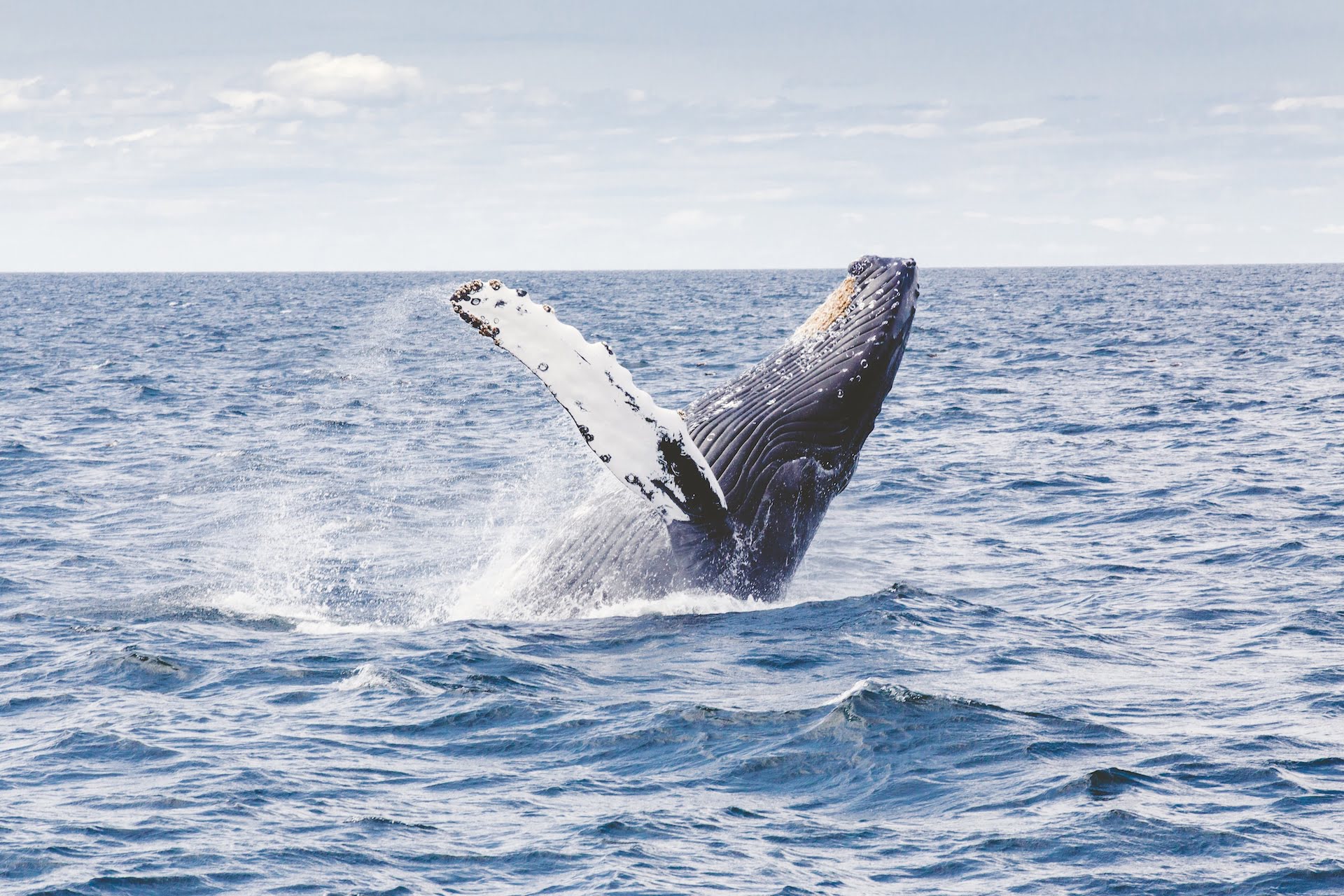
Taiwan is a quintessential island environment embraced entirely by the sea. Situated along the boundary between tropical and subtropical climatic zones, it faces the Taiwan Strait to the west, the Bashi Channel to the south, and borders the abyssal trenches of the boundless Pacific Ocean to the east.
Just over twenty kilometers off Taiwan’s eastern coastline flows the “Kuroshio Current”, the second largest warm ocean current in the world. Rushing from south to north, the Kuroshio sweeps up nutrient-rich deep-sea salts, interacting dynamically with seasonal monsoons to generate vigorous upwelling systems and thriving oceanic food webs. Naturally, the iconic marine mammals celebrated across human folklore and history—whales and dolphins—have made these azure depths their ancestral home for generations.
The Evolution of Marine Tourism and Cetacean Conservation in Taiwan
Transitioning from Commercial Whaling to Marine Ecotourism
Before international conventions designated whales and dolphins as protected species, coastal fishing hamlets across Minnan and southwestern Taiwan commonly consumed dolphin meat, colloquially referring to dolphins as “ocean pigs” due to anatomical similarities between dolphin and swine viscera.
Between 1913 and 1981, commercial whaling vessels operated out of Nanwan in Kenting, introducing motorized industrial whaling techniques during the Japanese colonial era. Decades of intensive hunting brought coastal cetacean populations across the western Pacific to the brink of local extinction. At its zenith, a single two-week whaling voyage could net a captain hundreds of thousands of New Taiwan Dollars.
As global ecological awareness took hold, nations enacted sweeping commercial whaling bans. In 1990, Taiwan officially placed all cetaceans under legal protection as endangered wildlife, putting an end to lawful whaling. Seizing this opportunity, the local marine fishing industry embarked on a profound transformation: transitioning from extractive “catch-and-sell” exploitation into sustainable, educational “marine leisure and ecotourism”.
Modern commercial whale watching traces its roots to 1955 along the coast of California, initially offering public cruises to watch migrating humpback and gray whales before booming globally in the 1980s. While Taiwan’s first commercial whale watching boat set sail in 1997, the island’s steep continental drop-offs and proximity to deep waters allowed it to develop an internationally renowned whale-watching sector within little more than a decade.
Global Commercial Whaling Controversies and The Cove
While cetacean preservation is now the global norm, a few nations continue whaling practices under the guise of cultural heritage or scientific research. Notably, countries such as Japan, Norway, and Iceland maintain commercial or scientific quotas. Japan’s extensive pelagic operations in Antarctic international waters sparked stern reprimands from international courts and conservation watchdogs.
In 2009, the documentary film “The Cove”, which exposed the drive-hunting of dolphins in Taiji, Wakayama Prefecture, sent shockwaves through international public opinion and won the Academy Award for Best Documentary Feature. The film prompted global scrutiny of marine mammal captivity and hunting ethics, further reinforcing Taiwan’s commitment to humane, animal-friendly ecotourism.

Major Whale Watching Ports and Friendly Ecotourism Certifications
Since the introduction of the two-day weekend in 1996, government bodies and civic groups have vigorously promoted ocean recreation. Today, whale-watching excursions in Taiwan are concentrated along the East Coast:
| County / Region | Major Departure Ports | Regional Highlights & Coastal Scenery |
|---|---|---|
| Yilan County | Wushi Port, Nanfang’ao Port | Combines circumnavigating and landing on Guishan (Turtle) Island with the ethereal “Milk Sea” volcanic waters. Easily accessible from Taipei. |
| Hualien County | Hualien Port, Shitiping Port | Flanked by the soaring Qingshui Cliff and deep submarine trenches, boasting a cetacean sighting rate over 90%. |
| Taitung County | Fugang Port, Chenggong Port | Centered directly in the Kuroshio main stem; possesses Taiwan’s highest cetacean biodiversity, with frequent sightings of large whales. |
To champion ocean sustainability, Taiwan’s Fisheries Agency and the Taiwan Cetacean Society established the “Friendly Whale Watching Mark”. Vessels undergo rigorous accreditation covering speed-reduction zones, standoff distances, zero marine littering, and professional naturalist commentary, ensuring visitor enjoyment while minimizing disturbance to wildlife.
Cetacean Biodiversity Around Taiwanese Waters
Worldwide, approximately 80 to 90 cetacean species have been recorded. Remarkably, small Taiwan’s surrounding seas—nourished by the Kuroshio and rugged seabed bathymetry—have documented 31 cetacean species, representing over a third of the world’s total. In the waters off Taitung alone, more than 20 distinct species have been sighted.
While the blue whale (Balaenoptera musculus), the largest mammal on Earth, is exceptionally rare in modern coastal waters, historical archives record that in 1919 fishermen encountered a colossal 26-meter blue whale off Eluanbi in Hengchun. In recent years, continuous monitoring has revealed an increasing frequency of humpback whale and sperm whale encounters during spring and summer months.
9 Iconic Cetacean Species Observed Along Taiwan’s Coast
During voyages along the East Coast, visitors are most likely to encounter the following 9 species:
-
Risso’s Dolphin
- Local Dialect Name: “Monk’s Head”, “Big Head”
- Morphology: Blunt, bulbous forehead without a prominent beak. Slate-gray coloration that develops crisscrossing white scars from squid suckers and conspecific teeth as they age; older individuals appear almost pure white.
- Ecology: Length around 3.8 meters, weighing up to 500 kilograms. Moves with composed, gentle grace and tends to maintain a respectful distance from boats.
-
Spinner Dolphin
- Local Dialect Name: “Sharp-Beak”
- Morphology: Slender elongated beak with a sharp three-part color pattern: dark charcoal cape, light gray flanks, and creamy white underbelly.
- Ecology: Length around 2.1 meters, weighing roughly 75 kilograms. Spirited and playful, famed for leaping high above the water and spinning multiple rotations along its longitudinal axis—the most beloved aerial acrobat of whale-watching tours.
-
Pantropical Spotted Dolphin
- Local Dialect Name: “Flower Fawn”
- Morphology: Distinctive sickle-shaped dorsal fin with a white-tipped beak. Mature individuals develop dense dark and pale spotting across back and belly.
- Ecology: Length around 2.4 meters, weighing approximately 115 kilograms. Rapid swimmers that love riding vessel bow waves in tight, coordinated groups.
-
Fraser’s Dolphin
- Morphology: Stubby beak with notably small flippers and dorsal fin; features a prominent dark lateral stripe and a robust, muscular build.
- Ecology: Length around 2.6 meters, weighing roughly 210 kilograms. Moves in dense pods numbering in the hundreds, churning up breathtaking whitecaps when surfacing in unison.
-
Common Bottlenose Dolphin
- Local Dialect Name: “Big White Belly”
- Morphology: Short, robust bottle-shaped snout, slate-gray back, and pale pinkish-white belly.
- Ecology: Length around 3.9 meters, weighing up to 650 kilograms. Exceptionally intelligent and inquisitive, often cruising alongside boats, rolling over to inspect passengers.
-
False Killer Whale
- Morphology: Slender, uniformly glossy black body with a tapered, rounded head and a distinct S-shaped bend along the central flipper edge.
- Ecology: Length up to 6 meters, weighing roughly 2.2 metric tons. Highly agile pack hunters that frequently approach vessels and breach vigorously.
-
Short-finned Pilot Whale
- Morphology: Bulbous, melon-like head with a thick, low, forward-swept dorsal fin; dark slate to black coloration.
- Ecology: Length around 6.5 meters, weighing up to 4 metric tons. Organizes into tight-knit matrilineal pods; calm and steady, frequently observed logging and spyhopping at the surface.
-
Killer Whale (Orca)
- Morphology: Striking contrast of jet-black and pristine white, conspicuous oval white eye-patches, and tall male dorsal fins reaching up to 1.8 meters.
- Ecology: Length up to 9.8 meters, weighing up to 9 metric tons. Apex predators possessing intricate vocal repertoires and matrilineal cultures. Entirely non-aggressive toward humans in the wild, making majestic appearances in deep offshore waters.
-
Sperm Whale
- Morphology: Colossal rectangular forehead comprising one-third of total body length; blowhole positioned forward and to the left; raises a massive triangular fluke high in the air when diving.
- Ecology: Length up to 18 meters, weighing up to 50 metric tons. The ocean’s supreme deep-diving champion, plunging deeper than 1,000 meters to hunt giant squid; the quintessential deep-water giant of Taiwan’s East Coast.
Essential Practical Advice for Whale Watching Excursions
A standard whale-watching cruise lasts between 2 and 2.5 hours, generally operating 10 to 20 kilometers offshore. To ensure your journey is safe, educational, and comfortable:
Recommended Reading on Cetacean Ecology
For travelers wishing to deepen their understanding of Taiwan’s ocean life, we highly recommend the Field Guide to Whales and Dolphins (published with the Taiwan Cetacean Society) and the evocative marine literature of author Liao Hung-chi. Their works illuminate the rich living tapestry of the Kuroshio corridor and serve as inspiring reading before setting sail.
Further Reading
Support Independent Perspectives & In-Depth Insights
Every thoughtful analysis and candid critique comes from our dedication to truth and quality. We choose not to follow sensational algorithms or clickbait headlines.
Sustaining independent research requires reader support. Make a one-time or monthly contribution, securely processed by Google.
Payments secured by Google · Manage or cancel anytime in your Google Account



Comments