
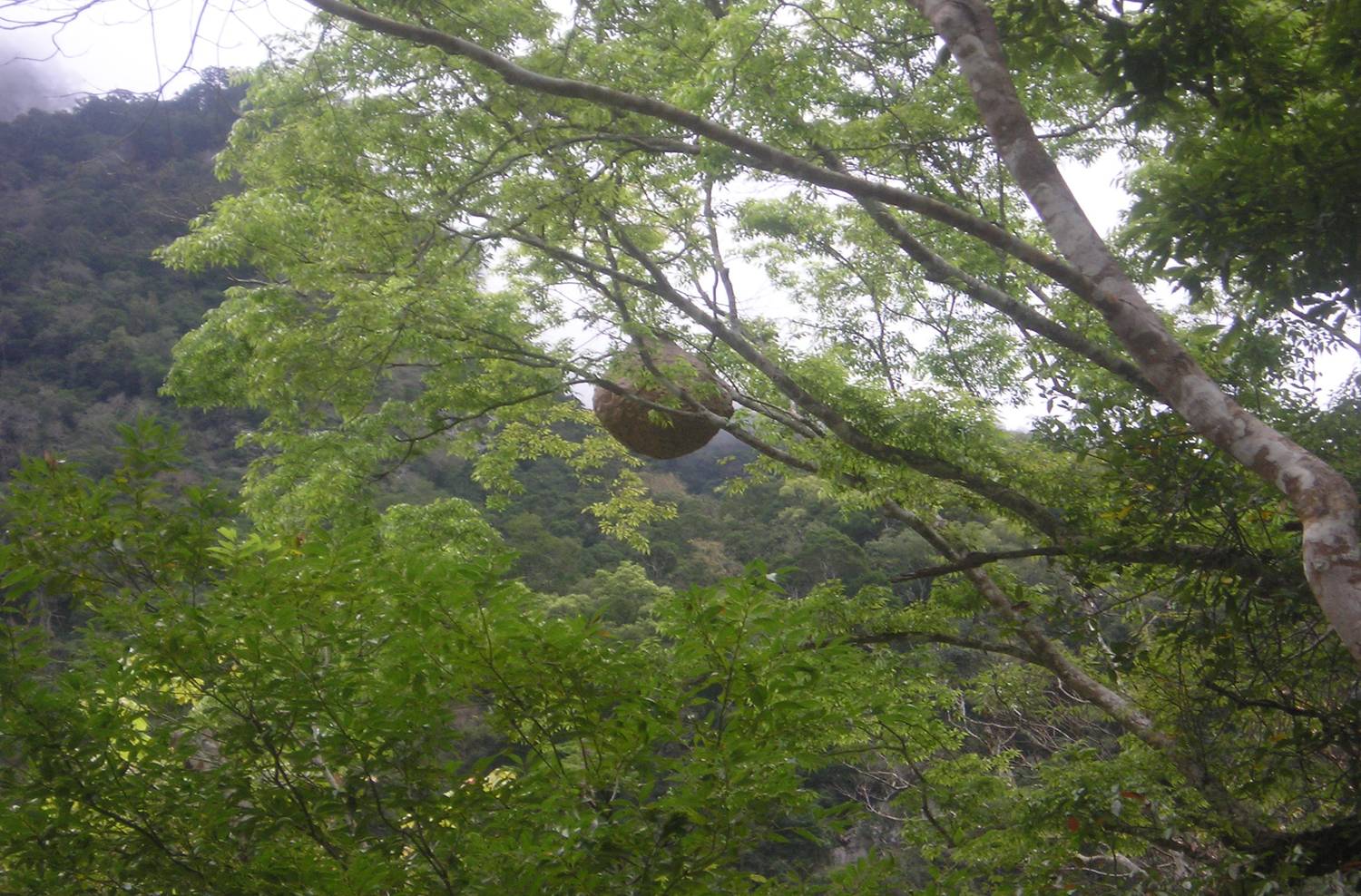
Every year from June to October, wild hornets become active across various regions. As the weather grows hotter, irritable hornets are even more prone to aggressive behavior. Rangers from the Nan’an Management Station under Yushan National Park discovered several large hornet nests hanging high in the treetops along the Walami Trail during patrol, urging visitors planning to hike the trail to take precautions.
The Yushan National Park Headquarters stated: “From July to October, wild hornets are frequently active along the Walami Trail in our eastern park area. When hiking the trail, if you encounter scout hornets patrolling nearby, do not wave or swat at them. Pass through quickly to avoid provoking a swarm attack, and always hike with companions. In the event of an incident, notify the fire and rescue department immediately.”
Conservation rangers at the Nan’an Management Station in the eastern section of Yushan National Park discovered black-tailed hornet nests above Shanfeng Bridge No. 1 near the trailhead and above Huangma Bridge No. 1 in the middle section. According to rangers, visual estimates indicated the nests were roughly one meter in diameter, classifying them as large nests posing significant risks.
The park administration advises hikers in the wild (such as along the Walami Trail) to heed the following five tips to prevent hornet attacks:
- Strong fragrances from perfumes or scented items easily attract wild hornets.
- Discarded sweets, fruit peels, and beverage cans attract foraging hornets.
- Wear long-sleeved shirts and long pants; brightly colored clothing can easily draw hornet attention.
- If a hornet circles overhead, move away calmly and carefully; do not swat or strike at it, as sudden movements can trigger an attack.
- If you spot a hornet nest, stay clear of danger; leave quietly and do not linger.
Generally speaking, it is very rare for a hornet nest to directly block the middle of a trail. Experienced hikers know that provoking hornets while completely unprepared does not happen easily. When you encounter a scout hornet, you should recognize that you have stepped into the defensive perimeter of a nest. At this point, scan your surroundings to spot the nest and quickly move away. If the nest is not visible, pay close attention to whether more scout hornets appear as you withdraw—an increase indicates you may be heading closer to the nest.
If you are interested in the behavioral biology of hornets and how to escape attacks, refer to the article Hornet Attacks: Dangerous Autumn Tigers — How to Avoid Hornet Stings and First Aid for Hornet Venom [1], which explores hornet physiology and aggressive behavior in depth.
References
- Hornet Attacks: Dangerous Autumn Tigers! How to Avoid Stings and First Aid Guide 🐝
- Encountering Hornets in the Mountains Is Normal; Meeting One in a Hot Spring Is Awkward
Support Independent Perspectives & In-Depth Insights
Every thoughtful analysis and candid critique comes from our dedication to truth and quality. We choose not to follow sensational algorithms or clickbait headlines.
Sustaining independent research requires reader support. Make a one-time or monthly contribution, securely processed by Google.
Payments secured by Google · Manage or cancel anytime in your Google Account


Comments