
If you are planning to step into the world of rock climbing, mastering foundational concepts early on will provide clear direction, sharpen your movement skills, and inspire your progression.
Free climbing forms the bedrock of all climbing disciplines. In broad terms, it can be defined as:
Relying entirely on a climber’s own physical effort across natural or artificial terrain using only hands and feet, without pulling on ropes, nuts, bolts, or pitons designed to catch falls.
Cracks, caves, overhangs, and arêtes combine into endless variations on the rock face, and this rich diversity is precisely what makes climbing such a captivating physical and mental challenge.
Every route is an exercise in psychological and physiological problem solving. Because every climb differs from the last, discovering what movements work, understanding what kind of route you are on, and finding personal solutions make this “dance on rock” continuously fresh and engaging.
Climbing, however, is far from haphazard improvisation. Several foundational principles apply to every climber:
- Smooth, synchronized coordination between hands and feet produces fluid movement.
- Balance, agility, and flexibility counteract gravity far more effectively than brute force.
- Endurance is consistently more critical than raw muscular power.
- Sustained power relies on placing your body weight firmly onto your feet rather than constantly hauling yourself upward with your arms. The ultimate goal is to complete the climb using the minimum amount of energy necessary.
- Finally, remaining calm and relaxed conserves immense physical reserves. Much of climbing is intuitive, and movement unfolds naturally when the mind is relaxed.
Even so, climbing demands technique that must be studied, practiced, and refined before it becomes second nature.
Here, we introduce several foundational concepts for beginners, focusing on warm-ups and bouldering.
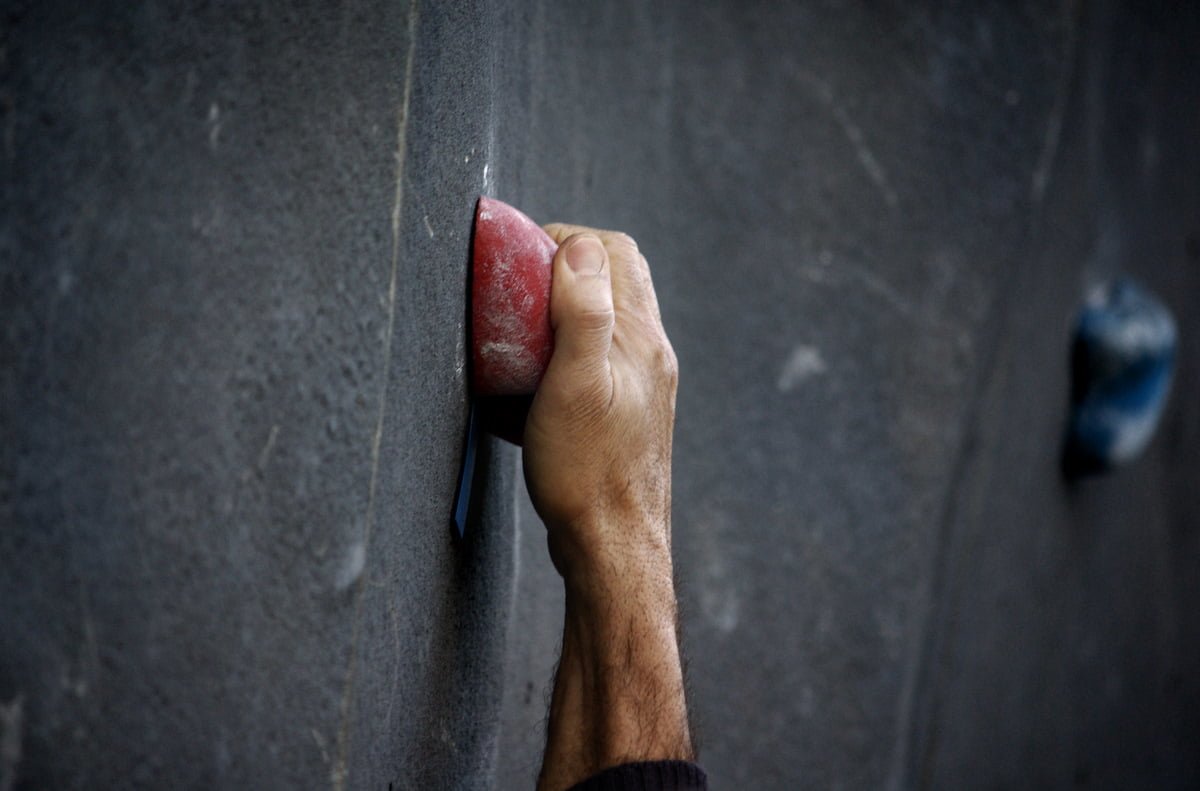 Climb (Photography by efrencd)
The Warm-Up
Before getting on the wall, warming up thoroughly is essential; skipping this step drastically increases the risk of injury.
For instance, if you have a doorway pull-up bar at home and casually bust out several reps every time you walk past, you may eventually suffer muscle or tendon strains simply because your tissues were cold and unconditioned.
While it is impossible to calculate an exact warmup formula that guarantees grade gains, warming up unequivocally decreases the danger of muscle strains or severe tears. Never skip it—it is a mandatory prerequisite for any session or training routine.
Although routines vary among athletes, discovering the sequence that leaves your body feeling loose and responsive is the best approach.
A proven method begins with 10–15 minutes of light jogging. If a running track is unavailable, jogging in place while incorporating high knees, jumps, and butt kicks works well.
Spend the first 30 minutes moving actively through easy, progressive movement, especially when climbing with full gear.
Another common pitfall during climbing sessions is the start-and-stop rhythm. Rigging ropes and building anchors takes time, allowing the body to cool down. Furthermore, belaying a lead climber expends substantial mental focus while remaining physically still, making you susceptible to chilling. Before stepping back onto the rock, perform active mobility drills to keep muscle temperatures elevated.
Bouldering
Bouldering is an unroped, accessible climbing discipline practiced close to the ground. Climbers tackle boulders or low artificial walls, benefiting from the ease of dropping safely back down to crash pads whenever needed. Even so, safeguarding against ankle injuries is vital, so climbing with an attentive spotter behind you is strongly recommended.
With just a pair of climbing shoes and chalk, you can immediately dive into the joy of bouldering. Look for boulders featuring varied cracks, crimps, slopers, jugs, ledges, and pockets—the exact features you will encounter on full-length sport or trad pitches. Many veterans argue that an hour of focused bouldering teaches as much practical movement intuition as a 100-foot pitch of roped climbing.
What key lessons does bouldering impart?
First, balance is the most decisive element of climbing technique, and bouldering hones balance rapidly. The best way to train it is to pay obsessive attention to your feet. Do not hesitate to commit boldly to dynamic or delicate moves—confidence unlocks solid execution.
Second, bouldering instills fundamental movement economy, teaching you how to choose optimal handholds and footholds. You quickly grasp the difference between arm strength and leg drive: the more weight you transfer onto your skeletal structure and legs, the longer your upper body avoids fatigue.
When bouldering, deliberately practice precise foot placement, selecting between inside edges, outside edges, or smearing based on foothold geometry. Leaning slightly away from the rock increases normal force and friction against friction holds. A classic beginner error is hugging the wall too tightly, which displaces the center of gravity outward away from the feet and forces the arms to burn unnecessary energy.
Lastly, sustained stamina allows you to maintain clean form throughout an entire sequence—a vital athletic trait for any climber. Because boulder problems are short, endurance is easily overlooked. To train stamina on boulder terrain, try linking multiple problems, practicing down-climbing, or traversing horizontally across the wall in continuous circuits without resting.
(References: John Long, “How to Rock Climb!,” pp. 1–14; “Rock Climbing Basics,” pp. 111–117; and Good Weather Fishing.)
Support Independent Perspectives & In-Depth Insights
Every thoughtful analysis and candid critique comes from our dedication to truth and quality. We choose not to follow sensational algorithms or clickbait headlines.
Sustaining independent research requires reader support. Make a one-time or monthly contribution, securely processed by Google.
Payments secured by Google · Manage or cancel anytime in your Google Account



Comments