
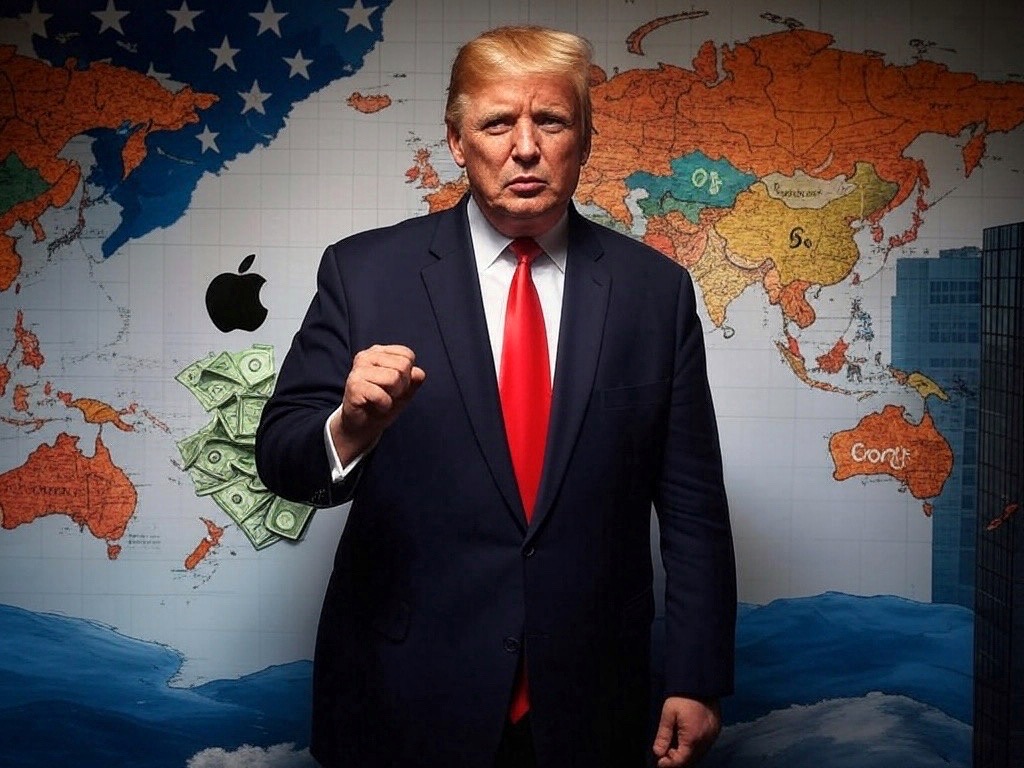
United States trade and tariff policy toward Taiwan has undergone profound transformations across changing global trade dynamics—transitioning from the stable, low-tariff World Trade Organization (WTO) framework to the aggressive “Reciprocal Tariff” policy enacted in 2025.
For readers following US-Taiwan trade relations, tariff history, reciprocal tariff algorithms, and industry impacts, this analysis delivers an in-depth dissection of historical contexts, the latest algorithmic formulas, and ongoing bilateral negotiations.
Historical Context: From WTO Most-Favored-Nation Status to Rising Protectionism
Before examining current tariffs, understanding the evolution of the multilateral trading system is essential.
Following Taiwan’s accession to the WTO in 2002, goods exported to the U.S. were largely subject to Most-Favored-Nation (MFN) tariff schedules, averaging between 2% and 4% across categories.
In particular, electronic components, semiconductors, and high-tech hardware enjoyed zero or near-zero tariffs under the Information Technology Agreement (ITA). This predictability spurred rapid bilateral trade growth, establishing Taiwan as a cornerstone of the American technology hardware supply chain.
While the Trump administration introduced section 232 steel and aluminum tariffs (25% and 10% respectively) in 2018, their overall direct impact on Taiwan remained modest. However, they set the precedent for unilateral executive tariffs that resurfaced with far greater force in 2025.
The 2025 Reciprocal Tariff Shock: How 32% Was Formulated
Upon returning to the White House in 2025, President Trump enacted sweeping “Reciprocal Tariff” executive orders targeting over 60 trading partners with large bilateral surpluses against the United States, including Taiwan (which registered a $73.92 billion goods surplus with the U.S. in 2024, ranking sixth globally).
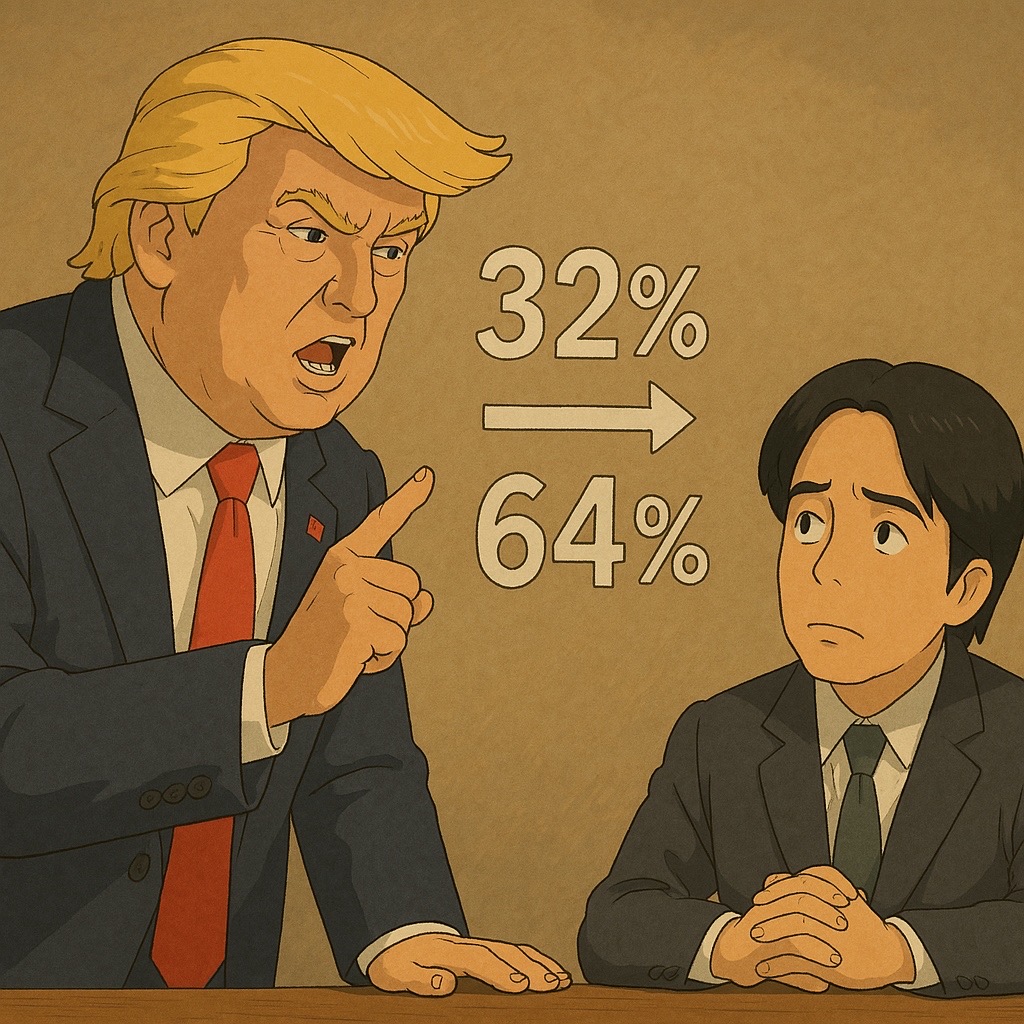
On April 2, 2025, the Office of the U.S. Trade Representative announced a 32% tariff rate on Taiwan, dramatically higher than the baseline 10% rate levied on balanced partners.
The calculation was derived from an algebraic formula factoring trade imbalances, price elasticity, and pass-through rates:
Tariff Rate = ((Total Exports - Total Imports) / (Import Price Elasticity * Tariff Pass-Through Rate * Total Imports)) / 2
Taking 2024 bilateral data as the empirical baseline (Taiwan exports to US: $116.264B; US exports to Taiwan: $42.344B; surplus: $73.92B), the modeled elasticity parameters yielded approximately 31.8%, rounded by the administration to 32%.
This punitive rate exerted immediate cost pressure across Taiwanese manufacturers, particularly traditional industrial producers with low operating profit margins.
The August 2025 Breakthrough: Lowering Tariffs from 32% to 20%
Facing the threat of 32% duties, Taiwanese diplomatic and economic delegations engaged in intense bilateral negotiations in Washington. On July 31, 2025, the White House announced that tariffs on Taiwanese goods would be adjusted downward from 32% to 20% as a “provisional tariff,” taking effect on August 7.
While 20% remains higher than the 15% rate negotiated by Japan, South Korea, and the European Union, it provided critical breathing room for core manufacturing supply chains. President Lai Ching-te stressed that 20% does not represent a final settlement, with further technical negotiations underway to seek additional parity.
Impacted Industries: Vulnerable Sectors vs. Annex II Exemptions
The 20% provisional tariff heavily impacts traditional industrial exports, automotive subcomponents, industrial machinery, fasteners, and plumbing hardware. Operating on razor-thin net margins, these sectors cannot easily absorb 20% import duties without losing U.S. market share to competitors in Southeast Asia or Mexico.
Conversely, advanced semiconductors, enterprise AI servers, and designated critical electronics were shielded from the 20% duty via placement on the U.S. Annex II exemption list.
Why were semiconductors spared? The U.S. technology sector depends existential on Taiwanese advanced foundry capacity. Disrupting this link would trigger domestic inflation and stall AI infrastructure rollouts. Nevertheless, prospective risks remain, as the U.S. administration could invoke Section 232 national security provisions to target microelectronics in future negotiation rounds.
Chronology and Future Outlook
A chronological review illustrates the unprecedented volatility of bilateral trade tariffs:
- 1990s–2010s: Low MFN tariffs (2–4%), zero tariffs on semiconductors and ITA tech products.
- 2018–2020: Steel (25%) and aluminum (10%) tariffs; limited systemic impact on tech exports.
- Early 2025: Proposed baseline global tariffs of 10%.
- April 2025: 32% reciprocal tariff announced for Taiwan based on trade deficit formulas.
- August 2025: Provisional tariff lowered to 20% pending continued bilateral discussions.
Looking ahead, Taiwan must continue proactive diplomatic engagement to achieve tariff parity while actively diversifying industrial production footprints to mitigate systemic exposure to unilateral trade measures.
Support Independent Perspectives & In-Depth Insights
Every thoughtful analysis and candid critique comes from our dedication to truth and quality. We choose not to follow sensational algorithms or clickbait headlines.
Sustaining independent research requires reader support. Make a one-time or monthly contribution, securely processed by Google.
Payments secured by Google · Manage or cancel anytime in your Google Account


Comments