
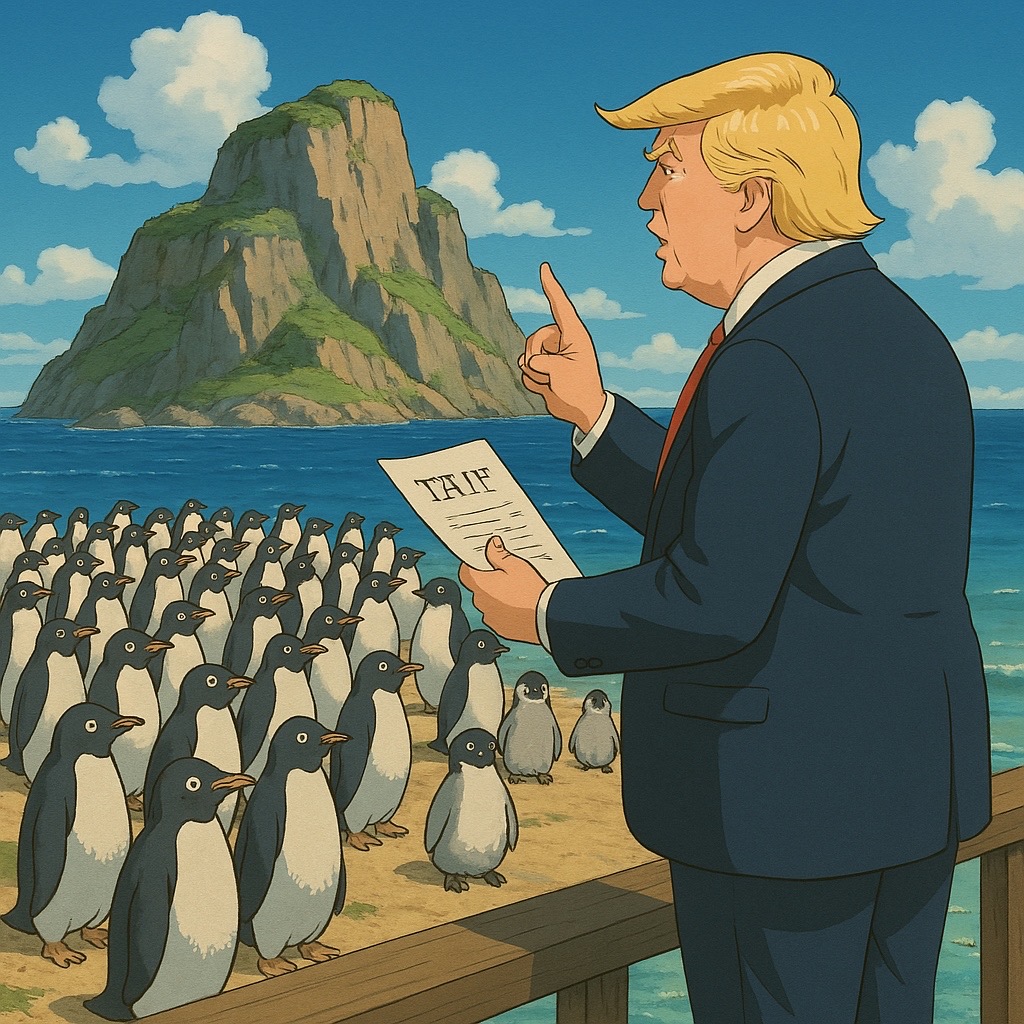
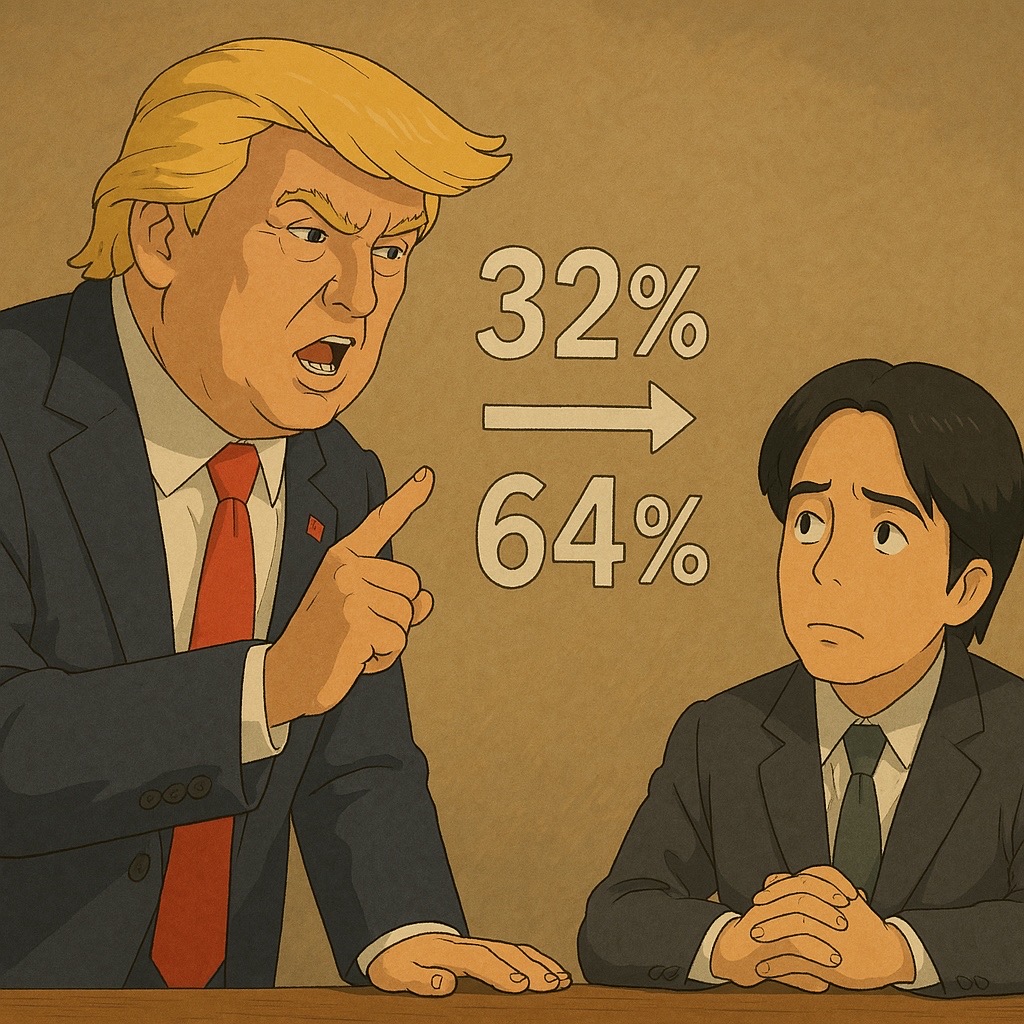
Donald Trump’s aggressive tariff policies—epitomized by the so-called “Trump Formula” that levies steep duties on imports, including proposed 32% or higher rates on Taiwanese goods—have often been framed by supporters as a brilliant opening gambit to smash foreign trade barriers and ultimately shepherd the globe toward reciprocal zero-tariff trade.
However, an objective examination of their implementation context, official rhetoric, and real-world macroeconomic outcomes reveals that their primary purpose is undeniably the entrenchment of protectionism, rather than the liberalization of global trade.
The Core Mandate of Protectionism
Throughout his 2016 campaign, initial presidency, and subsequent political discourse, Trump consistently championed “America First.” His doctrine advocates using high tariffs as protective bulwarks for domestic industries—particularly traditional manufacturing and steel—to counter the flight of domestic jobs and chronic trade imbalances.
In 2018, Trump enacted 25% tariffs on steel and 10% on aluminum, followed by successive waves of tariffs targeting more than $360 billion worth of Chinese imports. The explicit goal was to curb reliance on foreign products while shielding domestic champions such as U.S. Steel and automakers like Ford.
Trump famously declared on Twitter (now X) that “tariffs will make our steel industry strong again, which is vital for national security.” Such statements demonstrate that policy architecture was designed to fortify trade barriers, not dismantle them.
Trade Deficits and Economic Nationalism
Trump’s tariff drive is deeply intertwined with an obsession over bilateral trade deficits.
In 2018, the United States ran an overall trade deficit of roughly $617 billion, with the gap against mainland China reaching $375 billion. Operating on zero-sum merchant logic, Trump viewed imports as an inherent drain on national wealth and weaponized tariffs to curtail them. For instance, punitive duties contributed to a 16% decline (approx. $90 billion) in Chinese imports into the U.S. in 2019.
This unilateralist posture reflects pure economic nationalism: an effort to turn back the tide of globalization by sheltering domestic production behind tariff walls, rather than negotiating universal tariff reductions across multilateral trading partners.
Contrast with Systematic Barrier Removal
If the genuine objective were lowering global trade barriers, policy maneuvers would have centered on multilateral agreements and expanding Free Trade Agreements (FTAs) to secure reciprocal concessions. The historical record indicates the exact opposite:
- Withdrawing from TPP: In 2017, Trump abruptly exited the Trans-Pacific Partnership, an accord explicitly negotiated to eliminate tariffs and harmonize trade across twelve Pacific Rim nations.
- Reworking NAFTA: He renegotiated the North American Free Trade Agreement into the USMCA, incorporating stringent protectionist clauses, notably enhanced rules-of-origin quotas for the American auto sector.
- Unilateral Pressure on Allies: Imposing punitive tariffs on close partners including the European Union and Canada demonstrated a strategy of coerced concessions, not a collaborative dismantling of systemic barriers.
These actions reveal that tariffs were wielded as bilateral leverage to safeguard American corporate interests, rather than as a vehicle for holistic trade liberalization.
The Counter-Argument: Tariffs as Negotiating Leverage
Some defenders argue that extreme tariffs served a secondary strategic objective: coercing trading partners into cutting tariffs, thereby fostering free trade through aggressive brinkmanship.
The U.S.-China Phase One Trade Agreement signed in early 2020 is often cited, wherein Beijing committed to purchasing an additional $200 billion in American goods. However, this outcome represented a transactional bilateral accommodation rather than systemic structural liberalization. Furthermore, Trump consistently lambasted the World Trade Organization (WTO) as inherently biased against the United States, confirming that his governing philosophy fundamentally rejected multilateral trade governance.
Economic Realities and Empirical Evidence
The empirical economic fallout underscores the protectionist nature of these policies:
- Domestic Impacts: While U.S. steel producers temporarily added roughly 8,500 jobs (2018-2019), overall manufacturing employment suffered due to elevated input costs across downstream industries.
- Retaliatory Escalation: China slapped 25% retaliatory tariffs on American soybeans, and the EU targeted Harley-Davidson and bourbon, sparking trade wars rather than reciprocal tariff relief.
- Consumer Cost Transfer: Empirical studies showed American importers and consumers absorbed nearly 80% of tariff costs, pushing retail prices up by 3% to 5% on impacted consumer goods.
These outcomes directly conflict with the core tenets of free trade—such as price efficiency and comparative advantage—illustrating that the policies were built to protect, not liberalize.
Conclusion
Donald Trump’s high-tariff strategy functions primarily as an instrument of industrial protectionism. Grounded in economic nationalism, it seeks to shield domestic producers and force bilateral concessions through unilateral barriers.
While tariffs are frequently deployed as negotiating leverage, that remains a tactical expedient rather than a commitment to open global markets. Dismantling worldwide trade barriers requires multilateral consensus and reciprocal reductions, not unilateral tariffs and retaliatory brinkmanship.
Support Independent Perspectives & In-Depth Insights
Every thoughtful analysis and candid critique comes from our dedication to truth and quality. We choose not to follow sensational algorithms or clickbait headlines.
Sustaining independent research requires reader support. Make a one-time or monthly contribution, securely processed by Google.
Payments secured by Google · Manage or cancel anytime in your Google Account


Comments