
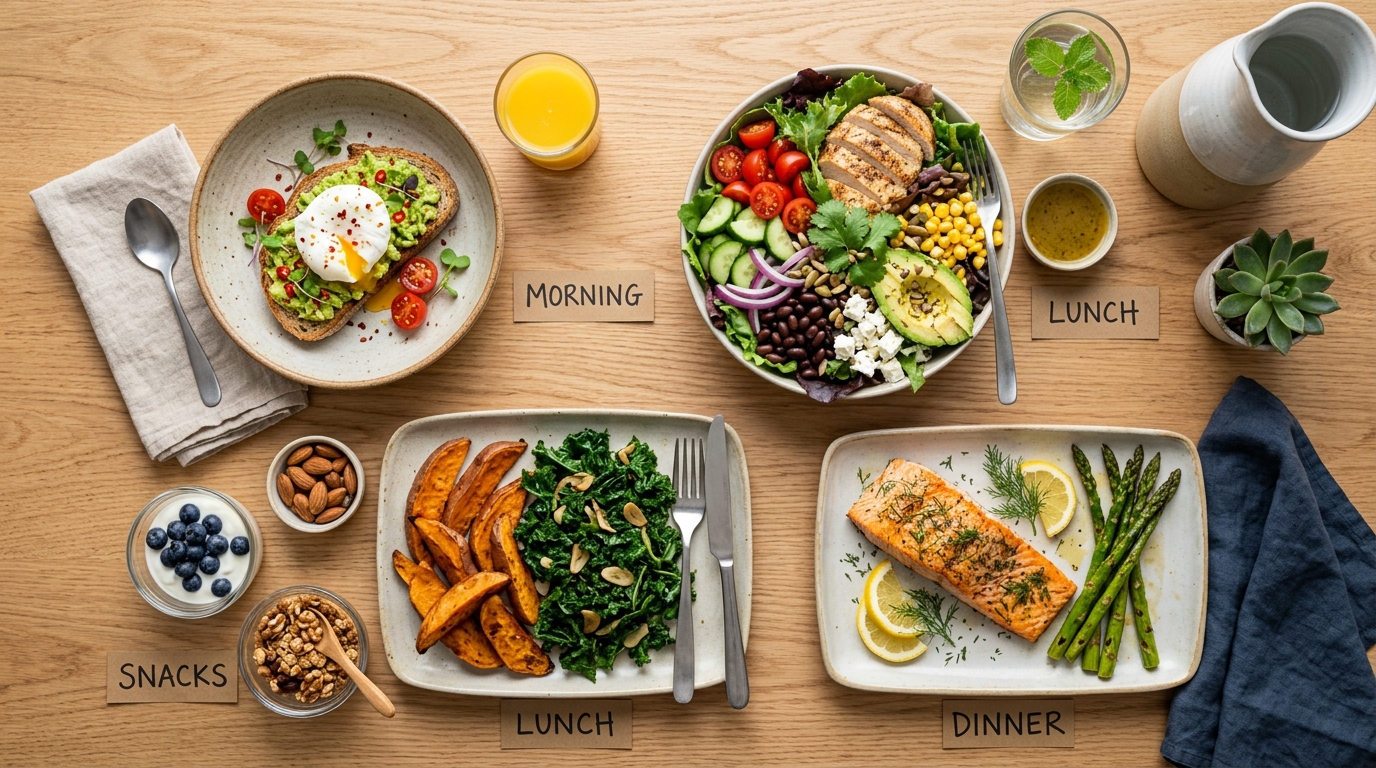
In the pursuit of healthy weight loss, many people fall into the extreme dieting myth of “the less you eat, the faster you lose weight,” only to regain the weight in the end due to a drop in metabolic rate, muscle loss, and a fierce rebound of hunger. Modern nutrition science and fat-loss research have long confirmed: beyond controlling total calorie intake to create a moderate “calorie deficit,” a precise and balanced “macronutrient distribution” is the core key to successful weight loss.
A truly sustainable fat-loss plan must be carried out on the premise of maintaining stable blood sugar, protecting lean body tissue (muscle mass), and providing adequate micronutrients.
Below is a scientifically formulated sample menu with a calorie range of roughly 1,250 to 1,300 kcal, featuring “three meals a day plus two healthy snacks.” This meal plan not only provides abundant daily energy and vitality but also, through highly satiating food combinations, helps you achieve your healthy slimming goals without going hungry.
Breakfast (about 265 kcal) — Kick-Starting an Energetic Morning
Morning is the switch that starts the day’s metabolism. After an overnight fast, quality protein and complex carbohydrates gently awaken insulin, providing the brain with a lasting supply of glucose for focus while preventing a crashing hunger pang at ten in the morning.
Menu Contents
- Whole-wheat toast: 1 slice (about 30g)
- Boiled egg: 1 (about 50g)
- Blanched spinach: 1 bowl (about 100g; drizzle a few drops of light soy sauce or lemon juice after removing from heat for extra flavor)
- Unsweetened high-fiber soy milk: 200cc
Nutritional Analysis
| Nutrient Item | Value and Composition Notes |
|---|---|
| Total Calories | About 265 kcal |
| Three Major Macronutrients | Carbohydrates 23.5g, Protein 17.0g, Fat 10.2g |
| Micronutrient Highlights | Spinach is rich in magnesium, iron, and vitamin K; non-GMO soy milk provides plant-based soy isoflavones and abundant calcium |
Mid-Morning Snack (about 119 kcal) — Replenishing Energy and Vitamins
Moderately supplementing with a low-glycemic-index (Low GI) snack between breakfast and lunch can effectively prevent blood sugar from plummeting before lunch, thereby greatly reducing the chance of overeating at lunch due to excessive hunger.
Menu Contents
- Plain roasted almonds: 10 (about 10g, unsalted, unseasoned)
- Fresh kiwi (green or golden, either is fine): 1 (about 100g)
Nutritional Analysis
| Nutrient Item | Value and Composition Notes |
|---|---|
| Total Calories | About 119 kcal |
| Three Major Macronutrients | Carbohydrates 15.6g, Protein 3.2g, Fat 5.4g |
| Micronutrient Highlights | Almonds are rich in antioxidant vitamin E and monounsaturated fatty acids; kiwi is rich in highly active vitamin C and water-soluble dietary fiber |
Lunch (about 390 kcal) — A High-Protein Satiating Meal
Lunch is the energy backbone for the peak period of work or activity during the day. This meal centers on ample “lean protein,” paired with complex carbohydrates rich in resistant starch and fiber, providing ample satiety while avoiding the afternoon drowsiness (food coma) caused by blood sugar swings.
Menu Contents
- Steamed or low-temperature sous-vide skinless chicken breast: 100g (seasoned with a little black pepper, sea salt, or rosemary)
- Cooked brown rice or multigrain rice: 50g (a little less than half a bowl)
- Stir-fried green bell pepper with mushrooms: 150g (stir-fried in 1 teaspoon, about 5g, of olive oil or canola oil)
- Blanched kale or broccoli: 100g
Nutritional Analysis
| Nutrient Item | Value and Composition Notes |
|---|---|
| Total Calories | About 390 kcal |
| Three Major Macronutrients | Carbohydrates 36.0g, Protein 38.5g, Fat 9.2g |
| Micronutrient Highlights | Green bell pepper provides abundant vitamin C; kale is rich in plant calcium and vitamin K; mushrooms contain the precious trace element selenium and polysaccharides |
Afternoon Snack (about 95 kcal) — A Refreshing Nutritional Boost
Three to four in the afternoon is often the danger zone when office workers most easily lose control and order bubble tea or eat high-calorie desserts. A serving of probiotic-rich yogurt paired with fresh berries satisfies sweet cravings while maintaining a steady mood and energy.
Menu Contents
- Unsweetened low-fat Greek-style yogurt: 100g
- Fresh blueberries: half a bowl (about 50g)
Nutritional Analysis
| Nutrient Item | Value and Composition Notes |
|---|---|
| Total Calories | About 95 kcal |
| Three Major Macronutrients | Carbohydrates 13.0g, Protein 8.5g, Fat 1.7g |
| Micronutrient Highlights | Yogurt provides quality casein and live probiotics; blueberries are rich in potent anthocyanins and antioxidant polyphenols |
Dinner (about 377 kcal) — A Light and Nutritious Evening Meal
Dinner is close to the rest and bedtime phase, when the body’s digestive function and calorie-burning rate gradually slow. The menu should center on “high-quality healthy fats and deep-sea protein,” greatly reduce refined starches, and pair with plenty of dark green high-fiber vegetables to avoid nighttime acid reflux and promote sleep and recovery.
Menu Contents
- Pan-seared or roasted wild salmon fillet: 120g (pan-seared with 1 teaspoon, about 5g, of olive oil, seasoned with black pepper and a little sea salt)
- Steamed yellow-flesh sweet potato: 100g (about the size of a fist; wash and eat with the skin for better fiber)
- Blanched spinach or bok choy: 150g (can be tossed with minced garlic and blanched)
Nutritional Analysis
| Nutrient Item | Value and Composition Notes |
|---|---|
| Total Calories | About 377 kcal |
| Three Major Macronutrients | Carbohydrates 27.0g, Protein 29.5g, Fat 16.5g |
| Micronutrient Highlights | Salmon is rich in the precious Omega-3 polyunsaturated fatty acids (EPA and DHA); sweet potato provides abundant beta-carotene (a precursor of vitamin A); dark green vegetables provide ample folate and iron |
Full-Day Total Nutritional Intake Analysis Table
Summing up the calories and macronutrients of all five meals of the day, the scientific distribution ratio presents an extremely balanced golden triangle for fat loss:
| Meal Item | Calories (kcal) | Carbohydrates (g) | Protein (g) | Fat (g) |
|---|---|---|---|---|
| Breakfast | 265 | 23.5 | 17.0 | 10.2 |
| Mid-Morning Snack | 119 | 15.6 | 3.2 | 5.4 |
| Lunch | 390 | 36.0 | 38.5 | 9.2 |
| Afternoon Snack | 95 | 13.0 | 8.5 | 1.7 |
| Dinner | 377 | 27.0 | 29.5 | 16.5 |
| Full-Day Total | About 1,246 kcal | About 115.1 g | About 96.7 g | About 43.0 g |
| Calorie Proportion | 100% | About 37% | About 31% | About 31% |
The Five Scientific Advantages of This Weight-Loss Diet
The reason this weight-loss menu can deliver stable and sustainable fat-loss results lies in its adherence to five core principles of clinical nutrition:
- Precise control of a calorie deficit, avoiding metabolic compensation: The full-day calories fall precisely in the range of about 1,246 to 1,300 kcal. For the average sedentary adult woman (total daily energy expenditure, TDEE, of about 1,600–1,800 kcal) or a lightly active man, this creates a moderate calorie deficit of about 400–500 kcal per day, without triggering low thyroid hormones or a stalling basal metabolic rate due to too few calories.
- Ample high-protein intake, protecting lean body tissue: The full-day protein total reaches 96.7 grams. Calculated for an adult weighing 60 kg, this is 1.6 grams of protein per kilogram of body weight, far above the 0.8g standard for basic survival. During the fat-loss period, it ensures the body prioritizes breaking down fat tissue while maintaining muscle mass and the elasticity of skin collagen.
- Quality high dietary fiber, building long-lasting satiety and a healthy gut: Through a diverse combination of spinach, kale, green bell pepper, mushrooms, whole wheat, brown rice, kiwi, and sweet potato, the full-day dietary fiber intake exceeds 25–30 grams. A high-fiber diet slows the rate of gastric emptying, giving the brain lasting satiety signals while promoting the growth of good gut bacteria.
- No blind spots in micronutrients, eliminating fatigue during fat loss: Many people experience hair loss, dry and dull skin, anxiety, or frequent colds during dieting, mainly due to a lack of micronutrients and minerals. This menu covers iron, magnesium, calcium, selenium, Omega-3 fatty acids, vitamins A, C, E, and K, and antioxidant anthocyanins, keeping you rosy-cheeked and energetic even during fat loss.
- Reasonable meal distribution, smoothing insulin and blood sugar swings: Spreading calories across “three main meals plus two light snacks,” with regular small energy replenishments every 3 to 4 hours, avoids sharp rises and falls in insulin, physiologically eradicating intense cravings for refined starches or high-sugar snacks.
A One-Day Substitution Guide for Those Eating Out / Office Workers
If you can’t cook for yourself, you can perfectly assemble corresponding meals using convenience stores (7-Eleven, FamilyMart) and ordinary healthy bento shops:
- Breakfast swap: A small sweet potato (or a whole-wheat cheese sandwich) + 1 tea egg + unsweetened high-fiber black soy milk (or unsweetened Americano).
- Mid-morning snack: A convenience-store single-serve pack of plain mixed nuts (take half a pack, about 10–15g) + half a guava or 1 kiwi.
- Lunch swap: A healthy low-oil bento shop (a steamed sous-vide chicken breast bento, swapping white rice for purple rice or half a portion of brown rice, and rinsing the vegetables to remove excess oil).
- Afternoon snack: 1 cup of unsweetened Greek-style yogurt + 1 box of frozen blueberries or cherry tomatoes.
- Dinner swap: A single order of grilled salmon / salt-grilled mackerel from a sushi or Japanese set-meal shop + chawanmushi (steamed egg custard) + blanched greens (without braised pork sauce), with corn baby or half a bowl of oatmeal rice as the starch.
Three Key Precautions for Fat-Loss Execution
- Adequate hydration (the golden water-drinking formula): Daily water intake is recommended to reach “body weight (kg) × 35–40cc” (for example, a 60 kg adult needs at least 2,100–2,400cc of pure water per day). Drinking 300–500cc of warm water half an hour before a meal can further boost satiety and increase metabolic rate.
- Fine-tune portions according to your individual BMR and activity level: If you do high-intensity resistance training or jogging more than 3 times a week, it is recommended to moderately add 30–50g of complex carbohydrates (such as cooked brown rice, banana, or oats) at lunch or after exercise to facilitate rapid muscle glycogen recovery.
- Maintain adequate sleep and a regular routine: Lack of sleep causes ghrelin levels to surge and leptin to drop, increasing the desire for high-calorie junk food by more than 30%. Ensuring 7 to 8 hours of high-quality sleep every night is a cornerstone that cannot be ignored for the weight-loss diet to deliver its maximum effect.
Losing weight is not an ascetic struggle against your body and food, but a healthy journey of relearning “how to properly nourish your cells.” Through this balanced three-meal-a-day fat-loss diet, you can steadily move toward a light, confident, ideal physique while enjoying delicious whole foods!
Support Independent Perspectives & In-Depth Insights
Every thoughtful analysis and candid critique comes from our dedication to truth and quality. We choose not to follow sensational algorithms or clickbait headlines.
Sustaining independent research requires reader support. Make a one-time or monthly contribution, securely processed by Google.
Payments secured by Google · Manage or cancel anytime in your Google Account




Comments