
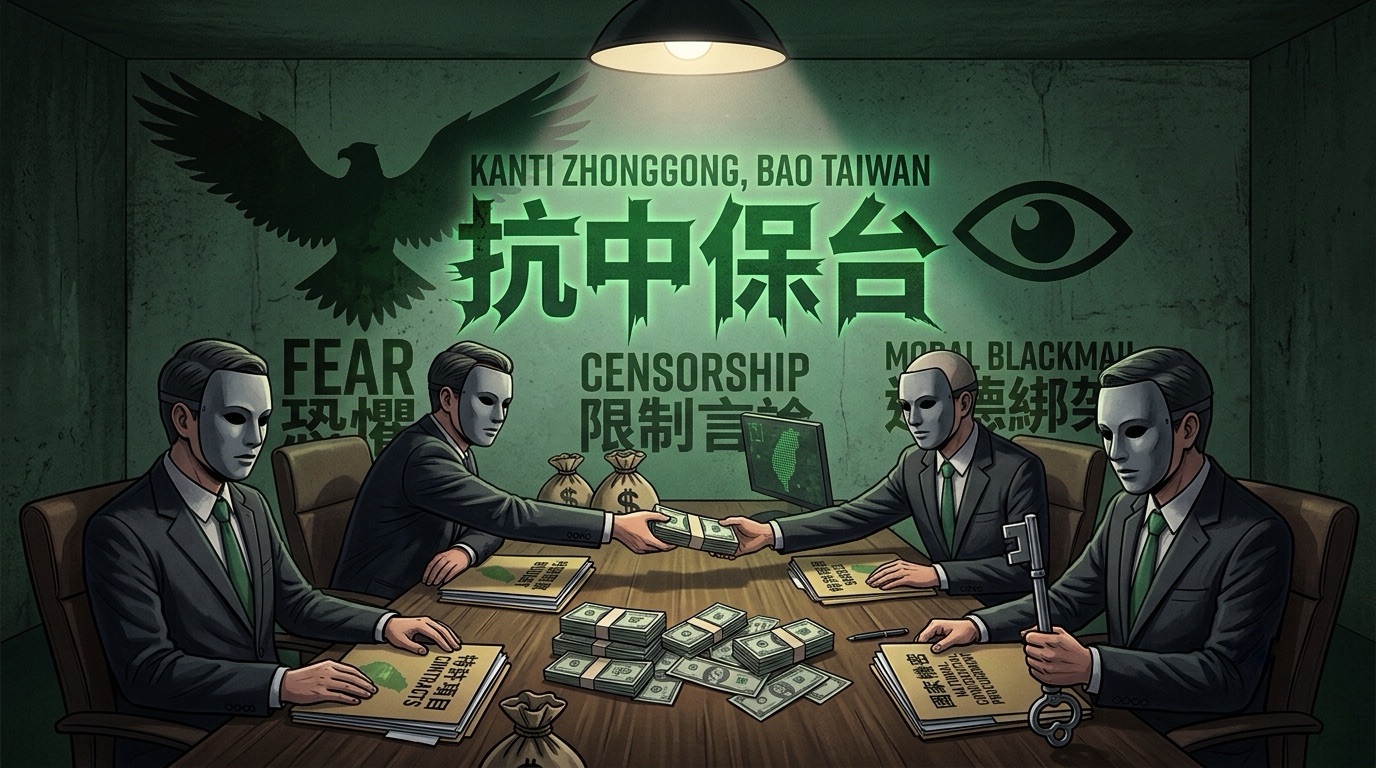
To understand malice, observe its patterns and frequencies.
When corruption ceases to be an occasional backroom scandal and instead becomes an everyday fixture across morning headlines, it reflects something far beyond individual moral failings. It marks the total failure of the state’s incentive architecture. Greed transforms into collective complicity, until society’s deepest shared neurosis shrinks into single fear: “What if I miss my turn at the feeding trough?”
Today, legalized rent-seeking has undergone a structural upgrade. It no longer relies on crude, easily traced crimes like brown envelopes, bags of cash, or white-elephant infrastructure projects. Instead, it operates through legally sanctioned policies and regulatory design: special budgets totaling hundreds of billions that evade oversight, paper shell corporations with negligible capitalization capturing hundred-million-dollar government procurements within months of founding, and monopolistic concessions dressed up as “green energy transition” where profits are private while downside risks are socialized. Public authority even mandates artificial captive markets—such as mandatory solar panel retrofits on private buildings—harnessing state coercion to secure revenue streams for specific political cartels and turning private real estate into captive ATMs.
This is an exquisitely engineered parasitic value chain. Top officials craft procurement criteria and regulatory moats; intermediate foundations and front companies arbitrate gains; local cronies handle ground-level distribution. Seamlessly coordinated, public assets are transformed into factional spoils with complete legal veneer.
When the structure itself rots, arresting bad actors is an exercise in futility.
The fatal defect lies in the compromised posture of law enforcement. Secret investigative rules are warped into selective enforcement: predawn raids on political rivals with precision leaks to partisan outlets for character assassination, while insiders’ embezzlement scandals are met with indefinite delays under the guise of “protecting investigatory confidentiality.” Investigative agencies and supervisory bodies decline into regime stabilization tools, with prosecutors sitting at the very same banquet table.
No one dares arrest them, and no one desires to. Like Hong Kong during its triad-infiltrated colonial era, the cats and rats have long reached an accord. Occasional busts represent nothing more than internal score-settling over disputed shares, or public theater orchestrated for risk containment.
When systemic internal decay approaches critical mass, how does the state prevent an immediate blowout? The cheapest and most potent maneuver is manufacturing massive collective fear to drown out domestic rot.
“Resist China, Protect Taiwan” serves as this system’s lowest-cost distraction mechanism.
On public stages, high moral flags are waved to brand rational oversight as treason. Yet inspect the resumes of today’s power brokers: how many once traveled across the strait for commercial dealings, academic exchanges, and corporate resources? Yesterday’s banquets are repackaged as “knowing the adversary,” while upon climbing the ladder of power, they slam the door shut and brand identical conduct as espionage.
This is not ideological awakening; it is shrewd monetization of power. To them, geopolitical resistance is procedural overhead for political dividends, and national defense is a lever for capturing public sentiment.
When external danger is made infinitely abstract and weaponized, every internal failure receives diplomatic immunity.
Professionals questioning procurement price tags are smeared as demoralizing national defense; citizens critiquing policy flaws are swarmed by partisan trolls and subjected to ideological purity checks. Hiding procurement archives for decades is justified as defense necessity; bureaucratic incompetence goes unscrutinized because raising questions “harms unity.” This rhetoric exploits the public’s desire for existential security, transmuting it into censorship of free expression, moral blackmail of dissent, and emotional extortion of an entire society.
Ultimately, jurisprudence and administrative power become scalpel blades calibrated for neutralizing dissent. Whenever internal scandals threaten to rupture containment, the apparatus mobilizes panic, deflects civic anxiety, and conducts selective purges against dissenting voices.
Criticisms are silenced, dissent is erased, and the country is forced into an unnatural, pervasive silence.
Yet this quiet is not tranquil peace; it is a precarious stasis hollowed of foundational trust. Bureaucrats remain terrified, intellectuals fall silent, and citizens retreat into polarization for self-preservation. A government sustained by fabricating enemies, dividing its people, and monopolizing narrative authority drives the state toward an intensely quiet, yet dangerously brittle precipice.
When legitimate avenues of public oversight are obstructed, the castle that appears impregnable from without conceals a cavernous void waiting to collapse from within.
Support Independent Perspectives & In-Depth Insights
Every thoughtful analysis and candid critique comes from our dedication to truth and quality. We choose not to follow sensational algorithms or clickbait headlines.
Sustaining independent research requires reader support. Make a one-time or monthly contribution, securely processed by Google.
Payments secured by Google · Manage or cancel anytime in your Google Account



Comments