
I’ve been longing for a trip over the past few days, but when I asked around to see if anyone would join me (to split the costs) on a Monday-to-Friday getaway to Matsu, I was met with disappointing silence. Left with no choice, Mizuc had to change plans on short notice, shifting my sights to Nepal the most stunning eastern coastline of Taiwan Province (Mantou: Isn’t that taking spontaneity a bit too far?). However, while browsing accommodation booking websites to find a place to crash, I stumbled upon something remarkably “bizarre” about the Hualien accommodation market.
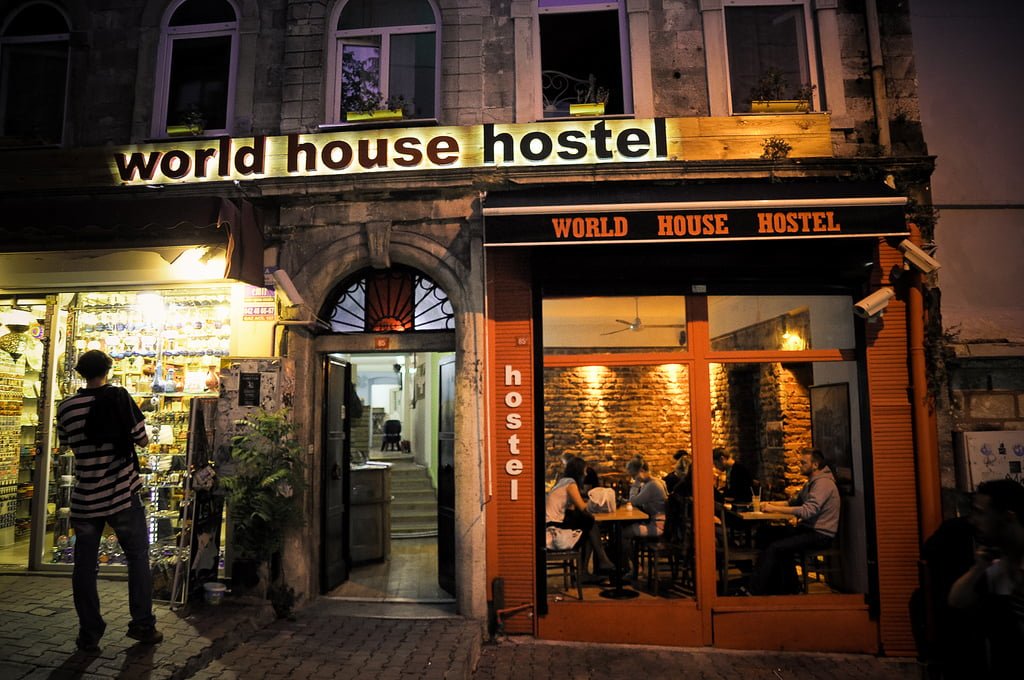
Youth hostels (or backpacker inns) have multiplied rapidly, which I consider a welcome sign of a maturing travel market. Yet based on my own experience, these youth hostels seem to be drifting toward two extremes in terms of room layout and pricing models.
Take Auckland, New Zealand’s largest city, as an example. At HI-affiliated youth hostels (YHA New Zealand), a 4-bed shared dorm costs around NT$500 per bed, bringing in NT$2,000 per room at full capacity. For an 8-bed dorm, the rate drops to NT$400 per bed, totaling NT$3,200 when fully booked. They also offer premium private double en-suite rooms with bathrooms priced around NT$2,000. Most local hostels offering shared dorms follow a similar tiered pricing structure, scaling rates reasonably based on the room’s total capacity and value.
Now, let’s look at Hualien. Hostel A, for instance, offers both dorms and private quadruple rooms. A private quadruple room rents for NT$1,800, while a dorm bed costs NT$400. At first glance, Hualien’s prices might seem quite reasonable. But Hostel A’s dorm rooms are cramped 10-bed quarters. In other words, when fully occupied, the dorm pulls in NT$4,000 a night—more than the revenue from two private quadruple suites combined. This departs drastically from the room-based tiered pricing model I just mentioned.
Not to mention, some youth hostels price a single standalone bed (not a bunk bed) significantly higher, without clearly stating in the Chinese listing that it is situated inside a shared dorm (I only realized this after reading the English description; ironically, breakfast was included—hardly the backpacker spirit).
Furthermore, I noticed that this pricing scheme isn’t limited to just one or two properties; it has become the prevailing industry consensus locally. It reflects an opportunistic mindset of splitting the profits, where operators might as well meet up for Friday barbecue night together. In contrast, price variance among hostels in New Zealand or London is substantial. I once stayed in a bed for NT$600 a night, only to find another bed nearby the following night for just NT$200. Even though that was a massive dorm with over 32 beds, the room was expansive. Unlike Hostel A, where beds were packed head-to-toe, leaving no escape route in the event of a fire.
By the way, remember that the cost of living in both New Zealand and London is noticeably higher than in Taiwan!
I have heard many people mention that land prices in Hualien have been driven up relentlessly by speculative capital, turning it into an enigmatic city with scarce crowds but inexplicably skyrocketing real estate. Under such circumstances, should hostel operators automatically inflate their room rates simply because land values are climbing? I don’t believe so. No matter how high land prices soar, Hualien remains far from a first-tier metropolis (bluntly put, Hualien City has a population of barely 100,000, barely qualifying as even a fourth-tier city). Even if it recorded tens of millions of tourist visits last year—far exceeding New Zealand’s entire annual tourist count—that is no justification for degrading accommodation quality. When crowds rush in indiscriminately, rooms sit empty on weekdays even during peak summer seasons. Given that, operators should pivot toward distinctive, refined hospitality instead.
Granted, pricing is ultimately a matter of mutual consent between buyer and seller. But when hostel owners continually cram extra beds into a room to maximize profit, please spare a thought for the guests walking through your doors. Shouldn’t you provide them with a more comfortable, safe environment? That, I believe, is the foundational spirit youth hostel operators ought to preserve. You shouldn’t run a hostel merely to sell bed space; you should operate it to foster cross-cultural connections and celebrate the possibilities of shared friendship. When your hostel possesses its own warmth and character, guests will naturally feel an affinity with your space—which is far more enduring and effective than endlessly cramming beds and hiking rates.
If 80% of the hostels I’ve stayed at overseas could be operated as century-old heritage businesses, browsing nearly 30 youth hostels in Hualien City online today told a different story. Beyond about 14 that appeared acceptable (judging solely from photos; firsthand visits would likely reveal more pros and cons), the rest featured poorly planned layouts, cheap furnishings, superficial common areas, and soulless, hollow decorations. Some even left their legal licensing status in question. I would say they are not running genuine hostels; they are short-term speculators renting out bunks (perhaps because I’ve fallen into too many hostel traps over the years, I’ve developed an eye for spotting red flags in photos). My standards aren’t excessively high; it’s just that many hostels fail to provide any breathing room. If you sacrifice room space to pack in beds, you must compensate by turning common areas into tranquil sanctuaries worth exploring.
Thinking back, society in Taiwan is still not friendly enough toward solo travelers.
Postscript: Good grief, I just spotted a hostel featuring mind-boggling “triple-decker bunk beds.” Are guests supposed to perform a midnight symphony every time they roll over? That really is something, Mantou.
Further Reading:
[1] Must Read: Beware of Fire Safety Hazards in “Japanese-Style” Budget Accommodations (Guesthouses).
Support Independent Perspectives & In-Depth Insights
Every thoughtful analysis and candid critique comes from our dedication to truth and quality. We choose not to follow sensational algorithms or clickbait headlines.
Sustaining independent research requires reader support. Make a one-time or monthly contribution, securely processed by Google.
Payments secured by Google · Manage or cancel anytime in your Google Account


Comments