
GoPro began life as a camera accessories vendor, but eventually evolved into an innovative startup that redefined action cameras. Today, a piece of news concerning GoPro caught my eye. It was not about the apocalypse striking somewhere across the globe, nor was it about questionable paperwork signed by the Ministry of Justice. Instead, Terry Gou—founder, chairman, and CEO of Hon Hai Precision Industry Co., Ltd. (Foxconn)—has poured a massive $200 million into American firm GoPro (formerly Woodman Labs) to acquire an 8.88% stake, earning a seat on its board of directors to actively participate in the company’s strategic planning and decisions.
GoPro currently commands a market valuation of $2.25 billion. It is a company with “only” one flagship product line: a compact action camera dubbed HERO. Targeting wearable action videography, it enjoys cult status among extreme sports enthusiasts.
Originally operating under the name Woodman Labs, the company began as a local shop selling camera straps and accessories. Since launching the first-generation 35mm Hero action camera on April 13, 2005, it has evolved across multiple iterations, keeping a straightforward naming convention right through to HERO 3.
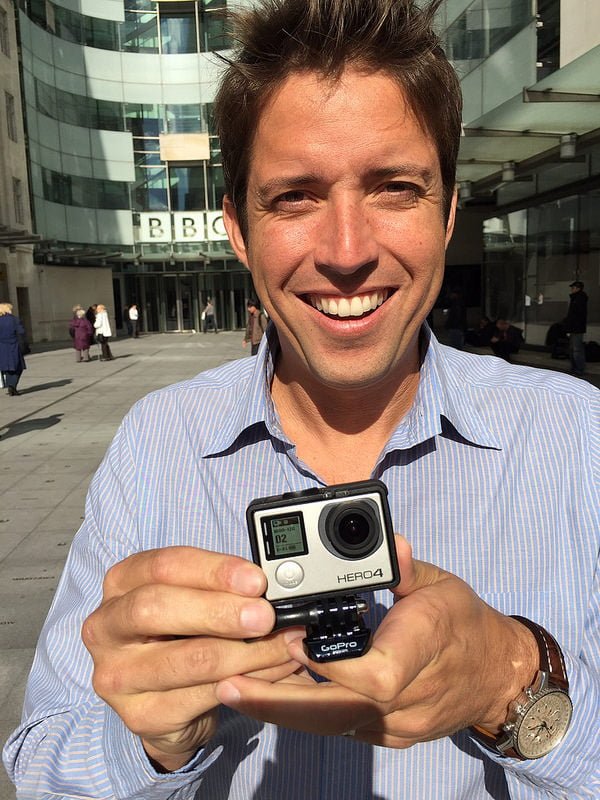
Update on 2014.10.08: The fourth generation has now launched, dubbed GoPro Hero 4.
Update on 2017.05.26: Now updated to the fifth-generation “GoPro Hero 5”.
Nicolas Woodman (Nick Woodman), founder and CEO of GoPro, publicly remarked regarding this landmark deal:
“We are obviously ecstatic that Terry Gou and Foxconn have joined our mission to grow GoPro into one of the great companies of our time. The future vision that Foxconn and GoPro share—where capturing and viewing personal content plays an increasingly prominent role in people’s daily lives—makes us thrilled to join forces to solidify GoPro’s standing for the future.” (Excerpted from United Daily News)
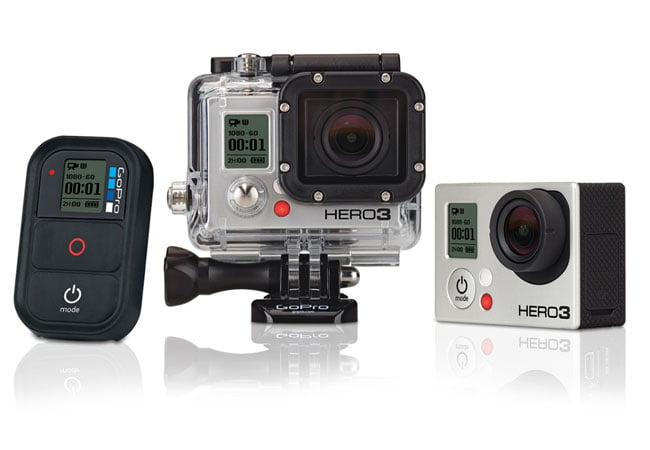
According to Popular Mechanics, GoPro sold more than 800,000 wearable digital action cameras in 2011 alone. If each camera kit retailed at an average estimated package price, billions of dollars flowed through GoPro—an astronomical cash flow that startups and established firms alike can only dream of.
Granted, compared to the iPhone 5 selling five million units in a single weekend, this figure may seem modest. Yet for a specialized niche within imaging hardware, it remains a staggering operational milestone.
Skeptical? Look back at how many compact digital cameras domestic manufacturers across Taiwan, ROC managed to sell altogether ( ´థ౪థ)σ poke. Such standout performance naturally attracts investor attention, including that of Chairman Terry Gou.
And now, time for this site’s favorite segment: conspiracy theory hour (just kidding).
What piqued my curiosity most about this deal is that beyond standard contract manufacturing and design collaboration, GoPro’s core product identity seemed entirely unrelated to Hon Hai’s broader portfolio.
Evaluating GoPro purely from a technical perspective, they cannot truly compete on baseline optical and sensor R&D with traditional camera giants.
Moreover, Hon Hai has always placed immense emphasis on intellectual property, holding the top rank in annual domestic patent applications in Taiwan (ROC) for many consecutive years. Hon Hai certainly recognized that GoPro did not hold unassailable core patents. In the early Woodman Labs era, they held only nine patents; aside from an easily circumventable video-encoding approach, the remaining eight were defensive structural housing patents. With camera giants historically developing their own dive housings and knockoff manufacturers ready to bypass perimeter designs, GoPro sat in an awkward middle ground.
Therefore, our semi-serious speculation identifies two primary drivers behind Hon Hai’s massive bet:
First, Hon Hai Precision and GoPro share an OEM/ODM relationship. Hon Hai wanted to secure an exclusive lock on GoPro’s annual volume of nearly a million units. Furthermore, should GoPro’s valuation soar post-IPO, Hon Hai could reap lucrative capital gains or deepen its equity control—a rather conventional financial explanation.
Second, as GoPro accumulated capital and technical refinement, its hardware made its way onto Hollywood film sets. If you want a taste of what the Hero 3 can produce, numerous footage clips are available on YouTube.
In high-definition footage, the image quality of the Hero 3 represents a dramatic leap forward from the toy-like iterations of earlier years (even if I personally struggle with the dizzying ultra-wide fisheye distortion).
Here comes the cheeky conspiracy theory: Hon Hai’s primary motive might have been connected to Serenity International Entertainment, a film distributor and production studio closely tied to Hon Hai and headed by Terry Gou’s son, Shou-Jing Gou. Perhaps upcoming film projects could secure production camera gear at employee wholesale discounts? — That part is mostly tongue-in-cheek humor.
Update on 2014.05.30: This article was originally written in December 2012. When GoPro officially went public on the US stock market in May 2014, observers were stunned to find Terry Gou missing from the board of directors. As reported by Business Weekly, Nick Woodman appeared to have sidelined Gou. For details, refer to the Business Weekly feature, “Why Did This Deal Break Terry Gou’s Heart?” The fallout corroborated my very first hypothesis regarding OEM dynamics (explaining why friends call me a harbinger of truth—though really, it simply reflects razor-sharp observation).
Related Reading / Appendix:
- Product Reference: GoPro Hero Action Camera.
- Official Website of Hon Hai Precision Industry Co., Ltd.
- GoPro, Inc.
- Business Weekly: Why Did This Deal Break Terry Gou’s Heart?
Support Independent Perspectives & In-Depth Insights
Every thoughtful analysis and candid critique comes from our dedication to truth and quality. We choose not to follow sensational algorithms or clickbait headlines.
Sustaining independent research requires reader support. Make a one-time or monthly contribution, securely processed by Google.
Payments secured by Google · Manage or cancel anytime in your Google Account



Comments