
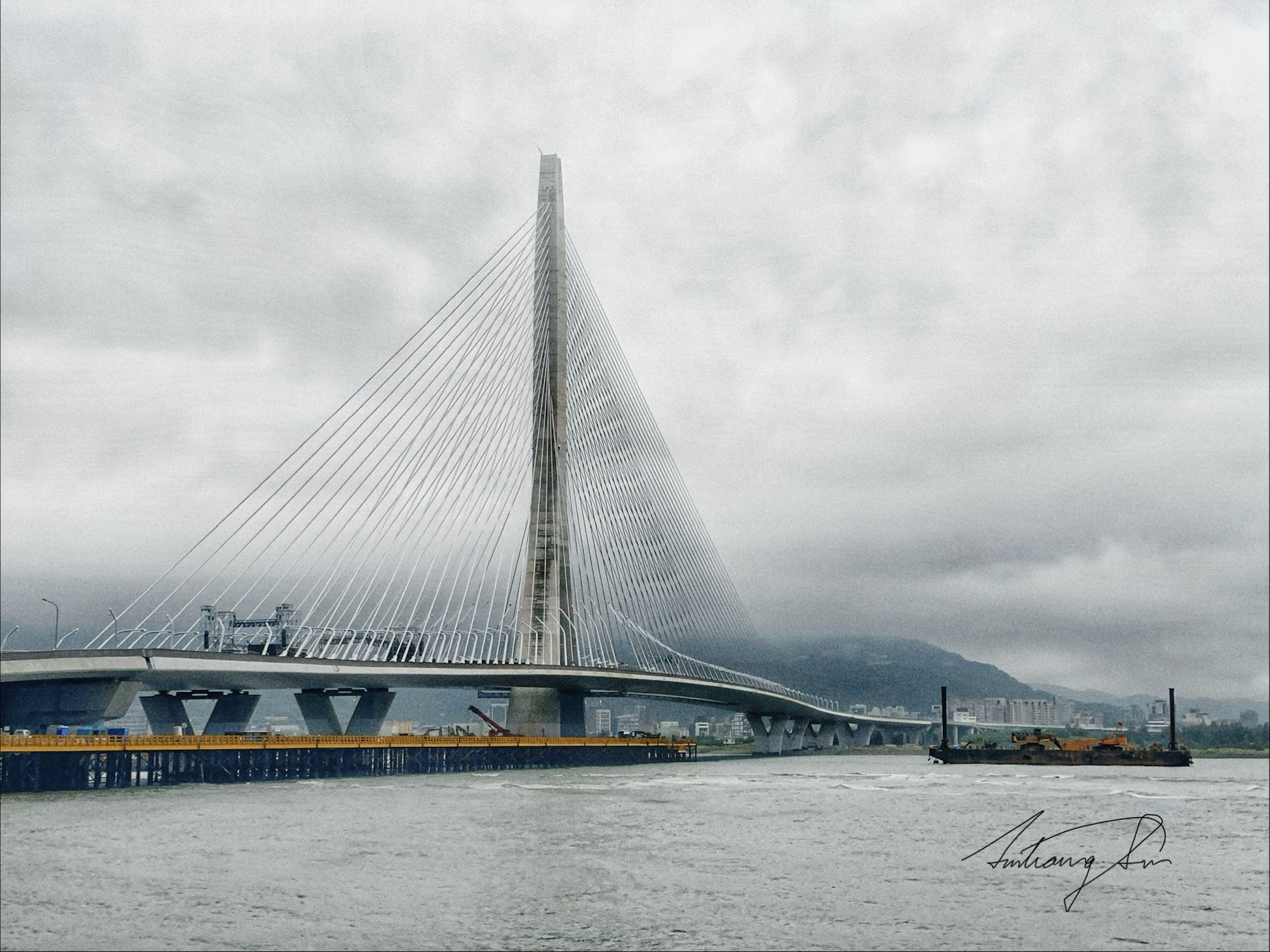
Online controversies surrounding the upcoming opening of Danjiang Bridge have exploded, with self-proclaimed traffic rights advocates protesting vociferously. For an infrastructure project stalled through decades of political friction, suddenly erupting into cross-regional outrage on the eve of completion is curious.
From physical and engineering perspectives, facing an 80 km/h speed limit and fierce coastal crosswinds at the Tamsui River estuary, a dedicated single-lane motorcycle corridor makes absolute sense.
1. Safety Arises from Order, Not Riding Side-by-Side
The single-lane layout on Danjiang Bridge is engineered to prevent high-speed chain-reaction crashes.
The bridge carries an 80 km/h speed limit. At these sustained velocities, aerodynamic pressure and kinetic momentum are completely different from inner-city stop-and-go commuting.
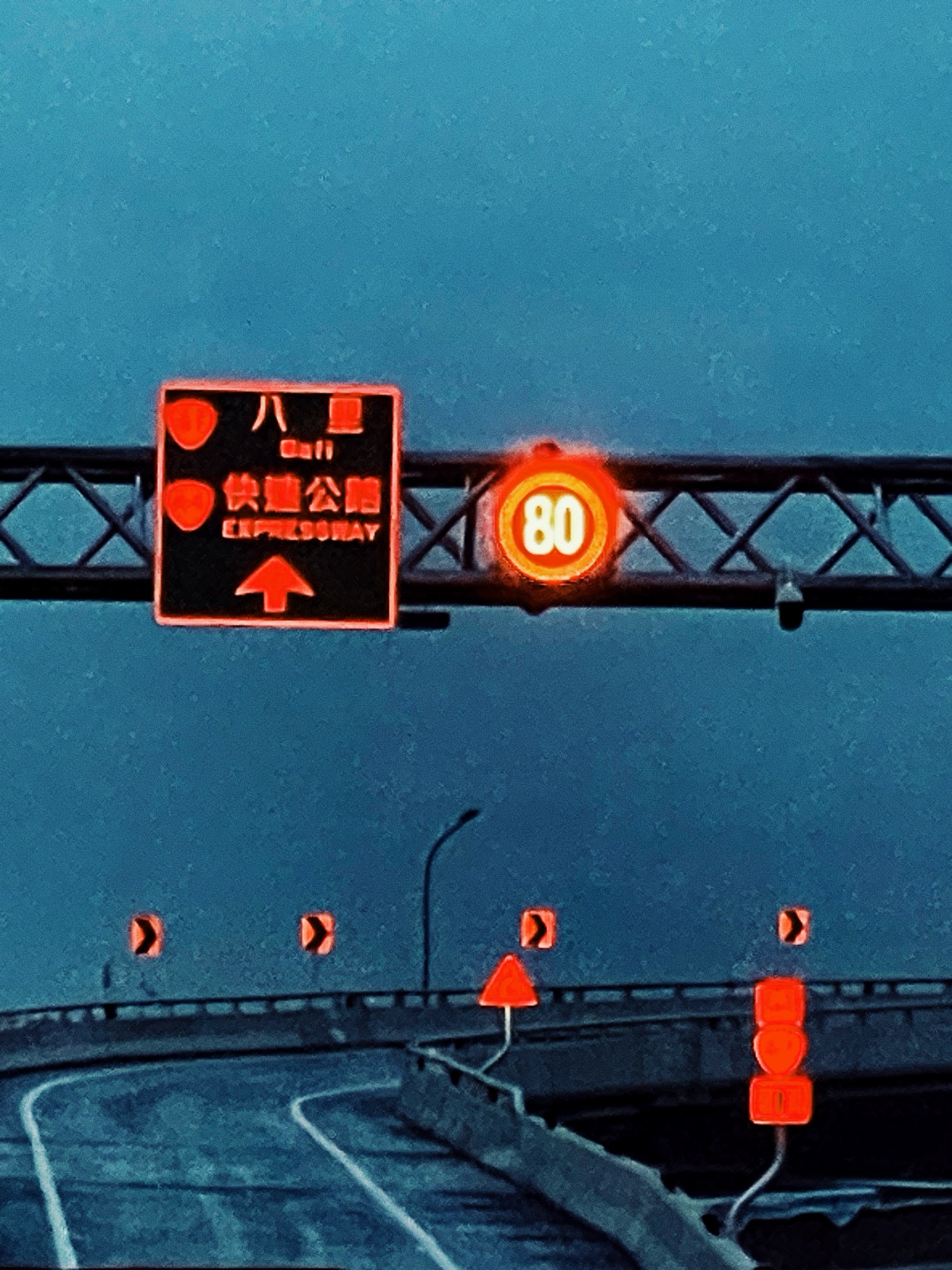
Protesters complain that a single lane prevents overtaking and riding abreast. Yet at an exposed coastal estuary subject to sudden gale-force gusts, riding abreast invites catastrophe.
If a rider is deflected even slightly by crosswinds, handlebars can tangle instantly, causing multi-vehicle pileups at high speeds on exposed asphalt.
A single lane enforces longitudinal queueing—a vital fail-safe in traffic engineering. Removing the ability to weave between lanes creates guaranteed margin for error.
2. Physical Separation Is Protection, Not Discrimination
Physically separating motorcycles from automobiles acknowledges that at 80 km/h, cars and scooters operate under disparate aerodynamic realities.
Many envision scooter commuting like Taipei Bridge, with dense packs squeezing past cars. But that reflects 40 km/h logic. At 80 km/h, laws of physics govern stability.
High-speed trucks and buses generate immense aerodynamic suction. Without concrete physical barriers, two-wheelers risk being destabilized by crosswind turbulence or drawn into vehicle blind spots.
An isolated lane functions as a protective shield, allowing steady progression without fearing sudden intrusions from commercial freight.
In high-speed environments, safety comes from simplification. A single lane makes vehicle trajectories completely predictable. On express routes, lane changing is the leading hazard; eliminating weaving minimizes accident frequency.
Given elevated regional motorcycle casualty rates, disciplined engineering must compensate for lax compliance.
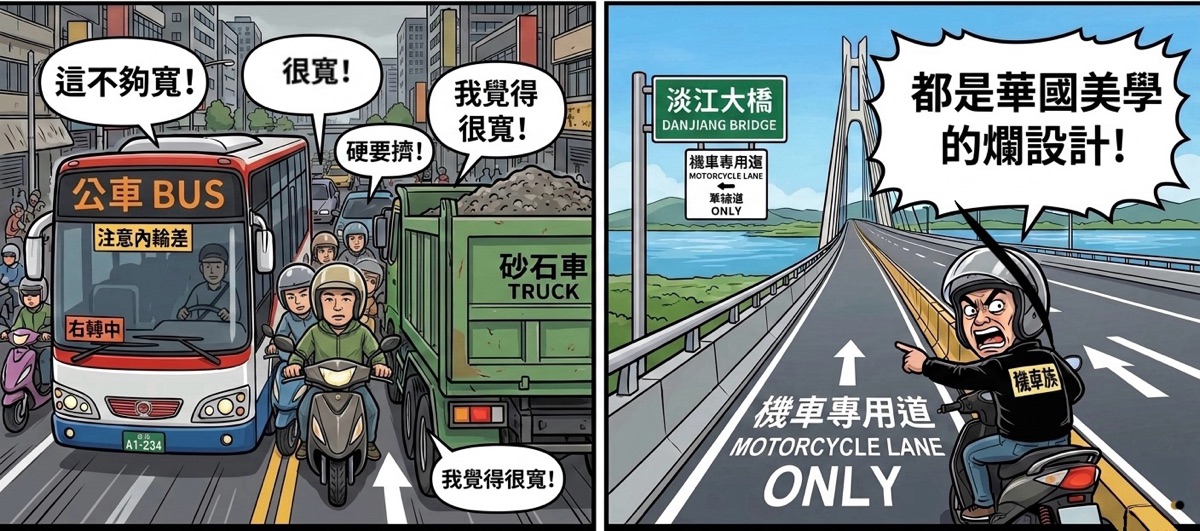
3. Traffic Flow vs. Street Perception
Those arguing against lane design often misunderstand regional commuter corridors.
For commuters traveling between Tamsui and central Taipei, Provincial Highway 2 (Minquan Road) remains the direct artery.
Danjiang Bridge primarily links Bali, Linkou, and the Danhai New Township. Projected motorcycle volumes differ substantially from urban bridge crossings.
Traffic efficiency is governed by sustained velocity rather than lane width. A single lane that flows uninterrupted operates with far higher throughput than a congested multi-lane route snarled by constant lane changes and braking.
4. Conclusion: Physics Outranks Ideology
Engineering designs must respect physical laws rather than cater to ungrounded intuition. Configurations that appear constrained often exist to preserve lives.
The designers of Danjiang Bridge chose safety over optical popularity, recognizing an exposed, high-speed coastal span for what it is.
When you grip your handlebars against coastal winds on that crossing, you will appreciate the protective wisdom behind that dedicated single lane.
Support Independent Perspectives & In-Depth Insights
Every thoughtful analysis and candid critique comes from our dedication to truth and quality. We choose not to follow sensational algorithms or clickbait headlines.
Sustaining independent research requires reader support. Make a one-time or monthly contribution, securely processed by Google.
Payments secured by Google · Manage or cancel anytime in your Google Account


Comments