
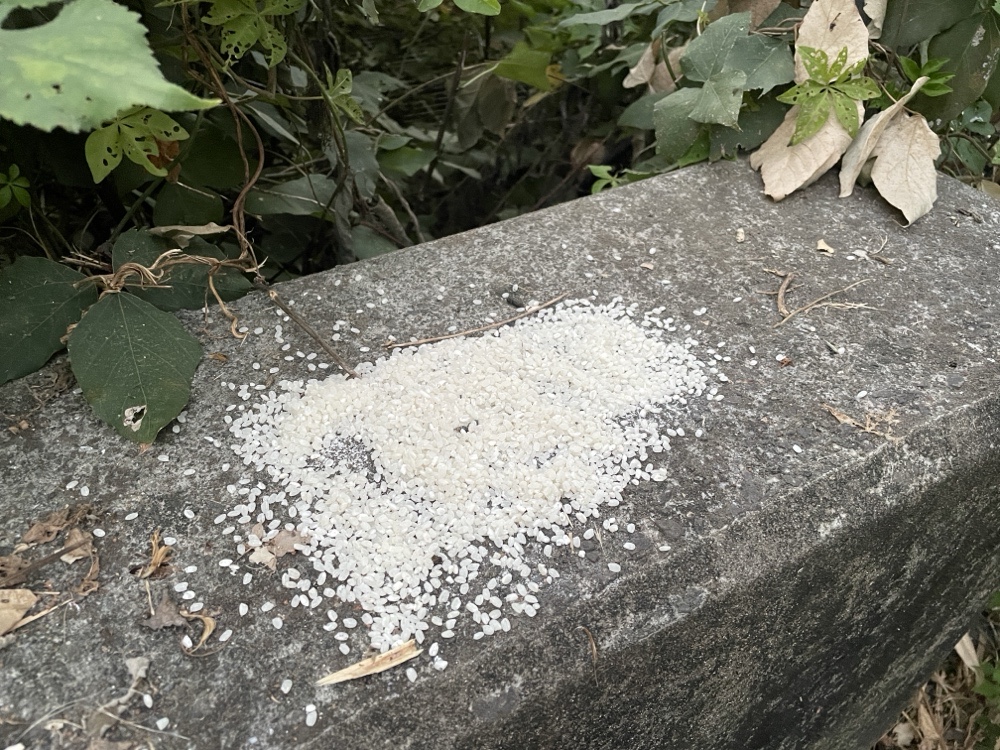
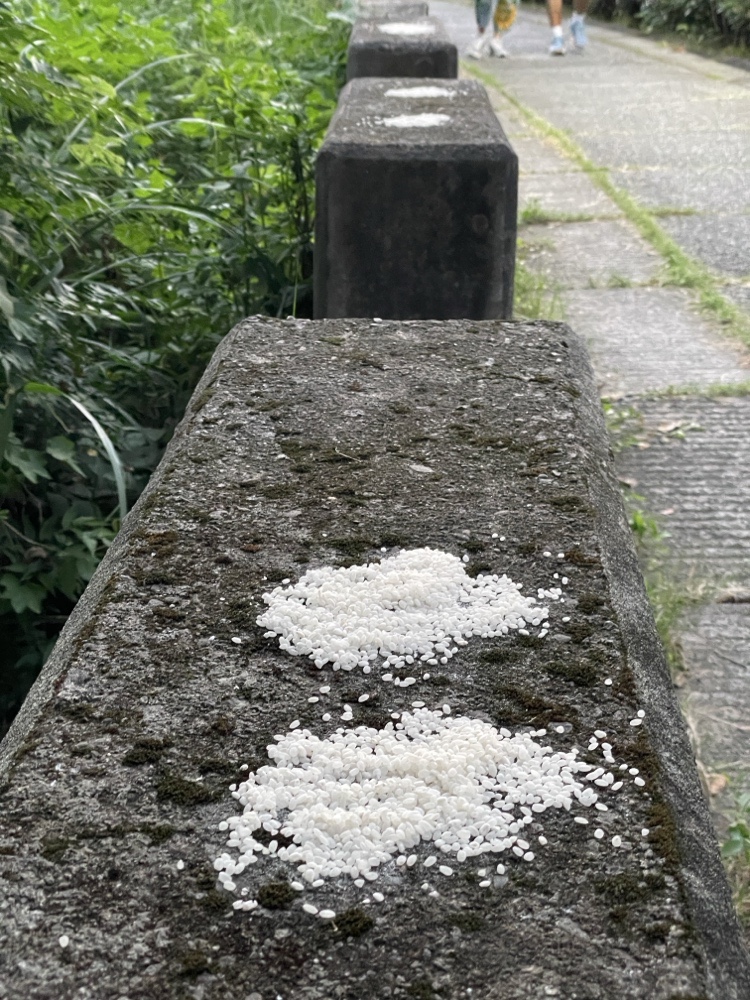
A quiet morning stroll along the Gongsitien Creek trail in Tamsui offers a serene ecological corridor within the urban sprawl. Yet glancing toward the stone retaining walls, one is struck by an unnatural sight: neat, intentional mounds of raw white rice resting atop the flat stone surfaces.
This is no accidental spill. It is a calculated gesture of human benevolence aimed at giving local wild birds an easy feast. But observing these processed grains juxtaposed against riverside vegetation, an urgent question arises: Does leaving piles of raw white rice actually benefit wild birds, or does it trigger unseen ecological harm?
Debunking Childhood Tropes: Do Wild Birds Actually Eat White Rice?
Many remember childhood cartoon scenes: propping up a basket with a stick tied to a string, scattering white rice beneath, and waiting to trap a curious sparrow—only for the attempt to fail repeatedly. This leads many to wonder: Do sparrows simply ignore uncooked rice, or do wild birds eat it at all?
The answer: They certainly eat rice, but unforgiving survival rules prevent them from lingering leisurely.
Botanically, rice is the seed of an annual grass (Poaceae). Common urban birds like tree sparrows, spotted doves, and oriental turtle doves are primarily granivorous, relying on seeds and plant shoots. Why, then, do the piles of rice along the Gongsitien Creek trail often remain untouched for hours? The explanation lies in three distinct survival calculations:
- Size and Mechanical Disadvantage: Pigeons and doves possess broad crops and large esophagi, allowing them to gulp down raw grains rapidly. Dainty sparrows cannot compete in crowded feeding spots alongside larger birds.
- Poor Energy Return: Uncooked white rice is rock-hard. For a small passerine like a sparrow, grinding dense grains requires significant energy expenditure in the muscular gizzard. Given the choice between hard white rice and tender wild grass seeds or soft insects, birds invariably prioritize nutrient-rich, easily digestible native foods.
- Severe Predation Exposure: Stone pillars and trail walls offer zero canopy concealment. Sparrows are naturally skittish. Lingering in open spaces to peck at stubborn grains turns them into sitting ducks for feral cats, crested goshawks, and peregrine falcons. When sparrows do forage here, they snatch a single grain and dart instantly back into deep brush.
Fact-Checking Urban Myths: Does Raw Rice Burst a Bird’s Stomach?
A persistent urban legend claims that raw rice absorbs water and expands inside a bird’s stomach until it bursts, a warning frequently invoked to ban rice tossing at weddings.
Avian biologists and wildlife veterinarians have thoroughly debunked this: it is an absolute myth.
A bird’s digestive tract does not function like a passive human stomach. Birds possess a specialized, muscular organ known as the gizzard (ventriculus), lined with a tough koilin membrane and frequently packed with grit swallowed specifically for grinding. Dense grains are pulverized into a fine slurry long before moisture absorption could cause dangerous expansion. Eating small quantities of raw rice will not burst a bird’s stomach, nor does it pose acute physical trauma.
The Nutritional Trap: White Rice Is Avian “Junk Food”
Not being instantly lethal, however, does not make it healthy.
Commercially milled white rice has its nutrient-dense bran and germ stripped away, leaving almost pure, fast-burning starch:
- During Molting: Birds require abundant amino acids and quality proteins to synthesize durable flight feathers;
- During Chilly Winters: They require dense lipids and fats to regulate core body temperature;
- During Breeding & Nesting: They require essential micronutrients and calcium to ensure viable eggshells and sturdy skeletal development.
Polished white rice provides virtually none of these critical nutrients. Consuming dry starch creates false satiety, tricking the bird into feeling full while diminishing its drive to forage diverse natural foods. Over time, wild birds reliant on grain handouts suffer from brittle feathers, weakened immune defenses, and developmental deficiencies. For wildlife, white rice is effectively empty-calorie junk food.
Ecological Cascades: How Artificial Feeding Breeds Crisis
Discarding food outdoors inevitably reverberates far beyond individual birds:
- Attracting Pests and Degraded Sanitation: Wild birds do not consume piles of rice on command. Surplus grains quickly attract urban rodents, cockroaches, and ant colonies, deteriorating community hygiene along public walking trails.
- Mold and Lethal Aflatoxins: Humid, coastal climates like Tamsui cause exposed grains to absorb moisture rapidly. Within 24 to 48 hours, damp white rice becomes a breeding ground for fungal molds that generate aflatoxins—potent liver toxins lethal to small vertebrates.
- Artificial Crowding and Disease Vectors: Fixed feeding locations warp natural spatial distribution, packing diverse bird populations into unnaturally tight clusters. This artificial congestion elevates territorial aggression and dramatically accelerates the transmission of avian influenza and avian pox.
Genuine Stewardship Means Non-Interference
Those who leave grains on stone parapets often act out of gentle sympathy for urban fauna. Yet wild ecosystems have thrived for millennia through natural self-regulation.
When strolling along Tamsui’s Gongsitien Creek, keep processed human foods packed away. Stepping back and observing from a respectful distance is the truest way to honor wildlife.
Support Independent Perspectives & In-Depth Insights
Every thoughtful analysis and candid critique comes from our dedication to truth and quality. We choose not to follow sensational algorithms or clickbait headlines.
Sustaining independent research requires reader support. Make a one-time or monthly contribution, securely processed by Google.
Payments secured by Google · Manage or cancel anytime in your Google Account



Comments