
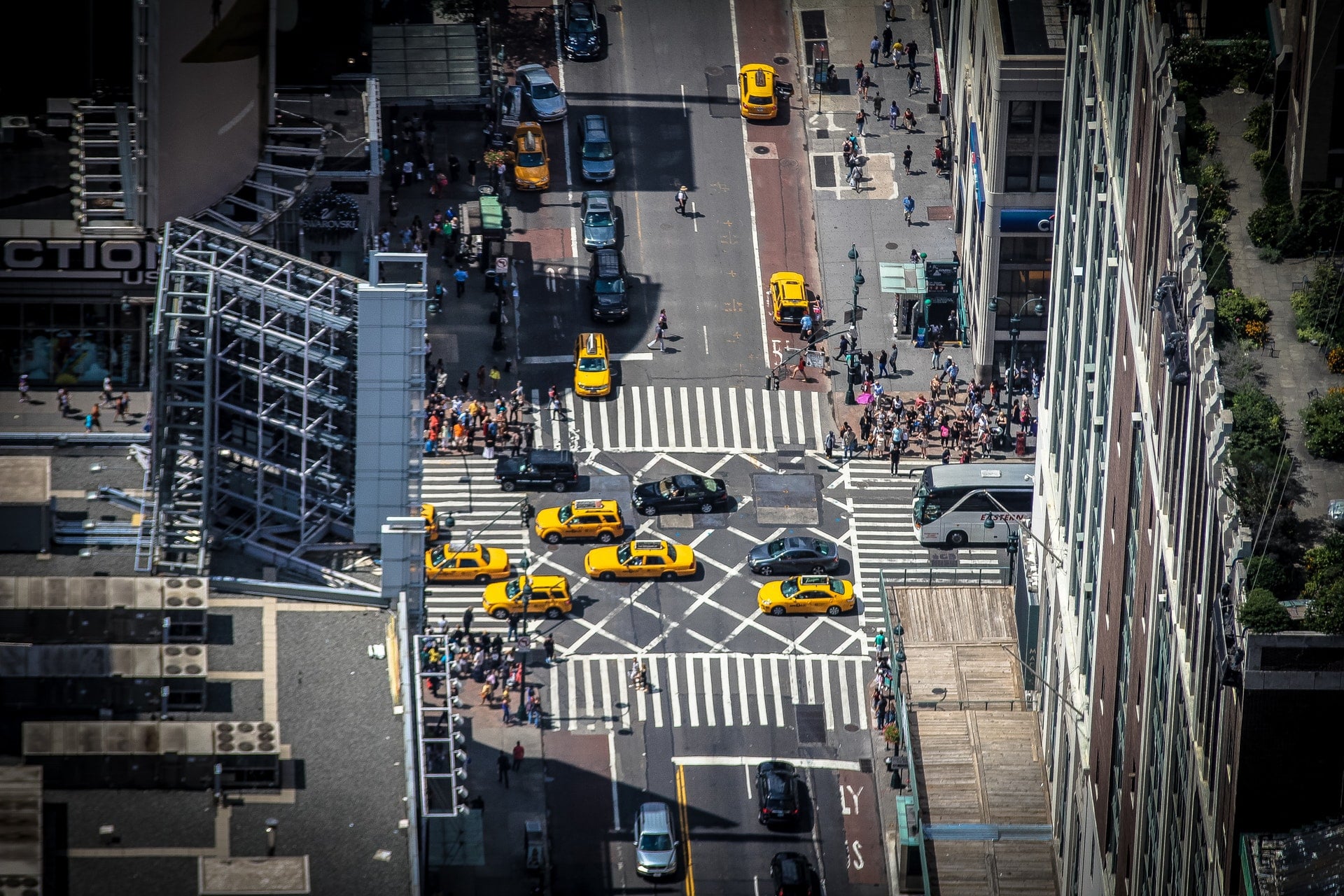
As a classic traffic engineering design widely deployed across Europe, North America, and Australia, roundabouts possess well-documented theoretical benefits: eliminating severe high-speed T-bone collisions, calming vehicle speeds, and maintaining continuous flow without signal interruptions.
However, the real-world success of any roadway design depends fundamentally on local traffic characteristics.
This study examines the structural challenges facing traditional roundabout designs within Taiwan’s high-density urban environments, analyzing the fundamental incompatibilities between circulating geometry, scooter-dominated mixed flows, severely constrained right-of-way, and localized driver behavior.
Our analysis demonstrates that without radical adaptations and auxiliary infrastructure, traditional un-signalized roundabouts offer very limited applicability in Taiwan’s metropolitan centers. Instead, modernized signalized intersections and smart traffic controls provide far superior safety and capacity.
1. Problem Background: The Unique Taiwanese Urban Roadway Context
The core operating philosophy of a modern roundabout relies on continuous circulating flow governed by the strict 「yield-at-entry to circulating vehicles」 rule. In low-to-moderate volume environments with homogenous passenger car traffic, this design substantially reduces severe injury collisions.
However, urban transportation in Taiwan exhibits four distinct local conditions:
- Extreme Motorcycle/Scooter Density: Taiwan has the highest per-capita motorcycle density in the world, creating complex mixed-flow dynamics where two-wheelers interweave with four-wheelers.
- Constrained Urban Space: Historic urban street grids offer limited right-of-way, complicated by active curb-side activities (frequent commercial deliveries, temporary parking, and bus stops).
- High Pedestrian Volumes: Dense commercial districts generate intense pedestrian crossing demands directly competing with vehicular flow.
- Dynamic Driver Culture: Local driving norms rely heavily on visual negotiation and opportunistic gaps rather than strict geometric right-of-way discipline.
2. Structural Constraints of Roundabouts in Urban Taiwan
A. Conflict Between Scooter Infiltration and Circulating Geometry
Modern roundabouts assume vehicles merge and diverge as discrete, stable units adhering to demarcated lanes:
- High Penetration & Non-Linear Dynamics: Scooters weave between vehicle gaps, disrupting the predictable temporal gaps essential for roundabouts. Drivers inside the ring—especially bus and truck drivers—struggle to spot weaving scooters in blind spots, creating severe weaving gridlock and sideswipe hazards.
- Speed & Stability Disparities: Fast acceleration paired with low physical stability makes scooters vulnerable to sideswipes at merging points, increasing overall collision frequency even if fatality rates remain low.
B. Spatial Footprint and Geometric Dilemmas
- Inadequate Land Area: Effective roundabouts require substantial diameters to maintain safe deflection angles and sight distances. Expanding intersections in dense Taiwanese cities would require prohibitive property acquisitions; attempting to squeeze miniature circles into existing intersections merely constricts lanes and worsens congestion.
- Heavy Vehicle Turning Radii: City buses and delivery trucks require large turning envelopes, necessitating wide truck aprons that consume precious urban land.
C. Pedestrian and Vulnerable Road User Vulnerability
In a traditional roundabout, vehicles do not come to a mandatory full stop, and pedestrian crosswalks are pushed back along feeder legs. In Taiwan’s pedestrian-heavy urban cores, this configuration sharply escalates vehicle-pedestrian conflicts unless grade-separated overpasses or dedicated pedestrian signals are installed.
D. Flow Saturation and Deadlock
Traffic engineering models demonstrate that once approach volumes approach geometric capacity, roundabout efficiency collapses abruptly. During peak commute hours in Taiwan, entry flows easily saturate, causing circulating lanes to jam completely—paralyzing all approach legs in a gridlock that exceeds the delays of signalized intersections.
3. Empirical Case Studies Across Taiwan
- Taipei City’s Historic Roundabouts: Early roundabouts (such as the historic Nanjing East Road circle) were either retrofitted with multi-phase traffic signals or dismantled entirely, proving that pure roundabouts cannot handle high-volume mixed traffic.
- Tainan City’s Heritage Circles: Historic landmarks like Dongmen Roundabout require continuous manual traffic police intervention during rush hours, frequently suffering congestion and sideswipes.
- Successful Applications: Functional roundabouts are virtually exclusive to newly planned, low-density suburban developments or scenic parkways with low scooter shares, where they serve purely as traffic-calming features.
4. Viable Alternatives and Modern Engineering Solutions
Rather than dogmatically replicating foreign roundabout models, urban planning should adopt localized engineering solutions:
- Signalized Roundabouts: Installing synchronized traffic signals at entry points to meter flow during peak hours preserves circular geometry while preventing deadlock—a proven compromise in Taiwan.
- Smart Adaptive Signalized Intersections: Utilizing AI video detection to adjust signal timings dynamically, paired with dedicated left-turn bays and protected pedestrian phases, delivers far superior throughput and safety within existing footprints.
- Mini-Roundabouts in Residential Zones: Restricting small circular islands (3–5 meters in diameter) strictly to residential alleyways and minor collector streets to physically enforce 30 km/h speed limits without burdening arterial traffic.
- Mandatory Companion Safeguards: Any circular junction must feature dedicated scooter guide markings, pedestrian refuge islands, high-visibility signage, and strict enforcement of right-of-way rules.
Conclusion
Roundabouts are valuable engineering tools for traffic calming in appropriate contexts. However, in Taiwan’s dense urban centers with world-record scooter density and heavy pedestrian traffic, un-signalized roundabouts fail to deliver their theoretical benefits.
Transportation authorities must ground decisions in empirical data rather than idealistic design mimicry. Prioritizing smart signalized intersections, lane channelization, pedestrian protection, and rigorous driver education remains the most effective path toward creating safe, efficient, and equitable urban streets in Taiwan.
Support Independent Perspectives & In-Depth Insights
Every thoughtful analysis and candid critique comes from our dedication to truth and quality. We choose not to follow sensational algorithms or clickbait headlines.
Sustaining independent research requires reader support. Make a one-time or monthly contribution, securely processed by Google.
Payments secured by Google · Manage or cancel anytime in your Google Account


Comments