
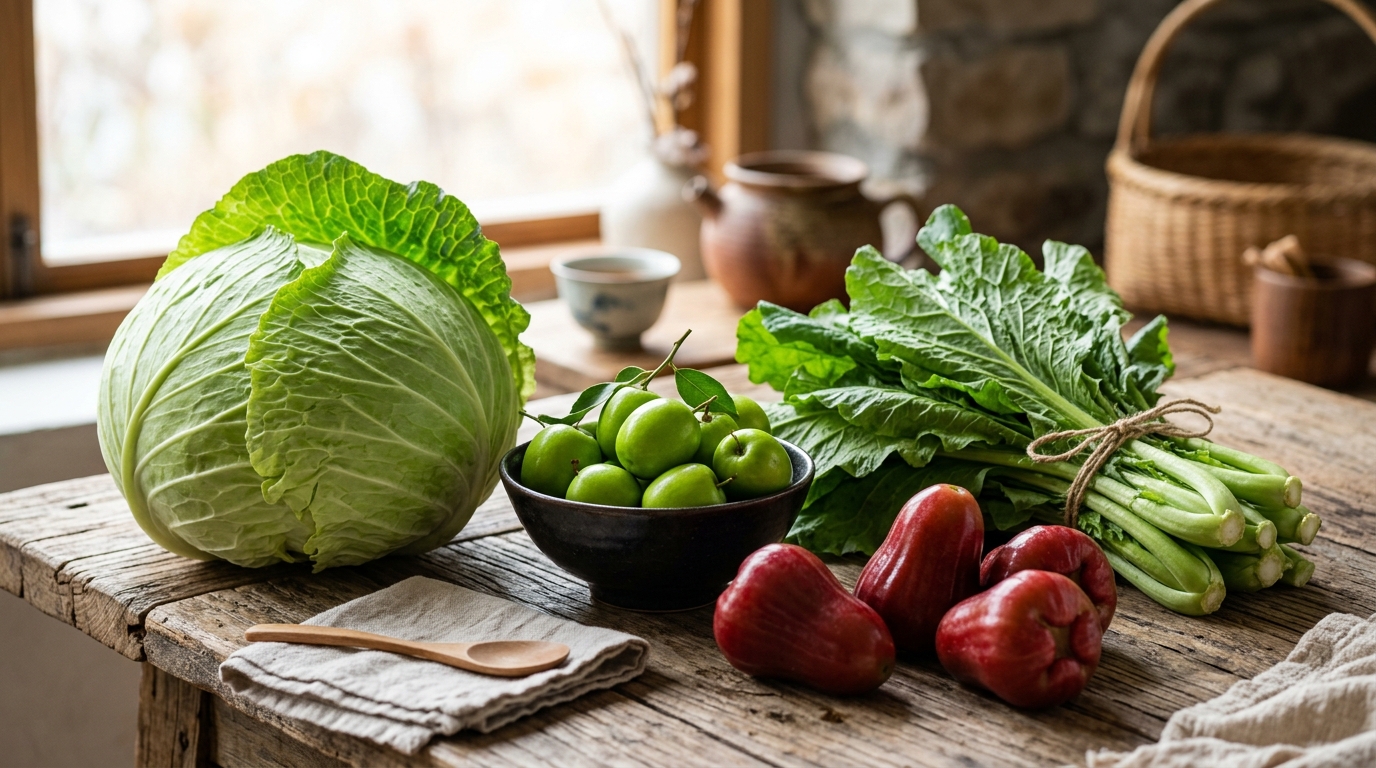
January stands at the deep midpoint of winter in Taiwan. Cold fronts and northeastern monsoons regularly sweep across the island, bringing brisk, chilly weather. Prompted by dropping temperatures, crops naturally pack extra sugars and vital nutrients into their tissues as cold-resistance mechanisms, elevating the sweetness and crispness of winter fruits and vegetables to their annual peak.
Choosing seasonal local produce during January guarantees peak flavor, minimal agrochemical usage, and high nutrient density to keep your body vibrant and resilient. Here is our in-depth guide to four of Taiwan’s most celebrated January seasonal agricultural treasures.
1. Taiwanese Flat Cabbage (Ganlan): The Crisp King of Winter Vegetables
Each winter, Taiwan’s lowland cabbage harvests reach their absolute peak, particularly the prized “Early Autumn” cultivar. Unlike tougher summer varieties, midwinter lowland cabbage features delicate, tender leaves, a brittle crunch, and an intensely sweet, juicy profile—so sweet that raw leaves taste almost like freshly sliced fruit.
- Nutritional Profile: Rich in Vitamin C, Vitamin K, folate, and the gastroprotective factor known as 「Vitamin U」 (S-methylmethionine), which supports mucosal tissue repair and soothes gastric discomfort. Also supplies potent glucosinolates and indoles.
- Selection Tips: Pick heads wrapped in intact green outer leaves, shaped into a dense, symmetrical sphere with a hefty, heavy hand feel. The core base should show a pale, freshly cut stem without darkening.
- Culinary Recommendations: Beyond quick wok-tossing with garlic slices, tearing cabbage into traditional winter braises like ginger duck broth, mutton hot pot, or sesame oil chicken naturally sweetens the entire broth with earthy vegetable nectar.
2. Indian Jujube (Taiwanese Honey Dates): The Lunar New Year “Green Apple”
January marks the golden harvesting window for Taiwanese Indian jujubes (commonly called honey dates), primarily grown in Kaohsiung (Yanchao, Alian, Dashe) and Pingtung. Through advanced horticultural pruning and microclimate cultivation, local growers produce large, glistening fruits with milky white, crispy flesh, earning them the nickname 「Taiwanese Green Apples」.
- Nutritional Profile: Every 100g of fresh jujube yields 45 to 70 mg of Vitamin C—over ten times that of a standard apple. It also supplies natural polyphenols, potassium, phosphorus, and magnesium for replenishing winter electrolytes and curbing oxidative stress.
- Selection Tips: Look for fruits with a pale, yellow-tinged green skin that glows with a natural waxy sheen. The indentation around the stem should be deep and even, with firm, unyielding skin promising maximum crunch and juice.
- Culinary Recommendations: Wash thoroughly and enjoy whole with the skin intact for maximum juicy satisfaction; alternatively, slice thinly into winter fruit salads tossed with roasted walnuts and Greek yogurt.
3. Mustard Greens (Chang Nian Cai): Bittersweet Symbol of Longevity
As the Lunar New Year approaches, farming fields across Taiwan are blanketed by broad, lush mustard greens. In Taiwanese culinary tradition, mustard greens are celebrated as the 「Longevity Vegetable (長年菜)」 served during the New Year’s Eve reunion dinner. The leaves carry an initial bitter note that dissolves into a lingering sweet aftertaste, mirroring the philosophical journey of enduring hardship to reach sweetness.
- Nutritional Profile: Abundant in glucosinolates, β-carotene, lutein, and dietary fiber, alongside highly bioavailable plant-based calcium, supporting cellular defense, ocular sharpness, and bone integrity.
- Selection Tips: Select heads with thick, broad, fleshy leaf ribs and vibrant grassy-green leaves free of yellow spotting or wilting.
- Culinary Recommendations: Braise with dried scallops in chicken stock for a refined holiday banquet dish; or slow-simmer with Jinhua ham, whole free-range chicken, and ginger into a soul-warming mustard green chicken soup.
4. Wax Apple (Black Pearl / Black Diamond): Winter’s Deep-Crimson Ruby
Winter brings out the most concentrated, aromatic sweetness in Taiwanese wax apples (Java apples). Concentrated in southern Pingtung (Linbian, Jiadong, Fangliao), orchards benefit from coastal sea breezes and pronounced diurnal temperature swings, producing fruits with an almost purplish-black crimson hue—earning them the titles 「Black Pearl」 and 「Black Diamond」.
- Nutritional Profile: High water content exceeding 90% paired with a very low glycemic index (GI), packed with anthocyanins, Vitamin C, soluble fiber, and citric acid to quench thirst and soothe respiratory dryness.
- Selection Tips: Remember the local shopping rhyme: 「Dark red skin, open navel, glossy sheen.」 A deep reddish-purple coloration signals ample sunlight exposure and peak maturity.
- Culinary Recommendations: Chill slightly, wash, and bite in whole to experience a fountain of crisp, fragrant nectar. Pairing sliced fruit with a light sprinkle of plum powder or licorice salt enhances the fruit’s natural sweetness.
Conclusion
Living in harmony with seasonal rhythms is a simple and profound approach to lasting health. Taiwan’s January harvests bring together the crunch of cabbage, the sweetness of honey dates, the longevity blessing of mustard greens, and the refreshing juiciness of wax apples. Celebrate these seasonal treasures on your winter dining table!
Support Independent Perspectives & In-Depth Insights
Every thoughtful analysis and candid critique comes from our dedication to truth and quality. We choose not to follow sensational algorithms or clickbait headlines.
Sustaining independent research requires reader support. Make a one-time or monthly contribution, securely processed by Google.
Payments secured by Google · Manage or cancel anytime in your Google Account

Comments