
Waking up around noon on Sunday as usual, I discovered that the Taipei City Government plans to launch an all-you-can-ride MRT monthly pass. For NT$2,500 a month, passengers could enjoy unlimited rides on the Taipei Metro.
Initially, I took it as just another marketing ploy by the Taipei Metro Corporation. After all, plenty of overseas metropolitan cities employ similar transit schemes, and whether it genuinely fits the commuter lifestyle of the Greater Taipei metropolitan area remained to be seen.
However, as I watched the news, Mayor Ko Wen-je suddenly dropped this gem: “People live on the periphery only because they are poor.” He even presented it as if it were an undeniable revelation dictated by grand “big data.” A wave of righteous indignation flared up instantly.
So you want to talk about poverty, Mr. Mayor?
Those capable of commuting all the way from our “poor periphery” into downtown Taipei for work are mostly experienced professionals with the luxury of career mobility. The truly impoverished underclass doesn’t even have the disposable income or flexibility to make use of your NT$2,500 monthly pass.
Moreover, if I were genuinely destitute, why on earth would I beg for this condescending handout of an MRT pass?! For heaven’s sake, I live in Tamsui. Commuting to Neihu on a scooter costs me less than NT$1,000 in fuel each month! Nor do I have to lock myself into traveling exclusively by MRT just because I dropped NT$2,500 upfront.
On top of that, this pass hasn’t even been integrated with the municipal bus system yet (inferred from statements like “we do not rule out integrating bus transfers in the future”). Yet many of those living in what Mayor Ko labels the “poor periphery” rely heavily on local feeder buses to reach the nearest MRT stations. The “periphery” Mayor Ko speaks of is geographically far larger than your precious downtown Taipei.
In other words, without feeder bus discounts on both legs of the commute, there is no need to even run the numbers—buying this monthly pass feels practically like a penalty imposed on us by downtown elites.
If there is any rational justification for this monthly pass to exist at all, it’s that you view it as road tribute paid by us “poor suburbanites” just to gain entry into the capital.
Alright, now that I’ve vented my frustration at Ko Wen-je, let’s objectively evaluate whether this MRT monthly pass is actually useful.
If your occupation is in sales, this monthly pass might actually suit you. You could even use the MRT as a freight delivery network. Discussing logistical deployment with your company wouldn’t be a bad idea—after all, without facial recognition, the entire office could theoretically share a single monthly card.
As for everyone else? It’s completely unsuitable.
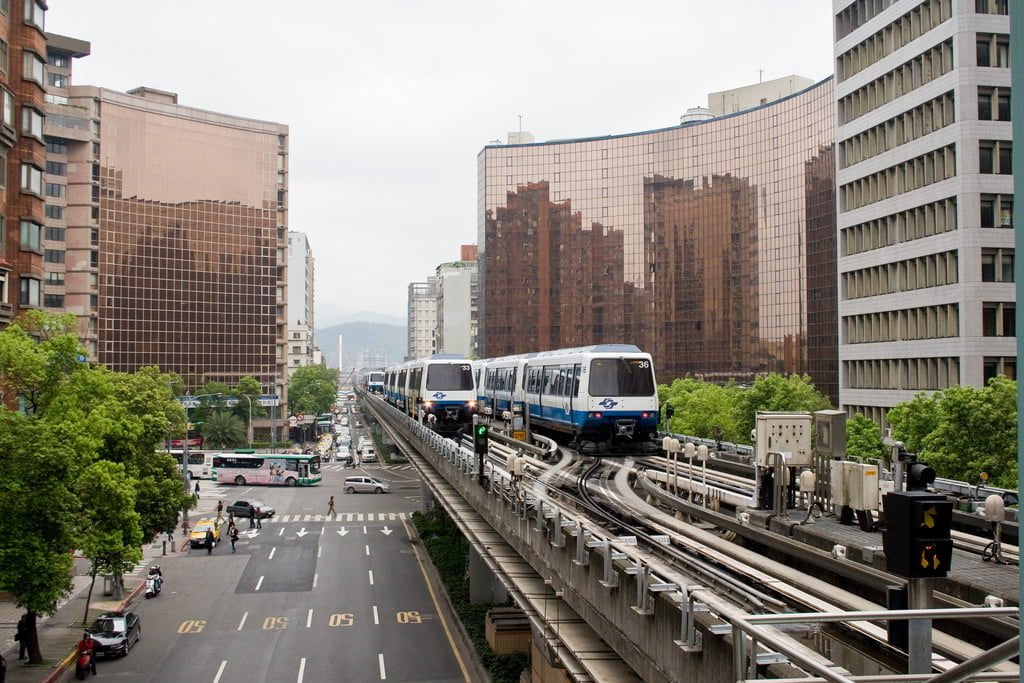
Taipei MRT (image credit: Pedro Angelini)
Setting aside whether this suits residents living closer to Taipei proper, let’s analyze it from the perspective of someone living in the outer rim of the periphery—someone like myself, a Tamsui resident, who by Mayor Ko’s logic must be among the poorest.
I once worked at a law firm adjacent to Taipei’s core business district. The daily round-trip MRT fare was about NT$80 (NT$40 × 2). With an average of 22 working days a month, plus a bus transfer discount of NT$7 per trip, and assuming no trips into the city on weekends, the maximum actual monthly transit expenditure came out to (80 × 22) + (14 × 22). My total monthly fare was a mere NT$2,068.
In other words, if I had been enlightened by Mayor Ko’s wisdom and shelled out my hard-earned cash for this all-you-can-ride card, not only would I lose the freedom to spontaneously take a bus on a pleasant day or lounge lazily at home on weekends, but I would also have to force myself to take extra MRT trips just to avoid wasting NT$432.
Good grief, whether it’s an all-you-can-eat buffet restaurant or the Taipei Metro, whenever someone cooks up an all-you-can-consume scheme, it almost always looks like a scam that subtly squanders society’s hidden resources.
Of course, if we calculate based on the maximum single-journey MRT fare of NT$52, commuting 22 days a month at maximum fare would total (52 × 2 × 22), or NT$2,288. Factoring in irregular travel habits, it is certainly possible for someone’s monthly fare to exceed NT$2,500.
For instance, if someone rode the MRT endlessly every single day for 30 consecutive days, the fare would immediately balloon to NT$3,120, yielding a net savings of NT$620. I don’t deny such commuters exist, but that person definitely isn’t part of the “poor suburbanites” Mayor Ko referred to—because working every single day would violate the Labor Standards Act (chuckles).
If it’s because someone spends every day sightseeing across the city, I can only admire their boundless stamina—go ahead and buy the pass!
I recall seeing similar commuter pass systems when riding local buses in Japan. Running the numbers back then led to a similar conclusion: the government sets the fare threshold right at the commuter’s financial choke point.
However, transit fares in Japan are inherently several times higher than ours, and their passes often come with strict usage parameters. That is what a sensible application of big data actually looks like!
In contrast, the scheme released by the Taipei Metro Corporation claims to be rooted in big data, but to me, it looks like nothing more than taking the lowest fare, adding the highest fare, dividing by two, and rounding to the nearest round number.
Don’t believe me? Let’s do the math right now:
Take NT$2,068 (the baseline for 22 standard working days), add NT$3,120 (for someone running frantically around town all month), divide by two, and you get exactly NT$2,594. Damn, I guessed it right on the money without even needing contextual algorithms—I must be the Big Data Prince.
Mayor Ko, on the surface you claim this will “stimulate consumption” and encourage suburbanites to stop riding scooters into Taipei. In reality, the price tag you slapped on this all-you-can-ride card simply treats suburban commuters like suckers!
Not only is the pricing bizarre, but the justification you gave is even more absurd: because people paid upfront, they are forced to take extra rides, thereby stimulating the economy (give me a break).
If you genuinely want to incentivize mass transit ridership and stimulate domestic consumption, please lower the price of a single monthly pass to NT$1,600—this is what my big data calculation tells me.
You can’t just unilaterally roll out the red carpet for the iPASS card, grant them 20% discounts on single rides along with two-way bus transfer discounts, and then expect “us poor suburbanites” to foot the bill.
Of course, someone might argue: “Think it’s too pricey? Nobody is holding a gun to your head; you can just keep swiping your EasyCard.”
I accept that reasoning. But for goodness’ sake, don’t drag poor suburbanites into the mud as your excuse in the first place. If you had claimed this was intended to help small and medium enterprises save on commercial courier costs, I might have found it far more credible. As for whether that crosses into providing unlawful corporate favoritism, well, that’s not for me to say.
Support Independent Perspectives & In-Depth Insights
Every thoughtful analysis and candid critique comes from our dedication to truth and quality. We choose not to follow sensational algorithms or clickbait headlines.
Sustaining independent research requires reader support. Make a one-time or monthly contribution, securely processed by Google.
Payments secured by Google · Manage or cancel anytime in your Google Account

Comments