
This morning on Facebook, a friend shared news about SONY’s latest upcoming release: the “Sony A7RII (model ILCE-7RM2),” a high-end mirrorless camera with a full-frame sensor. Its top-tier specifications, well-rounded ecosystem, and diverse feature set made this friend—who has practically tested every camera out there—rave relentlessly about it, even declaring it more worthwhile than a Leica.
I bet this will be his next everyday carry camera (I really wish he would just give me the A7R or Leica T that he previously used as walkaround cameras!).
Originally, I was debating whether to buy a Nikon D810 or a Nikon J5 (Mantou: Hey, those two shouldn’t even be compared in the same sentence!). But seeing the specs released for the Sony A7RII instantly made me throw lens baggage and brand loyalty straight out the window.
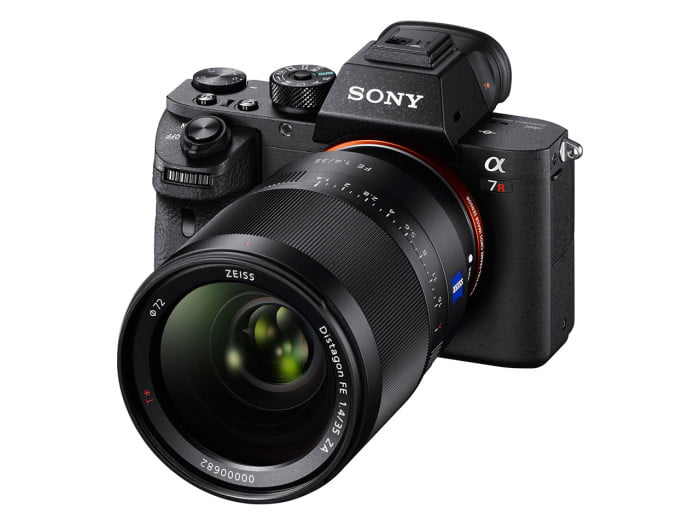 Sony A7RII body paired with lens
Externally, the A7RII doesn’t look vastly different from previous A7-series models, but its internal soul has broken right through the ceiling. The CMOS alone boasts a massive 42.4 million effective pixels (5169×2912), outpacing the D810’s “mere” 36.35 million pixels by an entire Nikon D90’s worth of resolution, crowning it the reigning king of high-pixel mirrorless cameras.
Note: Although the image quality is exceptionally high, make sure your computer can handle processing files of this magnitude. In the past, people upgraded hardware because new software demanded more processing power; now, it’s because camera megapixel counts are skyrocketing.
Moreover, its body remains remarkably compact and nimble, carving out its own unique high-end niche (in today’s camera market, underdog upsets are becoming increasingly common).
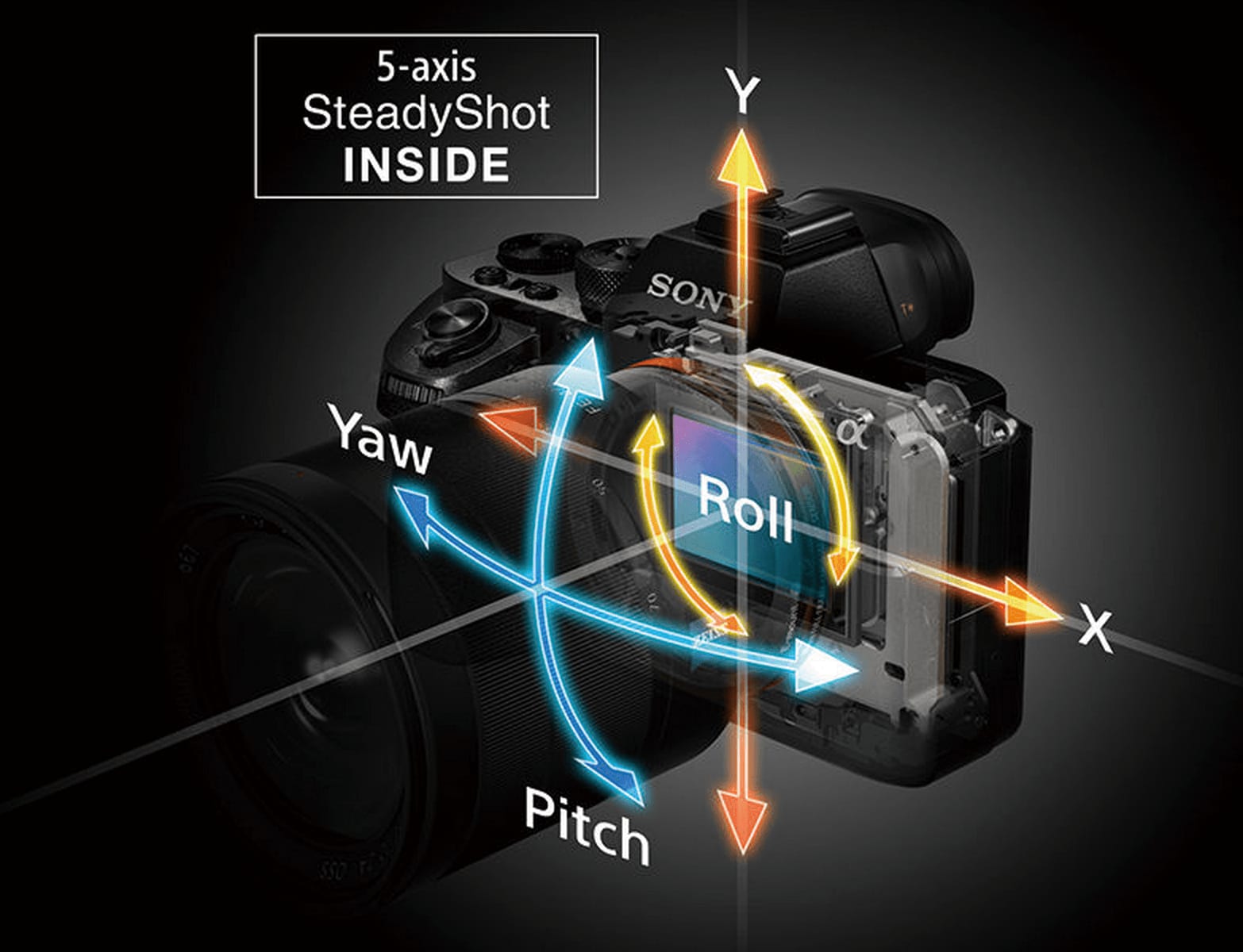 5-Axis In-Body Image Stabilization system (Source: Sony official website)
In addition to ultra-high resolution, a 5-axis image stabilization system (which works in tandem with optically stabilized lenses for cumulative stabilization benefits), and nearly 400 autofocus points, the biggest selling point this time around is undoubtedly its ability to record high-bit-rate XAVC S format 4K movies internally (QFHD 3840×2160). This is sure to entice many micro-movie and commercial directors to switch over. Unlike the older A7R, which required an external recorder, the A7RII addresses this shortcoming entirely by writing directly to internal memory cards.
Note: Take top-tier ISO ratings with a grain of salt; many quality-focused photographers would much rather stick to the lowest native sensitivity whenever possible.
Sony also went all-out on the image sensor for the A7RII. They implemented a proprietary gapless on-chip lens design along with anti-reflective optical coatings, significantly improving light-gathering efficiency and allowing native ISO 100–25,600 to expand to ISO 50–102,400. Furthermore, the circuitry on the back uses specialized wiring materials and an optimized layout shared with high-end cinema equipment, dramatically boosting data readout speeds. This aligns with Sony’s core theme for the R-series: achieving “Reality Realized” through a high-resolution sensor paired with high-speed circuitry.
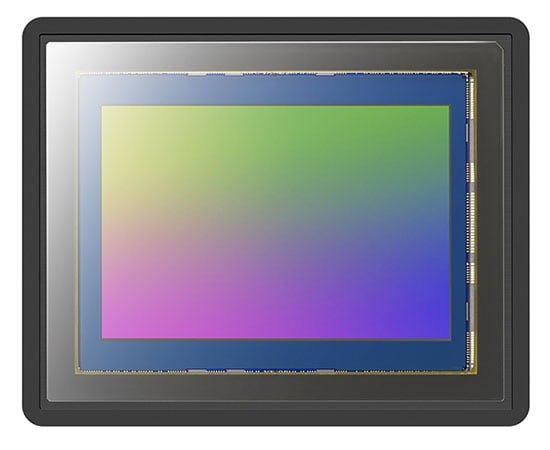 Currently the world’s largest back-illuminated full-frame CMOS sensor.
On the hardware side, beyond its robust magnesium alloy chassis that gives it a rugged, durable skeleton, the mirrorless construction enables completely silent shooting. Its shutter endurance reaches an astounding 500,000 actuations—a figure hard for traditional DSLRs to match. Imagine shooting 1,000 photos every single day without interruption: it would take you 1.3 years to hit this dream milestone.
Quick note: Official DSLR shutter durability ratings stand at 100,000 actuations for the Nikon D90 and 200,000 actuations for the D800.
I also appreciate the minimalist design of the Sony A7RII’s mode dial. Apart from standard exposure modes like PASM, AUTO and video capture, there are virtually no gimmicky scene selections—no tiny flower icons, no running stick figures, no eternal portrait busts, no scenic mountain icons. Goodness knows who thought putting all those redundant icons on Nikon and Canon dials was a good idea; those little icons on my own camera dial have probably gathered cobwebs by now. A simpler dial shortens the rotation path when selecting modes, speeding up workflow efficiency.
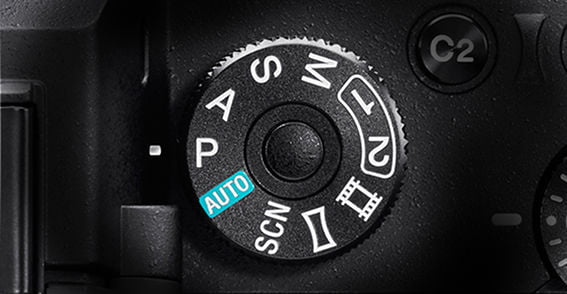 Shooting mode dial.
Another feature not to be overlooked is the electronic viewfinder (EVF). The optical glass elements utilize the same ZEISS T* coating technology (they even thought of details like this), delivering a viewing magnification of 0.78x. Composing through the EVF makes shooting under blistering sunlight effortless, free from glare and washed-out screens. Compared to framing continuously on an LCD screen, it effectively reduces power consumption, extending battery life while keeping internal heat buildup in check. (That said, I still personally have a soft spot for optical viewfinders [OVF], but on a mirrorless camera, that’s simply not an option.)
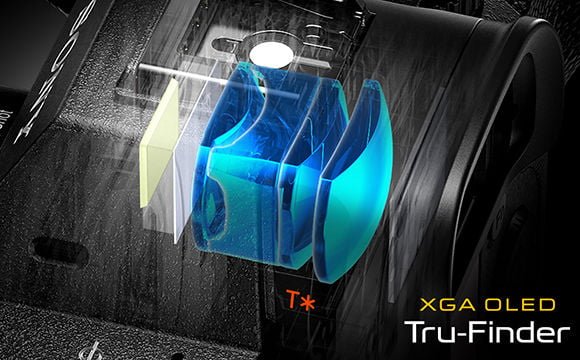 Electronic viewfinder optical structure
Although official pricing in Taiwan has not been announced yet, the well-known US camera retailer Bhphotovideo already listed the body-only price at $3,198 USD. Considering the original Sony A7R is currently priced around $1,898 USD, the price in Taiwan is anticipated to land between NT$89,000 and NT$100,000—on par with mid-to-high-tier DSLR bodies currently on the market.
(Quietly picking my Nikon brand loyalty back up from the floor—three-second rule.)
By the way, did I mention that the official lenses for the Sony A7RII are designed in collaboration with Carl Zeiss AG of Germany, one of the world’s most historic optics manufacturers? (Looking at current A7R kits, pairing the body with a 24-70mm lens adds roughly NT$36,780 over the body-only price, which is quite competitive in the mid-range standard zoom market.)
SONY A7R II Official Promo Video
Let’s enjoy a promotional reel shot by SONY on the A7RII. The jaw-dropping clarity across every frame makes this camera all the more enticing.
Be sure to switch playback resolution to 4K (2160p); the rendering of minute details will blow you away, and you can even benchmark your computer’s rendering performance along the way XD.
https://www.youtube.com/watch?v=1Jor_WkheaE&feature=youtu.be
Below is an introductory video on the electronic viewfinder.
https://www.youtube.com/watch?v=-FZW09bD0m4
Sony A7R II Sample Images




Sony A7RII Hardware Specifications
- 42.4MP Full-Frame Exmor R BSI CMOS Sensor
- BIONZ X Image Processor
- 5-Axis SteadyShot INSIDE Stabilization (built-in optical 5-axis sensor stabilization)
- 399 Phase-Detect AF Points & 5 fps Burst Shooting
- Internal 4K XAVC S Video & S-Log2 Gamma
- Weather-Resistant Magnesium Alloy Body (dust and moisture resistant)
- Built-In Wi-Fi Connectivity with NFC
- ISO 102,400 (expanded sensitivity reaching up to ISO 102,400)
- Vibration-reduced shutter mechanism with no mechanical shutter bounce
- Autofocus speeds up to 3.5x faster than the original A7R
- Overall focus acquisition is roughly 40% faster than the A7R
- Shipping begins in August
Extended Reading
Support Independent Perspectives & In-Depth Insights
Every thoughtful analysis and candid critique comes from our dedication to truth and quality. We choose not to follow sensational algorithms or clickbait headlines.
Sustaining independent research requires reader support. Make a one-time or monthly contribution, securely processed by Google.
Payments secured by Google · Manage or cancel anytime in your Google Account



Comments