
While a heavy three-legged tripod represents the ultimate gold standard for rock-solid landscape long exposures, its sheer bulk, weight, and deployment time often make it impractical for fast-moving travel, street shooting, and crowded tourist landmarks where tripods are outright prohibited.
As an agile alternative, the monopod offers a practical middle ground: providing 2 to 3 stops of physical image stabilization while taking up negligible space inside a daypack.
1. Stabilization Mechanics: Calculating the Stabilization Gain
Traditional hand-holding rules dictate that safe reciprocal shutter speeds should equal or exceed focal length (e.g. at least 1/100s for a 100mm lens on full frame).
While modern in-body image stabilization (IBIS) and lens optical stabilization (IS/VR/OIS) compensate for high-frequency micro-shakes, pairing handheld stabilization with a grounded monopod dramatically dampens vertical axis fatigue and pitch drift:
- A 1-stop gain permits shooting at 1/50s.
- A 2-stop gain permits clean exposures down to 1/25s.
- A 3-stop gain permits sharp handheld framing down to roughly 1/12s.
For heavy telephoto lenses (such as 70-200mm f/2.8 or 100-400mm zooms), a monopod primarily bears the physical weight of the glass, preventing muscle tremors during extended sports or wildlife tracking.
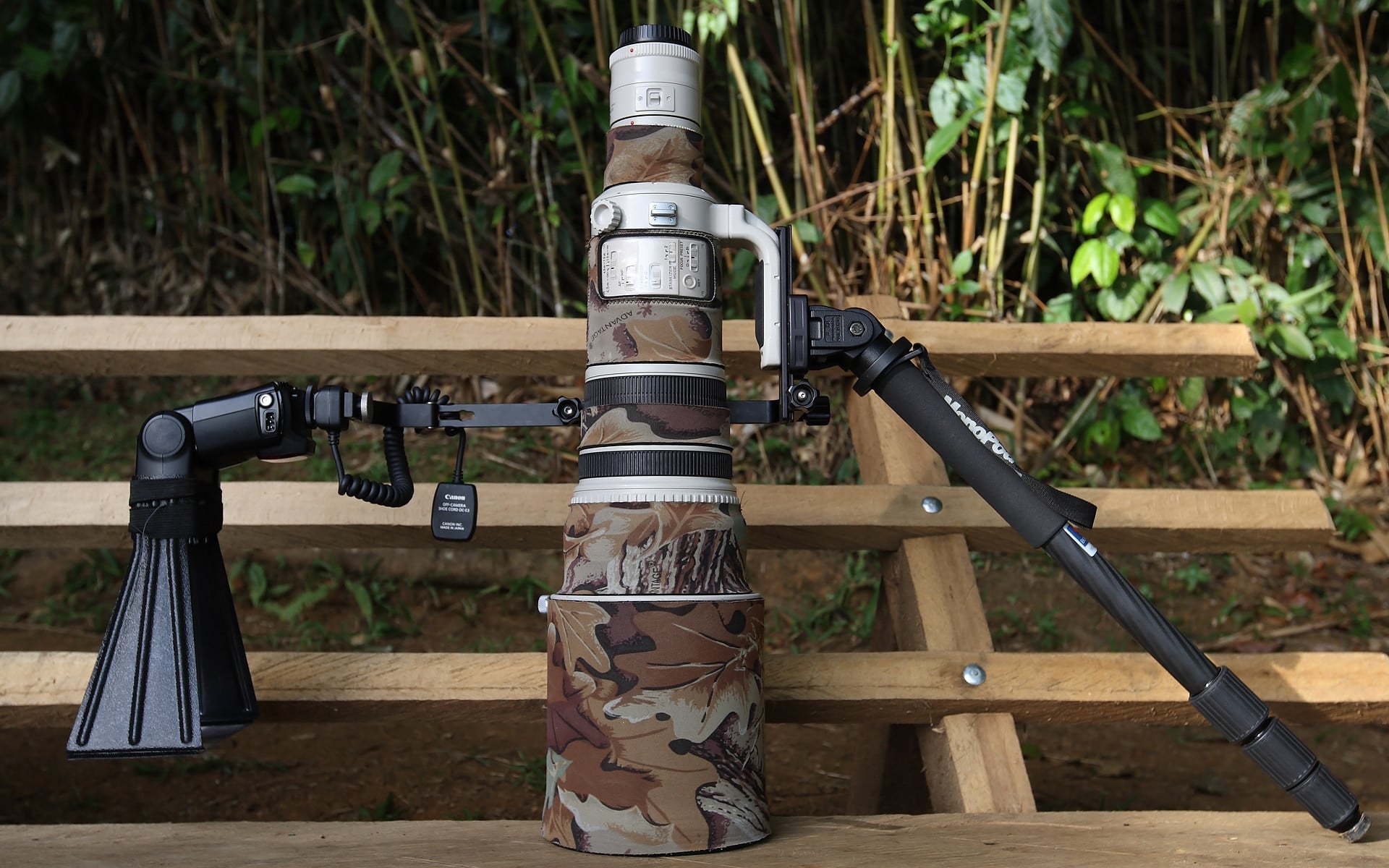
2. Real-World Travel Versatility
Beyond steadying telephoto optics, a compact monopod serves versatile secondary roles in the field:
- Elevated Perspective Boom: Extend the monopod fully, attach a wide-angle lens with an intervalometer or remote smartphone trigger, and hoist the camera high overhead to capture dramatic architectural bird’s-eye views above crowded festival courtyards.
- Compact Portability: Easily strapped to the side water bottle sleeve of a daypack, ready to deploy in seconds without unfolding three splayed legs.
- Makeshift Trekking Support & Self-Defense: While heavier than dedicated carbon-fiber trekking poles, sturdy aluminum monopods can provide emergency walking assistance on steep trail descents or ward off aggressive stray animals in remote terrain.
For dynamic travel where agility and speed supersede multi-minute long exposures, a reliable monopod earns its place in any photographer’s kit.
Support Independent Perspectives & In-Depth Insights
Every thoughtful analysis and candid critique comes from our dedication to truth and quality. We choose not to follow sensational algorithms or clickbait headlines.
Sustaining independent research requires reader support. Make a one-time or monthly contribution, securely processed by Google.
Payments secured by Google · Manage or cancel anytime in your Google Account


Comments