
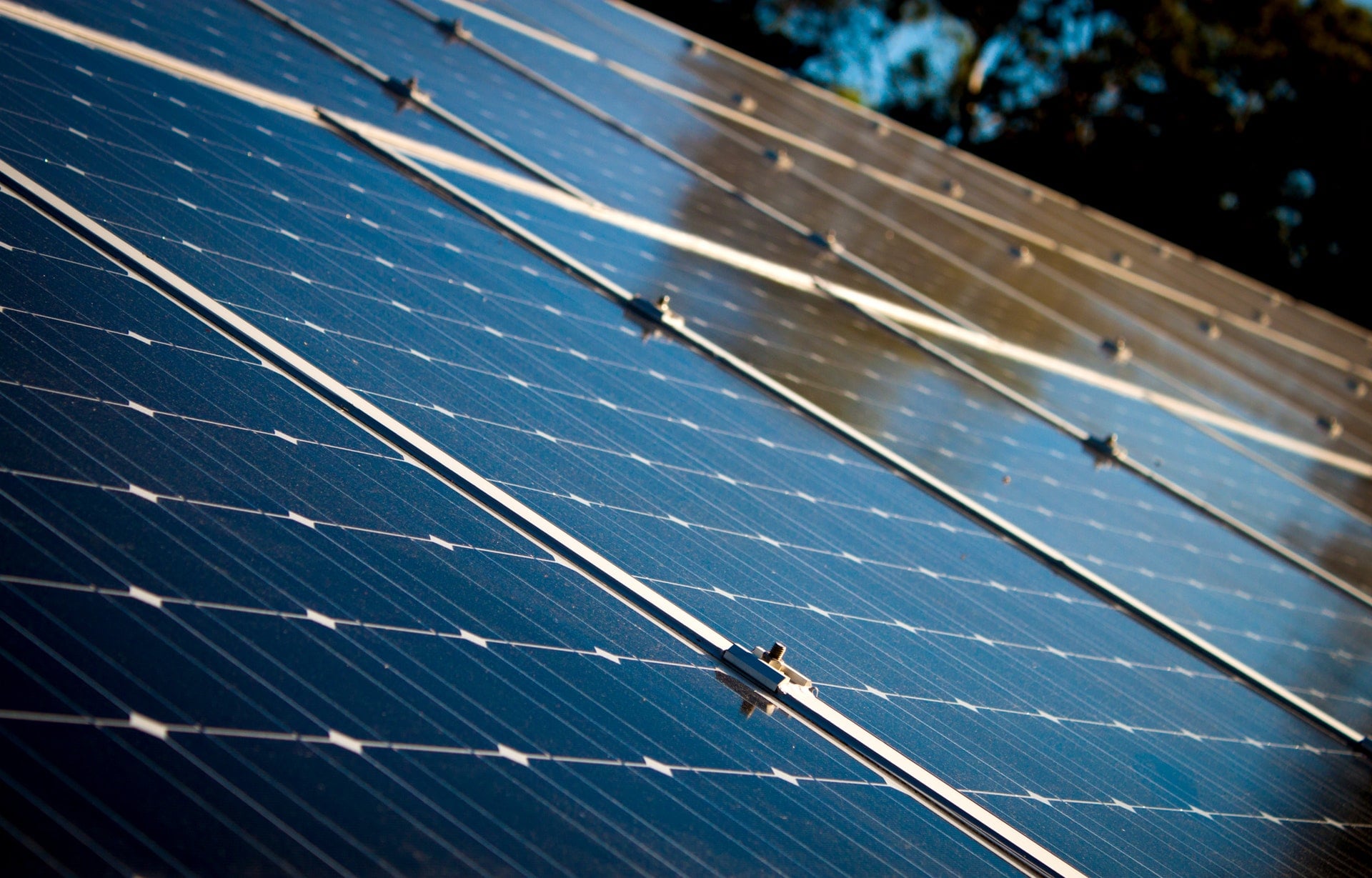
On this trip to Japan, Mizuc entered via Okayama and flew back to Taiwan from Fukuoka. As for why this route was chosen, it comes down to simply: “because I feel like it” (cue the eye-rolls). In truth, on one hand, this kind of spontaneity has always been the hallmark of Mizuc’s travels; on the other hand, it helped complete my travel footprint across Japan. After wrapping up this journey, only two major regions remain unvisited: the Tohoku region of Honshu and Northern Hokkaido (tourism boards are welcome to reach out!).
Additionally, on this trip I was assigned a special mission: the team leaders asked me to observe whether private residential rooftops across local Japan (at least throughout the Chugoku, Shikoku, and Northern Kyushu regions) were commonly fitted with (unsightly) solar panels. The purpose of this task was clearly to observe whether the Japanese share the same mindset as the ruling party in the Republic of China (ROC), pushing development schemes to install solar panels atop every single home’s roof (see [i] for related discussion).
To be clear upfront, I am no expert in energy calculations or engineering feasibility studies for grid construction. I am purely using my own eyes to see who actually installs solar panels on their roofs—essentially a field scout traveling ten thousand miles on foot.
In my past travel memories, one could spot people farming solar power on abandoned agricultural land from Hokkaido to Okinawa, but it was certainly not widespread. Typically between two cities, along railway tracks or connecting highways, only a handful of properties had installed solar arrays, and on a relatively modest scale—roughly 5 meters by 10-odd meters per setup (rough estimate). However, this was just a broad impression; because solar-farming land was uncommon, I tended to take a closer look whenever I spotted it. This time, I paid special attention and made a preliminary count: during the 1.5-hour train ride on the JR Sanyo Line from Mihara City to Hiroshima City, the proportion of houses with solar panels installed on their roofs was well under 0.2%.
Even the Japanese do not favor installing solar panels on their private rooftops. As Boss Liang argued in [i] when refuting the idea that “million solar rooftop” initiatives are ineffective and environmentally questionable, it is hard to fathom how Premier Lai and President Tsai came up with such a concept. Is this truly the caliber of energy experts in Taiwan today, or has the current ruling party—having repeatedly discredited nuclear energy and issued endless unbacked green-energy promises—become so desperate that they are grasping at straws?
Having seen it with my own eyes, I completely agree with Boss Liang’s observation: houses with rooftop solar panels installed really look unsightly. Japan in particular is a country that places tremendous value on urban aesthetics. Unless commercially viable transparent solar panels are invented, local governments across Japan are unlikely to ever permit widespread, unsightly solar panel installations on residential roofs.
I believe that certain political party known for its affinity with Japan ought to rethink whether pursuing such messy and ill-conceived policies is truly necessary.
Further Reading & Recommended Appendix
Support Independent Perspectives & In-Depth Insights
Every thoughtful analysis and candid critique comes from our dedication to truth and quality. We choose not to follow sensational algorithms or clickbait headlines.
Sustaining independent research requires reader support. Make a one-time or monthly contribution, securely processed by Google.
Payments secured by Google · Manage or cancel anytime in your Google Account


Comments