
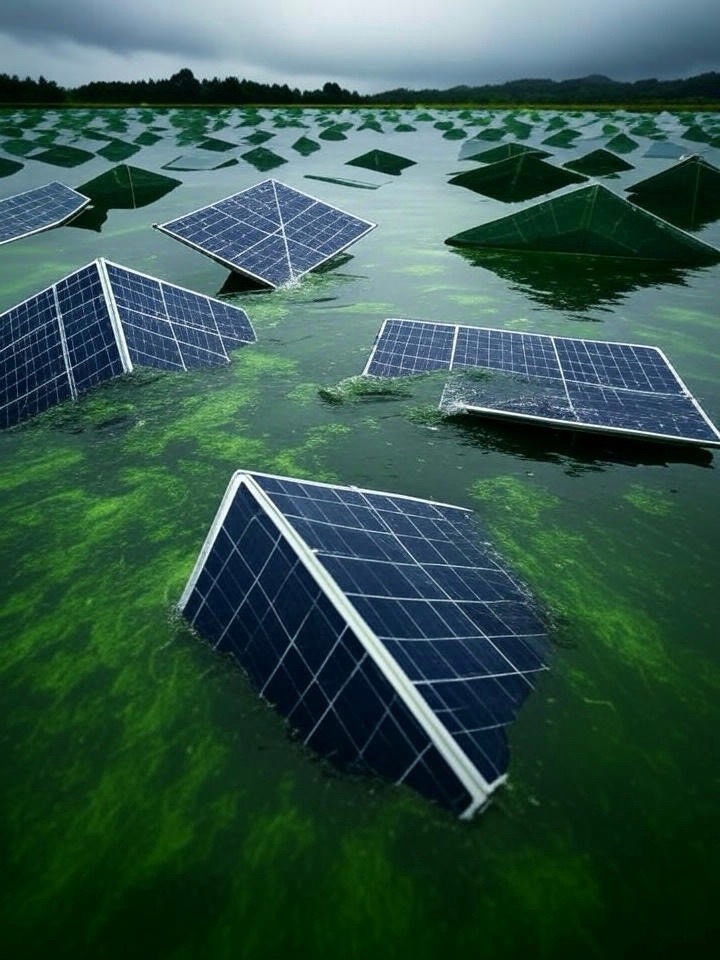
Picture a fierce typhoon sweeping across Taiwan: howling gusts and surging waves tear through floating photovoltaic arrays anchored above aquaculture ponds. Shattered glass and torn panels sink into the water, while toxic chemical compounds quietly leach into once-pristine aquatic systems.
Have we paused to examine whether these floating solar farms—often championed as the 「saviors of green energy」—might be pushing critical drinking water reservoirs and delicate aquatic ecosystems toward a dangerous tipping point?
Driven by aggressive renewable targets on a land-constrained island, floating photovoltaics (FPV) have rapidly expanded across reservoirs, detention basins, and fish ponds under the premise of dual land use.
Yet directly placing solar modules on water surfaces vastly amplifies contamination risks. Unlike land-based arrays where runoff can be intercepted and soil acts as a buffer, broken or submerged floating panels expose aquatic environments directly to toxic constituents.
This article reviews authoritative scientific literature, examines hypothetical disaster scenarios based on empirical findings, and highlights the environmental vulnerabilities of floating solar deployments.
The Hidden Toxicity of Solar Panels: Hazards Behind Clean Energy
Approaching a floating solar facility, rows of sleek panels gleaming under the sun present an image of eco-friendly technological innovation.
Yet solar modules are far from chemically inert.
A standard photovoltaic module consists of silicon cells, tempered glass, an aluminum frame, polymer backsheets (such as polyvinyl fluoride, PVF), and encapsulants (like ethylene-vinyl acetate, EVA). Within these components lie substances of significant toxicological concern:
- Lead (Pb) is commonly present in traditional solder alloys connecting electrical ribbons.
- Cadmium (Cd), in cadmium telluride (CdTe) thin-film modules, is a recognized carcinogen with acute environmental toxicity.
- Conductive tracks employ copper and silver, which exhibit pronounced toxicity toward aquatic microorganisms and fish gills.
- Polymer backsheets and fluoropolymer coatings can release per- and polyfluoroalkyl substances (PFAS)—so-called 「forever chemicals」 that resist natural environmental degradation.
- Dopants such as phosphorus and boron, along with acid residues from wafer manufacturing, represent additional chemical loads.
When modules are submerged during floods or fractured by storm debris, these compounds escape into the water column.
A 2020 study published in Environmental Science & Technology demonstrated that when CdTe solar modules are submerged in water for several weeks, cadmium dissolution concentrations can reach dozens of micrograms per liter—drastically exceeding the World Health Organization (WHO) drinking water guideline of 3 µg/L.
In Taiwan’s floating installations, continuous aquatic exposure accelerates moisture ingress, delamination, and material degradation, creating an immediate conduit for toxic release.
Pathways of Aquatic Degradation
Floating solar is celebrated as an ingenious spatial solution, yet it brings unique hydrological challenges to enclosed water bodies:
- Extreme Weather and Structural Rupture: Taiwan experiences frequent typhoons. A 2022 study in Environmental Management warned that floating PV systems face severe mechanical stress during gale-force winds and flooding. Fractured frames and severed cables expose internal solar cells directly to water.
- Hypothetical Scenario: Consider a typhoon striking an aquaculture zone in Pingtung. Severe wave action tears the mooring cables, smashing arrays against concrete banks. Cadmium and lead leach into stagnant pond waters. Within weeks, aquatic species experience bioaccumulation, rendering the harvest unfit for human consumption. While an illustrative scenario, it directly reflects the empirical leaching dynamics established in environmental chemistry literature.
- Persistent Organic Leaching (PFAS): Extended immersion in humid, UV-rich environments causes polymer backsheets to degrade, releasing fluorinated compounds. A 2023 International Renewable Energy Agency (IRENA) overview noted that the long-term cumulative effects of persistent fluorinated degradation products in enclosed reservoirs remain inadequately characterized. In drinking reservoirs, slow PFAS accumulation represents a silent, multi-decade threat.
- Physical Debris and Light Blockage: Shattered glass shards and micro-fragments cloud water columns, reducing sunlight penetration and crippling the photosynthetic capacity of phytoplankton and submerged macrophytes. Furthermore, dense array coverage alters thermal stratification and oxygen exchange. A 2021 investigation in Renewable Energy confirmed that high surface coverage leads to benthic hypoxia and sharp declines in aquatic biodiversity.
Dual Consequences: Ecological Shock and Human Health
The ecological cascade resulting from heavy metal contamination in enclosed waters can be devastating:
- Aquatic Toxicity: Studies in aquatic toxicology demonstrate that fish exposed to dissolved cadmium concentrations as low as 10 µg/L suffer marked hepatic and renal damage within weeks.
- Trophic Biomagnification: Heavy metals accumulate in benthic invertebrates and forage fish, traveling up the food chain to apex aquatic predators and ultimately human consumers.
- Drinking Water Vulnerability: Many Taiwanese reservoirs serve dual roles as flood retention basins and municipal drinking water supplies. Soluble cadmium exposure induces chronic kidney disease, bone demineralization (Itai-itai disease), and elevated cancer risk, while lead exposure causes irreversible neurological damage in young children.
Critical Policy Gaps: Technological Haste vs. Rigorous Oversight
Peer-reviewed literature clearly underscores that floating solar installations should not be placed indiscriminately:
- Environmental Science & Policy (2023) specifically advised against deploying floating solar on primary drinking water reservoirs or biologically fragile lakes, urging comprehensive environmental impact assessments (EIAs).
- Extreme weather resilience standards, rigorous post-storm cleanup contingency plans, and mandatory long-term heavy metal water quality monitoring are indispensable prerequisites.
Yet policy rollouts in Taiwan have often prioritized capacity installation speed over precautionary ecological reviews. In enclosed reservoirs where water turnover is slow, pollutants cannot readily flush away. Neglecting storm risks and chemical leaching transforms a well-intentioned renewable initiative into a long-term environmental gamble.
Conclusion: Balancing Clean Energy with Environmental Stewardship
Solar power remains a vital pillar of the global transition away from fossil fuels. However, deploying floating photovoltaics directly onto vital freshwater bodies without robust safeguards jeopardizes the very ecosystems renewable energy aims to preserve.
Future generations should not have to inherit compromised water resources because of poorly mitigated infrastructure today. A truly sustainable green transition must embrace rigorous environmental oversight, prioritize land-based brownfield installations, and strictly safeguard our most precious asset—clean drinking water.
Support Independent Perspectives & In-Depth Insights
Every thoughtful analysis and candid critique comes from our dedication to truth and quality. We choose not to follow sensational algorithms or clickbait headlines.
Sustaining independent research requires reader support. Make a one-time or monthly contribution, securely processed by Google.
Payments secured by Google · Manage or cancel anytime in your Google Account




Comments