
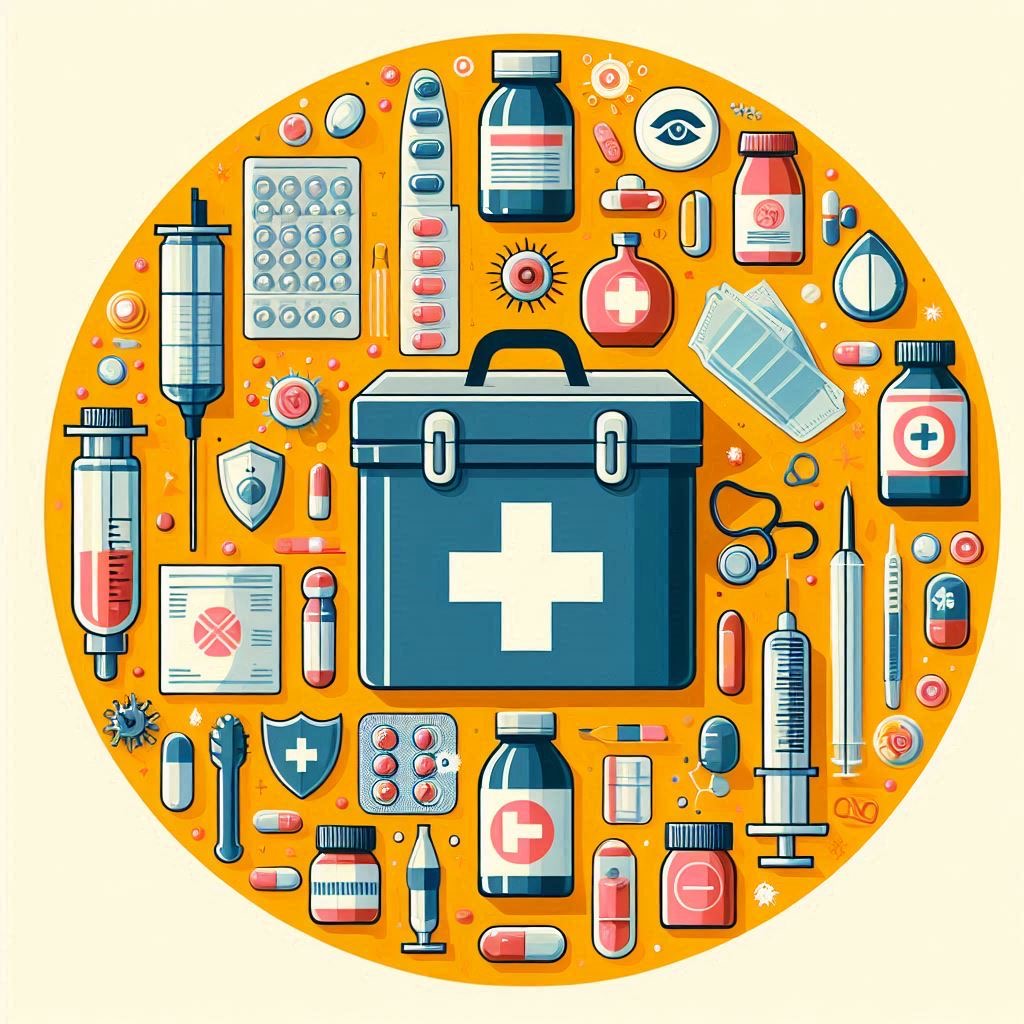
Recently, reports indicated that due to careless storage of medications by adults, a 3-year-old child accidentally swallowed several of grandmother’s sleeping pills at home and fell into a drowsy state, only recovering after being rushed to the hospital.
This is believed to be no isolated case; many members of the public are unclear about how to store medications and their expiration dates. To this end, the Food and Drug Administration of the Ministry of Health and Welfare of the Republic of China has publicly announced three correct methods for storing medications and six steps for disposing of waste medications, aiming to reduce environmental pollution and ensure medication safety.
3 Principles for Correct Medication Storage
The public often believes that medications should be stored in the refrigerator, or that medications can be kept forever, but these are all misconceptions. The correct ways to store medications are described below:
-
General medications only need to be stored at room temperature, taking care to avoid direct sunlight or placement in hot and humid environments (such as bathrooms and kitchens), unless the medication bag or container specifically indicates that refrigeration is required, such as hematopoietic injections, insulin that diabetic patients need to inject, a few eye drops, or anal suppositories, which must be placed in the refrigerator.
-
Medications should be stored in places that are not easily accessible to children, to prevent children from mistaking them for candy and swallowing them.
-
Medications should be kept in their original packaging as intact as possible, otherwise they are prone to moisture; it is best not to repackage them, so as to ensure the quality of the medication and avoid affecting its efficacy. At the same time, keep the complete packaging container, medication bag, or package insert, and carefully read the package insert or the labeling on the medication bag, paying attention to the expiration date. If there is anything unclear, be sure to consult a physician or pharmacist to ensure medication safety.
For more information on medication storage methods, please refer to the article “6 Principles for the Safe Storage of Household Standing Medications and Chronic Prescription Drugs” for further learning.
6 Steps for Recycling Waste Medications
After seeking medical treatment, you should follow medical advice, take medications on time, and store them correctly to use them with peace of mind. Even if you no longer need them, do not give leftover medications to relatives or friends, or take them again the next time you get sick. Regularly review leftover or expired medications at home, and correctly dispose of waste medications through the following 6 steps, including:
- Pour waste liquid medication into a ziplock bag (or a used plastic bag tied tightly).
- Rinse the medication bottle with water, and pour the water used to rinse the bottle into the ziplock bag as well.
- Remove waste pills from their packaging (such as foil packaging, medication bags, etc.) and concentrate the pills in the ziplock bag.
- Mix used tea leaves, coffee grounds, or used paper towels from home together with the liquid medication and pills.
- Seal the ziplock bag, and it can be disposed of with ordinary garbage.
- Recycle clean medication bags and bottles according to garbage sorting; remember to follow the principles of not discarding them randomly, not pouring them into the sink, and not flushing them down the toilet. In addition, note that anti-tumor medications should be taken back to the original medical institution for disposal as “medical waste.”
Support Independent Perspectives & In-Depth Insights
Every thoughtful analysis and candid critique comes from our dedication to truth and quality. We choose not to follow sensational algorithms or clickbait headlines.
Sustaining independent research requires reader support. Make a one-time or monthly contribution, securely processed by Google.
Payments secured by Google · Manage or cancel anytime in your Google Account


Comments