
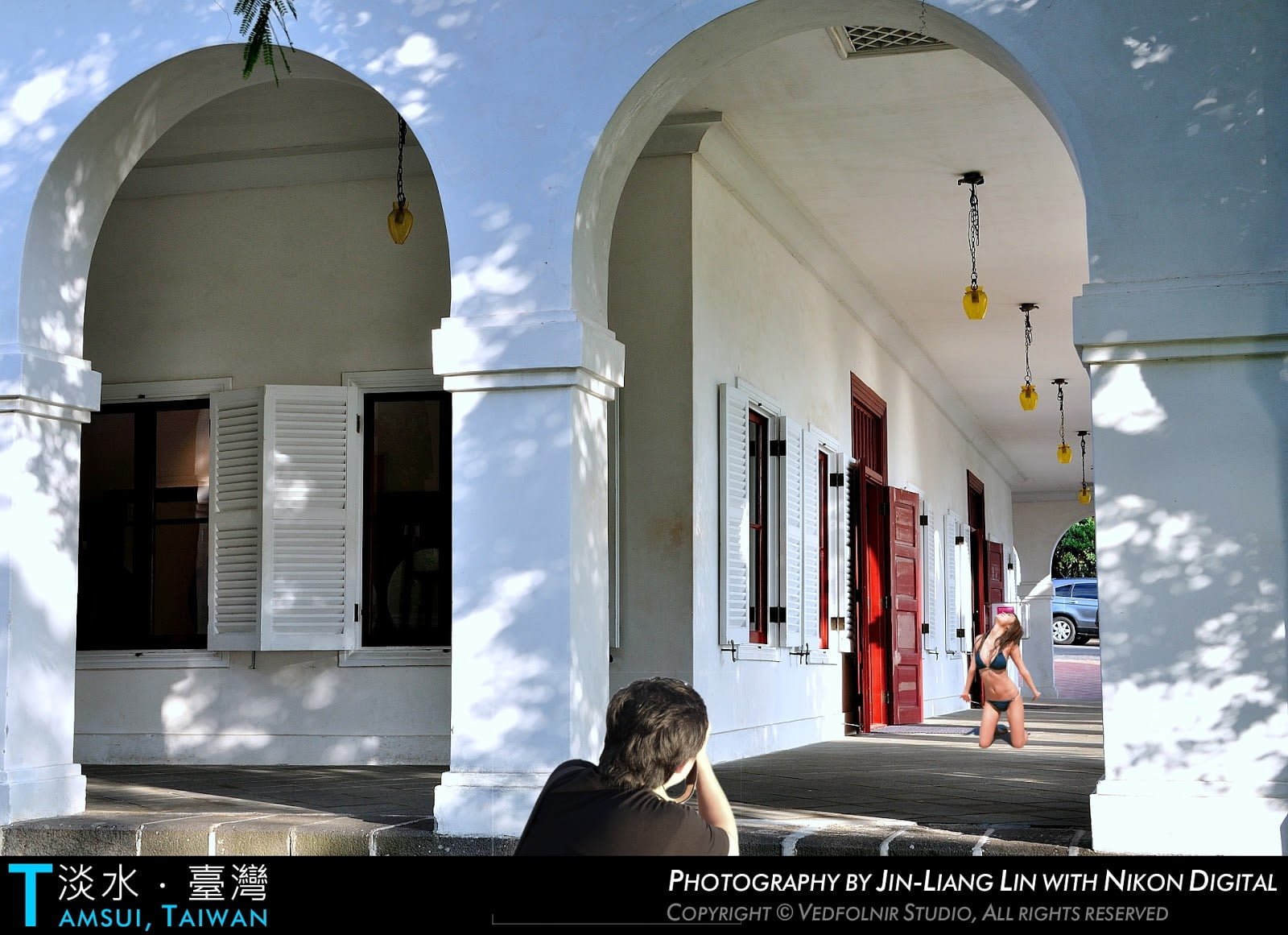
Around noon, I shared a photograph on Facebook of the “Tamsui Little White House.” I always make it a habit to provide a short historical background with my photos so friends can understand a bit more about the subject’s cultural context.
If my photographs and words inspire someone to spend their weekend visiting Tamsui, that is a wonderful bonus.
Searching for keywords about the Little White House led me from Google to a project portal managed by the Council for Cultural Affairs (CCA): the “Encyclopedia of Taiwan.”
While reading the article, I discovered that the building colloquially dubbed the “Little White House” actually possesses a rather formal official title: the author wrote “Former Qing”… “Tamsui”… “General Affairs”… “Customs”… “Residence.”
Damn, made a mistake—it’s “Former Qing Tamsui”… “Inspectorate General of Customs”… “Residence.”
Damn, let me check again. Got it right this time: “Former Qing Dynasty Tamsui Commissioner of Customs Residence” (前清淡水總稅務司官邸).
We all speak the same language, so why torment someone with a poor memory like mine?
These ten characters are hardly everyday colloquial phrasing, and rolling them off your tongue is a mouthful. Yet the Council for Cultural Affairs actually implemented the “No Right-Click” script on their official website—a gimmick typically found only on a handful of outdated blogs or commercial sites.
The Drawbacks of “No Right-Click” Scripts
To be frank, I strongly disagree with the Council for Cultural Affairs’ decision. Isn’t the CCA a public agency funded by taxpayers? Why treat citizens like potential thieves?
Articles on our site have also been copied and republished verbatim by third parties in the past, yet I remain entirely unwilling to install “disable right-click” or “disable shortcut keys” on this website.
Implementing such scripts merely punishes your loyal readers; for anyone determined to scrape articles in bulk, it is utterly useless.
Besides, rather than passively trying to block others from touching intellectual property, pursuing a formal copyright infringement lawsuit in court is far more effective—and can even recover monetary damages (ahem).
Here are a few quick examples illustrating why right-click blockers are completely ineffective:
In the simplest method, anyone can just hit “Save Page As” in their browser, open the saved file in any text editor, and freely copy any passage they want.
An even simpler method is directly using “View Page Source” (Chrome users can simply prepend view-source: to the URL), making the raw text instantly readable and copyable.
While raw HTML source code may look a bit cluttered (as shown below), for anyone with basic web design experience, it’s a total piece of cake.
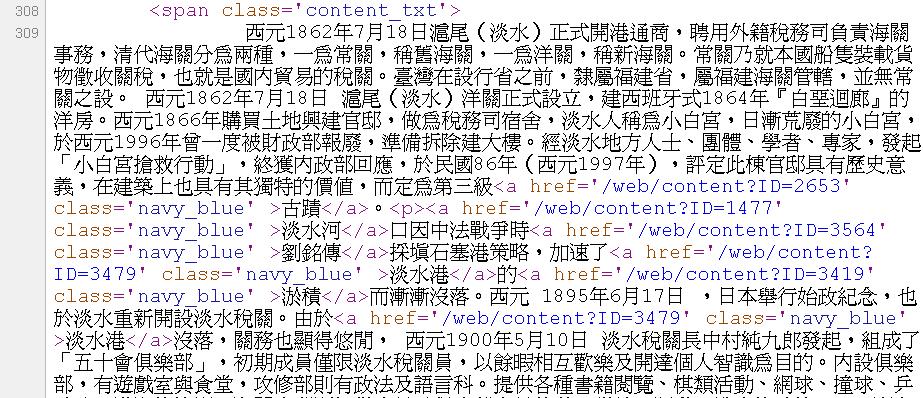 Encyclopedia of Taiwan webpage snippet
For bad actors determined to steal content, beyond writing custom web scrapers, even vintage free utilities like HTTrack can download entire static websites straight to a local drive.
The three methods mentioned above are just basic tricks. In reality, bad actors deploy automated crawlers (often termed data harvesting) or install browser extensions that disable right-click locks globally. There is always a workaround.
Is There Any Real Benefit to Disabling Right-Click?
Someone with the opposing view once had a brief discussion on the Encyclopedia of Taiwan discussion board a year ago:
The user asked:
“[Information Science] Disable Copy Function: Why doesn’t this website prevent right-click copying? Corporate sites and bloggers use it all the time so visitors can only read and cannot copy a single word. Have you considered how broadly beneficial this feature would be?”
The site administrator replied:
”…Thank you for your feedback. In response to your note: 1. The Encyclopedia of Taiwan is built on a spirit of co-creation and sharing. Public user submissions are licensed under Creative Commons (Attribution-NonCommercial-ShareAlike 2.5). Articles bearing the CC badge can be fairly used under the creator’s terms, so we do not lock right-click copying on those entries. Learn more at Creative Commons. 2. However, professional entries owned directly by the Council for Cultural Affairs are contractually restricted to this site only, which is why right-click copying is disabled on them. Please consult our Fair Use Policy; users may quote content within fair use boundaries. If you have concerns, feel free to contact us or request permission from the original author. Thank you!”
After reading that exchange, I couldn’t resist chiming in with my two cents:
“Hello. Disabling right-click is trivial to bypass for anyone intending to ‘plagiarize’—it takes just a keystroke or two beyond a right-click. But for genuine web readers, your article isn’t necessarily the end of the journey. In other words, whether verifying factual claims or conducting further research, copying a phrase isn’t about infringing copyright, but about running further keyword searches. Others simply highlight text to improve readability while reading. We hope the site administration recognizes this distinction: do not burden honest readers just because of a few scrapers. Thank you.”
There is no absolute standard answer as to which stance is entirely right or wrong; I offered my view merely as constructive feedback for webmasters.
After all, honest readers constitute the overwhelming majority. While scrapers copying entire sites inflict minor frustration, their relative proportion hardly justifies ruining usability for everyone else.
While administrators understandably wish to protect content, even students or researchers clipping excerpts for school reports or work presentations fall squarely within legal fair use.
True deterrence against content theft relies on public awareness of copyright law and a willingness to assert legal claims in court when genuine violations occur.
As creators, none of us want our hard work stolen in two clicks. But while safeguarding our work, we must never lose sight of the reading experience for our audience. What do you think?

Results and Discussion
Some might wonder why, after a long dissertation on copyright and usability, I ended the article with another creator’s image.
In fact, this photograph of an innocent child’s joyful smile is an open work I found online whose creator graciously chose to share under Creative Commons.
When choosing to share knowledge openly on the web, one should embrace web culture with a broader mindset—though using ad-blocking extensions remains a disservice that harms creators’ motivation to keep producing quality work.
Support Independent Perspectives & In-Depth Insights
Every thoughtful analysis and candid critique comes from our dedication to truth and quality. We choose not to follow sensational algorithms or clickbait headlines.
Sustaining independent research requires reader support. Make a one-time or monthly contribution, securely processed by Google.
Payments secured by Google · Manage or cancel anytime in your Google Account




Comments