
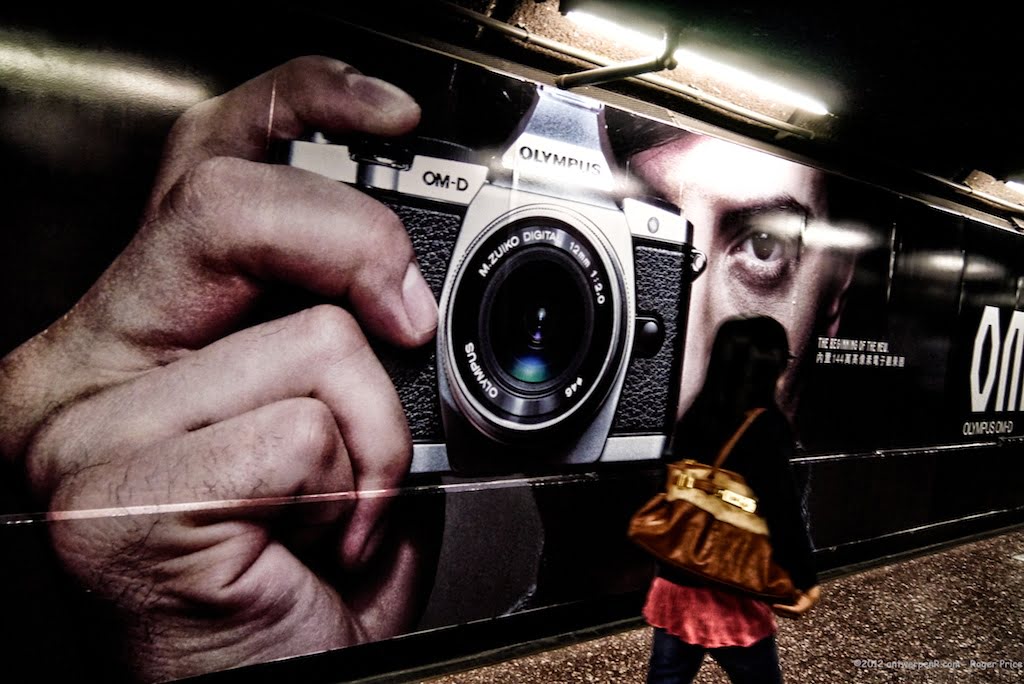
In the digital era, as entry- and mid-level camera equipment has become vastly more accessible (with high-end gear also increasingly democratized), many professional and amateur photographers frequently run into on-site disputes when photographing models or passersby, often due to failing to respect the subject’s personal wishes. The most heated arguments almost invariably center on the photographer’s right to privacy and copyright versus the subject’s portrait rights (predatory photographers being an entirely different issue).
From a fundamental legal standpoint, the subject being photographed (such as a model) possesses “general personal rights” (since portrait rights lack an explicit statutory definition under the civil law, they are subsumed within customary general personality rights).
Meanwhile, the photographer, as the creator (author), holds the “copyright” to the image as well as the “right to privacy” guarding their work from unwarranted inspection.
Because each side holds legally defined rights, in the absence of mutual negotiation and consent, these rights exist in opposing legal tiers. Specifically, copyright encompasses two fundamental pillars: “moral rights” and “economic rights.”
“Moral rights” can be further divided into three exclusive powers of the creator over the work itself:
- Right of disclosure (right to make the work public);
- Right of paternity (right to indicate authorship); and
- Right of integrity (right to maintain the work’s identity without unauthorized modification).
The three powers mentioned above are exclusive to the creator and cannot be assigned or waived. On the other hand, “economic rights” (which protect financial interests for 50 years after public release) can be freely assigned, licensed, or waived by the author, and are partitioned into the following powers based on use and nature:
- Right of reproduction;
- Right of public recitation;
- Right of public broadcast;
- Right of public performance;
- Right of public presentation (display);
- Right of adaptation or compilation; and
- Right of rental.
Under these legal provisions, the exact moment a photographer completes an “intentional creative expression”, they automatically own the “copyright” to that work. Conversely, without authorization from the subject, the subject retains absolute autonomy over whether their recognizable likeness within that creative work may be publicly displayed. These seemingly contradictory rights often plunge photographers and subjects into stalemates where both sides talk past each other.
Put simply, a photographer may not arbitrarily publish or commercially utilize portrait photographs without the subject’s consent, although there are legal caveats discussed below.
We often hear subjects invoke the justification of “privacy protection” on the spot, strictly forbidding photographers from shooting or even demanding that the photographer delete the images themselves.
Regarding the scope of privacy protection for subjects, the Judicial Yuan’s Interpretation No. 603 clearly articulates two major definitions of the right to privacy: “spatial privacy” and “secrecy/informational privacy”:
- Informational privacy: Refers to “guaranteeing an individual’s private realm of life against intrusions by others and ensuring autonomous control over personal data”; and
- Spatial privacy: Refers to “protecting the people’s right to decide whether, within what scope, at what time, by what means, and to whom their personal information is disclosed, while safeguarding their right to know, control, and request corrections of erroneous records regarding the use of their personal data.”
By applying reverse reasoning to Interpretation No. 603, we can derive the principle that in a “public space”, a subject cannot claim a violation of privacy merely to obstruct a photographer’s freedom of artistic creation.
Similarly, within the legal boundaries of privacy rights, photographers must not infringe upon the privacy of others in a “private setting”—meaning one may not secretly photograph individuals in non-public spaces without permission, which constitutes a clear invasion of privacy.
However, just as statutory laws protect a subject’s rights in private venues, a photographer’s rights are correspondingly protected by law.
Under no circumstance does a subject have the legal authority to unilaterally demand to inspect, delete, or destroy images stored inside a camera that constitutes the photographer’s private property. Even if the subject calls the police, police officers likewise have no legal power to search, delete, or damage a photographer’s private property without a warrant. In reality, however, because police officers can threaten referral to prosecutors or create extensive bureaucratic friction, photographers usually comply and delete the photos on the spot, receiving at best a hollow official apology after filing subsequent administrative complaints.
Regardless of whether a photographer is treated as an offender caught in flagrante delicto, third parties may at most effect an arrest under Article 88, Paragraph 1 of the Code of Criminal Procedure. Nonetheless, until convicted by a court of law, a photographer is merely a suspect, and no private individual may arbitrarily violate a suspect’s statutory rights.
Returning to the earlier point that photographers may not arbitrarily publish unauthorized photos: even if a photographer publicly exhibits an unauthorized portrait, unless there is blatant, large-scale commercial exploitation, the victim must carry the burden of proof for multiple legal criteria. This includes concrete “pecuniary damages” and the far more elusive “non-pecuniary (moral) damages.” Aside from public celebrities, it is exceedingly difficult for an average person to prove the quantifiable monetary worth of their face in court. Hence the classic legal adage: where the burden of proof lies, defeat often follows.
Therefore, unless a subject expressly voices an immediate objection before the photographer snaps the picture, it is exceedingly difficult in real-world practice for the subject to legally force the photographer to delete the image.
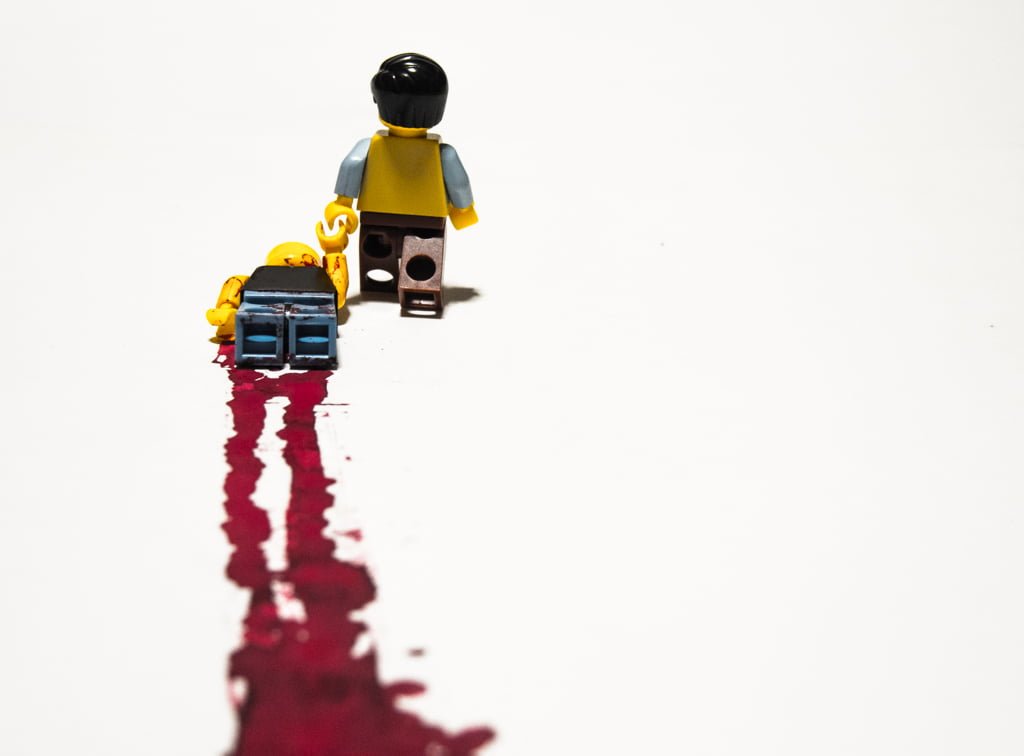
General personal rights and copyright often stand in natural tension. Because each party holds legally recognized rights, exercising them simultaneously can create conflict. However, based on prevailing customs and the legal priority given to protecting fundamental personality rights, our society generally maintains that photographers ought to respect the subject’s wishes—a principle consistently reflected across historical judicial precedents.
Furthermore, let us consider the legal dimensions of photographic works themselves. Once a work is created, it inherently embodies both “ownership of physical property” and “copyright.” For example, in typical photography competitions, organizers pay compensation (prize money) to require photographers to forfeit ownership, aiming to transfer or extinguish the photographer’s property rights over the physical print or file (without affecting the photographer’s non-transferable moral rights).
Some disreputable corporations even unilaterally expand their competition terms to unauthorizedly exploit non-winning submissions. However, without a legitimate consideration relationship between organizer and participant, many legal disputes have seen rejected entrants successfully sue organizers for unauthorized use.
Finally, when a client hires a photographer for a shoot, absent any express contractual agreement to the contrary, statutory copyright law dictates that the copyright remains vested with the photographer. Therefore, when commercial photography is commissioned, clients must draft comprehensive memoranda and contracts with precision.
Relevant Statutory Articles Cited in This Article
- Criminal Code Article 315: Offenses Against Secrecy.
- Civil Code Article 18: Protection of Personality Rights.
- Civil Code Articles 149–152: Exclusion of Infringement / Self-defense.
- Civil Code Article 195: Protection of Privacy and Personality Rights.
Notice Regarding “Photography Law: What Every Photographer Needs to Know About Copyright and Portrait Rights”:
- The discussion in this article is framed around the laws of the Republic of China (ROC) and does not represent universal international legal standards. In all cases, asking politely prior to shooting remains the fundamental core of photographic ethics.
Editorial Note: Originally written on July 7, 2011; revised on February 28, 2016.
Support Independent Perspectives & In-Depth Insights
Every thoughtful analysis and candid critique comes from our dedication to truth and quality. We choose not to follow sensational algorithms or clickbait headlines.
Sustaining independent research requires reader support. Make a one-time or monthly contribution, securely processed by Google.
Payments secured by Google · Manage or cancel anytime in your Google Account



Comments