
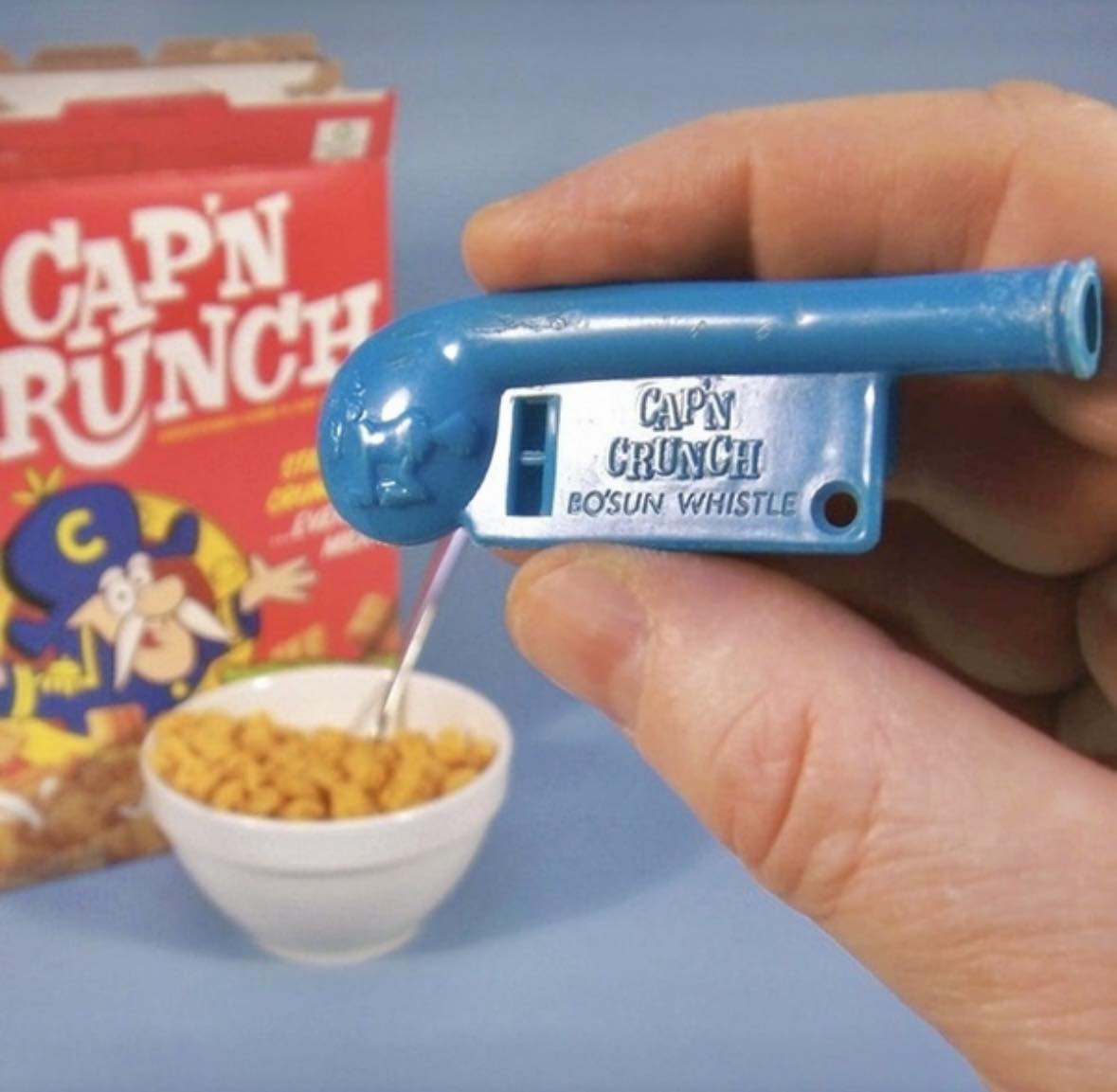
During the 1970s and 1980s, boxes of breakfast cereal offered more than just morning nourishment—they concealed coveted prizes. In a bid to win over young consumers, cereal brands routinely stuffed small trinkets and toys into their packaging. These innocent promotional novelties were meant for nothing more than harmless childhood amusement.
Yet, who could have anticipated that a diminutive plastic whistle packaged inside PepsiCo’s Cap’n Crunch cereal would ignite a nationwide technological storm, ultimately threatening the security of the United States telecommunications infrastructure?
The Secret Frequency of the Cap’n Crunch Whistle
Originally intended as a standard marketing giveaway, the whistle was designed to provide breakfast-table entertainment for youngsters. To the untrained eye, it was just another injection-molded toy.
However, this unassuming plastic gadget harbored an extraordinary acoustic secret: when blown, it generated a resonant acoustic tone at precisely 2600 Hertz. While that frequency meant little to an average consumer, within the analog architecture of the North American telephone network, it operated as a master skeleton key.
At the time, the AT&T telephone network relied on an in-band multi-frequency signaling architecture. Control signals, routing instructions, and billing triggers traveled along the exact same audio channel as human speech. Crucially, a sustained 2600 Hz tone served as the universal “trunk disconnect” signal. It communicated to automated switching systems: “This long-distance line is now idle; reset the circuit and prepare for a new call.”
By piping a 2600 Hz tone into a live telephone receiver, an operator could trick the trunk line into resetting without notifying the billing computer. The line remained open, allowing the caller to dial operator routing codes and make unlimited, untraceable, toll-free long-distance calls worldwide.
This systemic flaw was famously uncovered by a young blind prodigy and engineer named John Draper. Upon testing the Cap’n Crunch whistle against a telephone handset, he discovered that the telephone switch obediently reset, opening up direct, unbilled trunk access. The discovery unlocked a hidden world, earning Draper his legendary moniker: “Captain Crunch.”
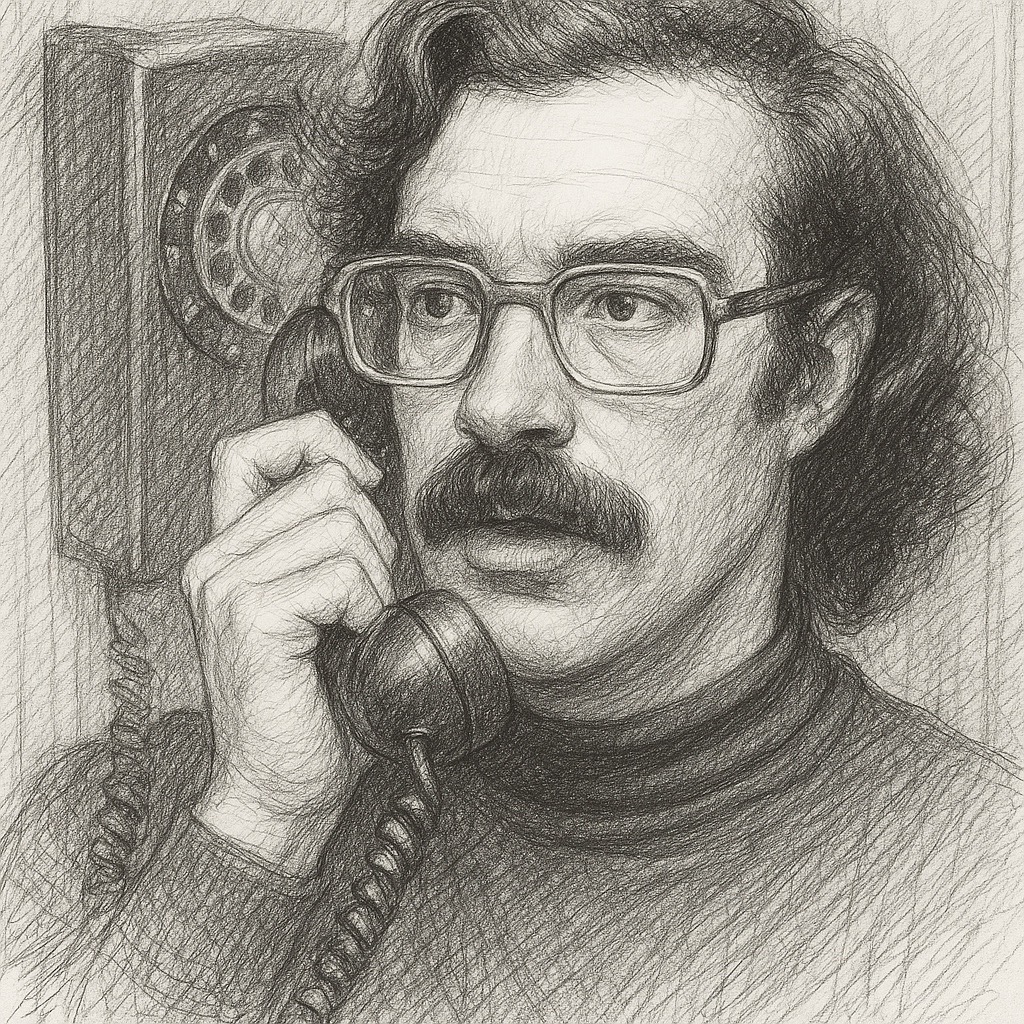
John Draper (Captain Crunch)
From Breakfast Toy to the Ultimate Phreaking Tool
Draper did not hoard this knowledge in secret. News of the 2600 Hz whistle spread like wildfire through countercultural engineering networks and nascent hacker gatherings. These electronic explorers, who called themselves “phone phreaks,” weaponized the breakfast whistle.
Using the whistle—and later building electronic multi-frequency tone generators dubbed “Blue Boxes”—phreaks traversed the labyrinthine underbelly of AT&T’s switching hierarchy. They bridged cross-continental circuits, tapped into engineering test loops, and dialed remote internal switchboards inaccessible to ordinary citizens. Among those early enthusiasts building and selling Blue Boxes were two young college students: Steve Wozniak and Steve Jobs, who later acknowledged that without the confidence gained from phone phreaking, Apple Computer might never have existed.
Unintentionally, Cap’n Crunch’s marketing campaign had become the primary arsenal of an underground technological insurgency. Millions of whistles were distributed across the nation, landing in the hands of curious teenagers and college students. The epidemic of toll fraud cost telecommunications monopolies millions in unbilled revenue while exposing the structural vulnerabilities of analog circuit switching.
A Public Relations Crisis for PepsiCo
For PepsiCo and its Cap’n Crunch subsidiary, the promotion devolved into a surreal PR crisis. A promotional giveaway conceived to delight children had metastasized into a celebrated hacking tool capable of destabilizing national communications.
AT&T and federal authorities launched aggressive crackdowns, upgrading network filters and prosecuting prominent phreaks. Draper was arrested multiple times for wire fraud. Yet, his technical notoriety ultimately propelled him into pioneering software development, where he authored EasyWriter, the first word processor for the Apple II computer, cementing his status as an early cybersecurity pioneer.
The Cap’n Crunch whistle passed into technological legend. It laid bare the fragility of in-band signaling and catalyzed the rise of digital out-of-band signaling (SS7), which finally segregated audio voice channels from network control data.
Accidental Lessons from the Breakfast Table
The saga of the Cap’n Crunch whistle serves as a timeless cautionary tale: even the most innocuous commercial initiative can trigger profound, unintended consequences. Who could have envisioned that a penny-priced promotional toy would rattle a multi-billion-dollar telecom monopoly?
It remains an enduring reminder that the cat-and-mouse dynamic between technology and security never rests. In an interconnected technological landscape, an unforeseen acoustic overlap can rewrite the rules of an entire industry.
Today, that vintage plastic whistle is no longer viewed merely as a cereal prize; it stands as a cultural artifact celebrating curiosity, hacking ingenuity, and the serendipitous twists of computing history.
Support Independent Perspectives & In-Depth Insights
Every thoughtful analysis and candid critique comes from our dedication to truth and quality. We choose not to follow sensational algorithms or clickbait headlines.
Sustaining independent research requires reader support. Make a one-time or monthly contribution, securely processed by Google.
Payments secured by Google · Manage or cancel anytime in your Google Account

Comments