
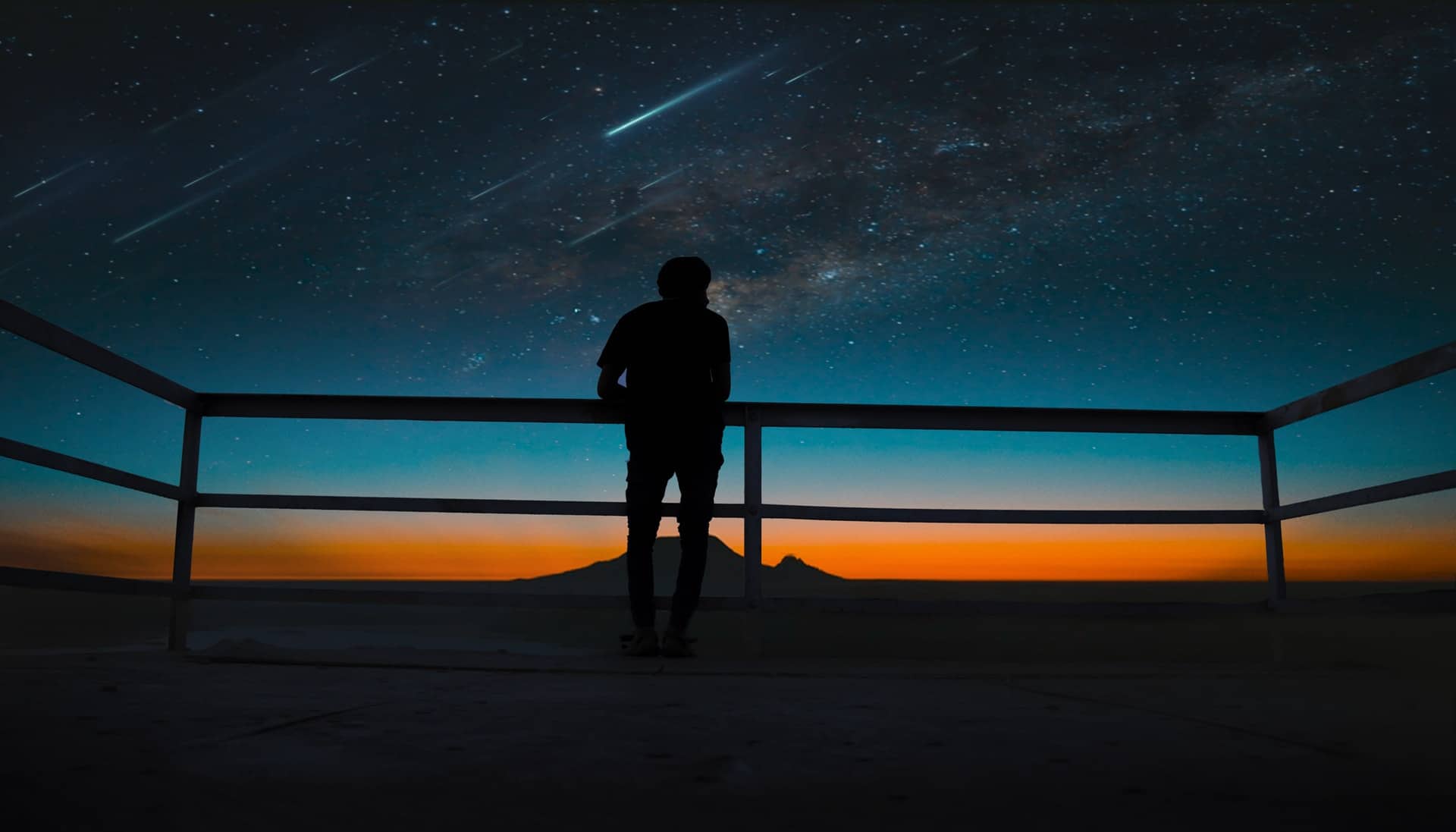
“A bad headlamp can send you to the sky lantern; a good headlamp can get you safely home. I think compared to heaven, most people would rather choose the warm bed at home, right?”
In mountain and outdoor exploration, the alternation of day and night is often accompanied by enormous environmental risks. Whether it’s setting off in the dark at two in the morning to summit a hundred peaks, being forced to push forward along a ridge when fog rolls in in the afternoon, or having to wear a headlamp for a night descent due to an unexpected delay, a reliable professional headlamp is always the most non-negotiable life-saving gear in a mountaineer’s hands!
Many beginners who have just stepped into mountaineering often stare only at the “lumens” on the outer packaging when walking into an outdoor gear store, thinking that the bigger the number, the better. However, in the harsh high-mountain environment, no matter how bright the light is, as long as the structure is unstable, the battery is accidentally drained by the backpack, or a rainstorm causes water to short-circuit it, you will instantly fall into a fatal crisis on a pitch-black cliff edge.
Before you prepare to spend a budget of several thousand dollars to invest in a high-quality headlamp, be sure to first review the following 5 key core points!
Point 1: Shape and Counterweight Structure (Integrated Front-Mounted vs. Split Rear-Mounted)
The appearance and shape of a headlamp is by no means purely for aesthetics; it directly determines the neck burden and center-of-gravity stability during long-term wear:
1. Integrated Front-Mounted (Lamp head and battery integrated at the forehead)
- Structural features: The battery compartment is built directly behind the lamp head, and the entire device is fixed to the forehead by a single-loop headband.
- Advantages: Extremely compact structure, storage volume as small as an egg, easy to put on and take off with no exposed wires.
- Disadvantages: All the weight (about 70-100 grams) is completely concentrated at the forehead, and when running or descending quickly, it easily produces an obvious forward dangling sensation (commonly known as the “nodding” phenomenon).
- Best scenarios: Single-day suburban hill hiking, single-push summit of hundred peaks, camping site work, trail running backup.
2. Split Rear-Mounted (Lamp head at the forehead, battery box placed independently at the back of the head)
- Structural features: Only a lightweight lighting lamp head is at the front, and a wire moves the heavier battery box to below the back of the head.
- Advantages: Perfect front-to-back counterweight balance, greatly reducing forehead pressure; can accommodate larger-capacity high-power lithium batteries; during extreme low-temperature snow-season climbing, some models support extending the battery box cable to hide it inside a mid-layer warm jacket, preventing the lithium battery from freezing and cutting power.
- Disadvantages: Larger storage volume, and the exposed wire may be snagged when weaving through dense forests and bamboo.
- Best scenarios: Multi-day heavy-load traverses, long-distance night trail running, snow-season alpine climbing, engineering search and rescue, and cave exploration.
Point 2: Power Supply System (Dry Battery vs. Lithium Battery vs. Dual Power Hybrid)
Power is the heart of a headlamp. On high mountains where there is no outlet for resupply for days on end, the fault tolerance of the power supply system determines everything:
| Power Type | Advantage Analysis | Disadvantages and Physical Limitations |
|---|---|---|
| Traditional dry battery (AAA size 4) | Extremely convenient resupply, available at any convenience store; backup batteries can be replaced quickly, saving the long wait for charging. | Low energy density, discarded batteries are heavy and not eco-friendly; and alkaline batteries experience a rapid voltage drop in sub-zero low-temperature environments, greatly shrinking discharge time. |
| Rechargeable lithium battery (USB-C) | Extremely high energy density, strong constant high-lumen output capability; can be charged anytime with a power bank, low long-term use cost. | During multi-day treks without power, once the battery is depleted you must charge slowly by wire on the spot, unable to instantly swap in a fully charged power source. |
| Dual power hybrid system (Hybrid) | 【Strongly recommended first choice!】 The lamp slot is compatible with both a dedicated high-capacity rechargeable lithium battery and AAA dry batteries (such as Petzl CORE or Black Diamond Dual-Fuel technology). | The dedicated lithium battery pack usually needs to be purchased separately, or the unit price is slightly higher. |
Point 3: Ask Around About Headband Styles (Single-Loop Ring vs. Top Three-Point T-Shape)
Many people only look at the lamp body specifications when buying a headlamp, but overlook that the “headband” is the soul accessory that fits against your skin and hair all night:
- Single-loop ring headband: The most common form on the market, suitable for lightweight headlamps under 80 grams. When choosing, pay attention to whether the webbing has a “moisture-wicking breathable weave,” and it is best if the outer side has a “360-degree reflective strip,” so that teammates behind you can clearly identify your position in the dark.
- Top three-point T-shape headband (with top-of-head strap): Essential for large-capacity battery boxes or heavy-load headlamps! An extra support strap across the top of the head completely resolves the downward pull of vertical gravity. In addition, if you need to wear a climbing helmet or mountaineering safety helmet, the T-shape headband can be firmly fixed on top of the helmet, never slipping up and popping off.
- Headband hygiene and detachability: After long-term sweat soaking, inferior headbands easily become smelly and loose. Please confirm that the headband can be easily detached for “independent soaking and washing” to maintain long-lasting elasticity.

Point 4: Additional Functions Not to Be Overlooked (Red Light Night Vision and Anti-Accidental-Touch Lock)
A headlamp designed specifically for the outdoors must have the following two extremely critical auxiliary functions:
1. Red Light Mode—Mountain Hut Etiquette and Night Eye Protection
- Dark adaptation protection (Night Vision): The human pupil needs about 20 to 30 minutes in the dark to establish dark adaptation. If you turn on a glaring white light in the middle of the night, the pupil instantly contracts, and after turning off the light everything before your eyes goes pitch black; red light has a longer wavelength and does not destroy the pupil’s dark adaptation.
- Basic high-mountain hut etiquette: Getting up at one in the morning at Paiyun Lodge or Tianchi Lodge to pack up, turning on a high-lumen strong white light will shine directly on other sleeping hikers, causing public outrage; switching to a soft red light lets you see your own backpack clearly without disturbing others.
- Insect repellence and distress signals: Red light does not easily attract flying insects to your face; long-pressing to switch to red light strobe or SOS Morse code is a highly recognizable survival light marker in storms and dense fog.
2. Switch Lockout Mode—Avoiding Fatal Self-Ignition Deep in the Backpack
Many hikers have had this painful experience: the headlamp is casually thrown into the mountaineering pack, and during long bumpy travel, the switch is accidentally squeezed on by a sleeping bag or water bottle. The headlamp continuously generates high-power heat inside the sealed backpack, and when you take it out upon arriving at camp late at night, the shell is burning hot and the power has long been completely drained! A professional headlamp must have a “long-press 3 to 5 seconds button lock” or a physical anti-accidental-touch tab, to completely seal off the possibility of accidental power-on.
Point 5: Weather Resistance and Waterproof/Dustproof Rating (IP Specification)
Mountain weather changes rapidly, and afternoon torrential thunderstorms, humid dense fog, or cold snaps with snow are all commonplace. A headlamp’s waterproof capability must be based on the objective international Ingress Protection rating:
- IPX4 (splash-proof): The basic bottom line for mountaineering activities. It can withstand water splashing from all directions, enough to handle general light rain and heavy sweat erosion.
- IPX7 / IPX8 (underwater immersion protection): Advanced mountaineering standard. It can withstand immersion in 1 meter of water for more than 30 minutes without water ingress, and even if you accidentally drop it into a deep pool while crossing a stream, it will still light up normally after being retrieved.
- IP67 / IP68 (full dustproof + full waterproof): Extreme weather-resistance specification, completely preventing fine wind-blown sand and soil from entering the internal circuits, suitable for long-range wilderness exploration and desert Gobi hiking.
Conclusion: The Last True Word on Buying a Professional Headlamp
As for the lighting brightness (Lumens) and beam distance that many people care about most, these are objective data that are clear at a glance on the packaging box:
- Close-range camp cooking: about 30 to 50 lumens of wide-angle floodlight is more than enough.
- General mountain trail night travel: about 100 to 200 lumens of soft beam is the most comfortable and non-reflective.
- Cliff pathfinding, finding reflective trail markers: requires a long-throw spotlight function that can instantly burst to 300 to 500 lumens or more.
As long as within your acceptable budget range, after confirming that it passes the 5 hard indicators of “shape balance, dual power fault tolerance, stable headband, red light anti-accidental-touch, and high weather-resistance waterproofing,” just pick the headlamp with a uniform beam that is the brightest within your budget!
Safety is the only destination of every journey. Put on a truly reliable professional headlamp, illuminate every step of gravel beneath your feet, and warmly return to that most stable bed at home at the foot of the mountain!
Further Reading
- Buying Advice and Analysis for Stoves for Outdoor, Mountaineering, Summiting, Camping, and Independent Travel
- How Should You Dress to Stay Warm When Traveling in Sub-Zero 10, 20, 30 Degree Cold Countries?
- How to Dress for the Great Cold in Winter? Onion Layering or Warm Heavy Coat? A Buying Guide for GORE-TEX and Hard Shell vs. Soft Shell
Support Independent Perspectives & In-Depth Insights
Every thoughtful analysis and candid critique comes from our dedication to truth and quality. We choose not to follow sensational algorithms or clickbait headlines.
Sustaining independent research requires reader support. Make a one-time or monthly contribution, securely processed by Google.
Payments secured by Google · Manage or cancel anytime in your Google Account


Comments