
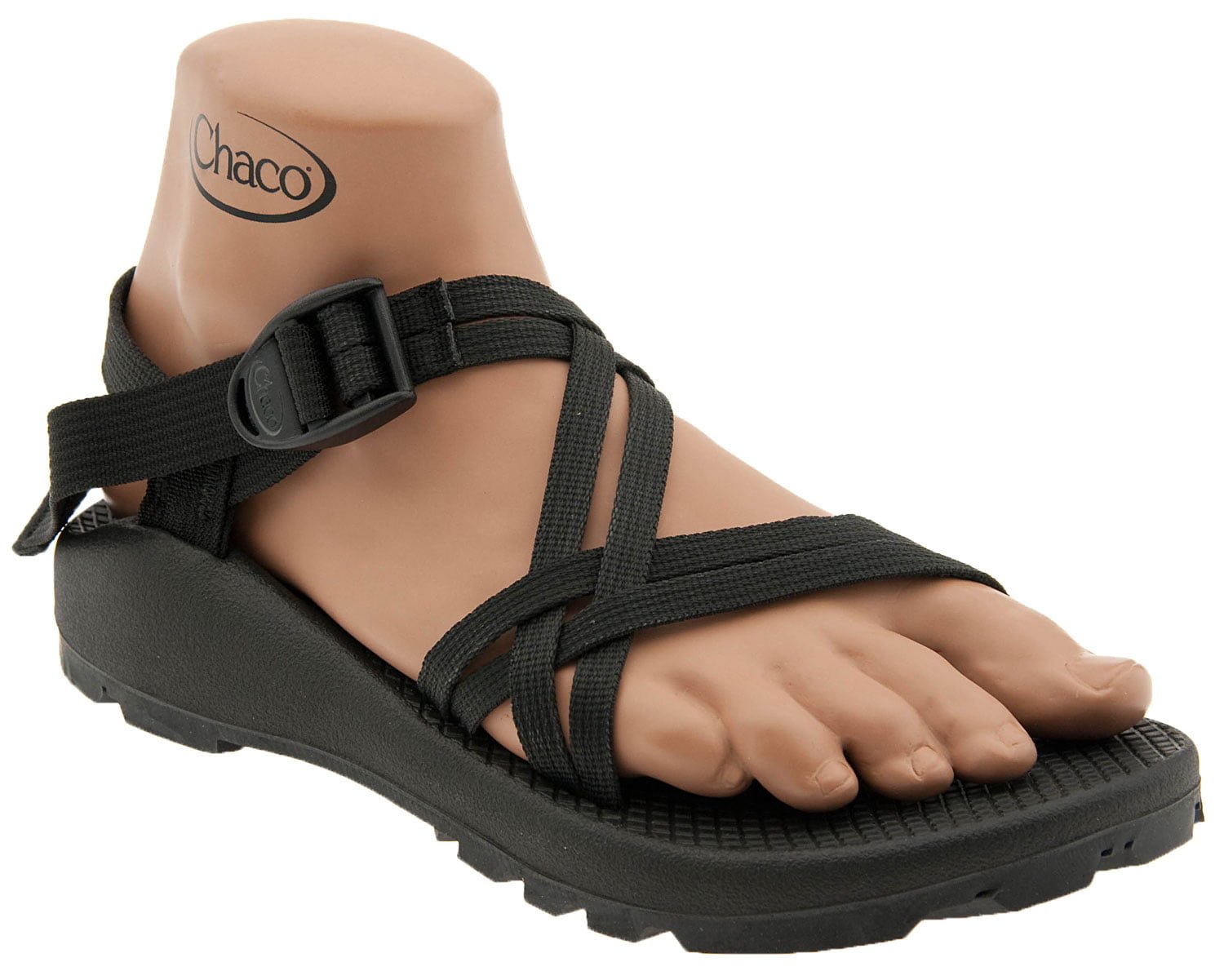
Although the title of this article is “My First Pair of Chaco Sport Sandals”, my very first pair of sport sandals was actually dedicated to Teva[1].
Regardless, both Teva and Chaco are renowned professional gear manufacturers in the outdoor sport sandals market.
I still remember how, thanks to having the same brand enthusiasm, I hit it off immediately with a good friend of Wan-Chen’s. We spent an entire evening chatting away at a riverside café along the Tamsui River, exchanging stories and experiences using Teva sport sandals.
Today, in addition to introducing the pair of Chaco sandals I snatched up during a major sale, I will also compare the similarities, differences, pros, and cons between Chaco and Teva to serve as a reference for anyone considering buying a pair.
**
Note: It’s best to avoid buying expired or heavily aged stock for professional outdoor equipment. You can refer to the article 《Gear Repair: Vibram Outsole and Footbed Delamination on Chaco Sport Sandals》.
The biggest difference between sport sandals and regular casual sandals lies not only in the choice of specially engineered polymer materials[2] to boost weather resistance and material strength, but also in providing solid foot protection. Wearing such sandals directly into riverbeds for river tracing, mountain hiking, or walking on sandy beaches is standard practice.
I once wore Teva sport sandals on several long-distance treks, and even scaled up to 92% of a 3,000-meter peak.
At the time, I was hiking an overseas mountain trail with no maintained path. I had to scramble up through forest vegetation and rocky riverbeds. Right before the final push to the summit, there was a massive scree slope. Basically, you had to jam your toes into the loose rocks to keep from sliding off the cliff edge, so I swallowed my pride and turned back.
Interestingly, when I was preparing to retreat (stuck motionless on that loose scree slope), the only other hiker I encountered that day came up behind me ─── a blonde girl in full, professional mountaineering gear.
She looked at me curiously and asked how on earth I had hiked up there in sandals (the truth was, I had been misled by trail markers and kept hiking higher and higher).
The design objectives for these sport sandals include durable outsoles, multi-layered cushioned soles, comfortable wear, efficient water drainage, excellent foot protection[3], clear ground feedback while walking, quick-drying webbing that does not chafe, and attractive aesthetics. Only when meeting these standards can they truly be called professional sport sandals.
The more demanding the design goals, the higher the retail price. Those mid-to-low-priced sandals found in hypermarkets like Prosperity Plaza Taiwan (formerly Carrefour), often made locally or imported from mainland China, face inherent structural, material, and aesthetic limitations even if they call themselves sport sandals.
If you wear ordinary sandals in casual everyday environments, there won’t be much of an issue, but they simply cannot handle harsher conditions, and I would not advise you to try.
In my youth, I once bought a pair of supposed sport sandals at Prosperity Plaza Taiwan (formerly Carrefour), which even seemed to have an air cushion at the bottom. Looking back now, “foolish” is the only word for it.
Not only did the wet straps violently chafe my feet, but the sole was made of cheap rubber. Whenever the shoes got wet or I walked on a rainy day, passersby around me would be treated to an annoying “squeak~ squeak~ squeak” sound with every step (damn it).
Of course, a professional-grade sport sandal might also tout antibacterial or odor-resistant features, although that is largely marketing hype. And that brings us to the most criticized flaw of the Teva sandals I used to own ─── the smell.
After wearing Tevas for a long time, the smell was atrocious, giving rise to quite a few “not-so-fun” stories.
Fortunately, recent Teva models place a stronger emphasis on antibacterial odor control, though I am not certain how much it has improved.
Once, while having breakfast at a female friend’s dorm, she looked at me with an awkward expression and said: “Actually, I’ve been wanting to tell you… your sandals have quite a… presence.”
Any smart person knew immediately what she meant.
The Awkward Sandal Incident on an Airplane
Another time on a long-haul flight, for the sake of foot comfort and my personal appreciation for natural living, I loosened the sandal straps slightly. The woman sitting in the row ahead immediately spun around and told me condescendingly: “Can you put your shoes back on? My child smells a weird odor.” (Hey, these are sandals, they were thoroughly ventilated to begin with!).
As I recall, their group was a business delegation. A man who appeared to be the boss went up to the flight attendant before takeoff and said: “This lady from our company has a cold. Can you upgrade us to business class so she won’t infect others? I can go along and look after her.”
After being politely turned down by the flight attendant, the boss was undeterred and said: “The flight has plenty of empty seats anyway, what’s the harm in letting her rest in business class?”
When the attendant turned him down a second time, he persisted: “Our company always flies with your airline. Can’t you accommodate her? Why is your service so terrible?”
To everyone’s delight, the boss was rejected once again by the polite flight attendant.
He continued making a fuss two or three more times, even arguing with another flight attendant. That day I learned two things: flight attendants truly encounter difficult passengers, and company bosses often have remarkably thick skin.
The First Chaco Sport Sandals of My Life
In light of those dark memories of awkward odors, and happening upon a rare discount sale, I finally bought my first pair of Chaco professional sport sandals.
I had always heard they were great shoes that never smelled bad.
I bought them and wore them, but personally speaking, I still lean toward Teva.
If I were to distinguish between the professional outdoor sandals produced by Teva and Chaco, I would separate them by usage scenarios.
Brand C claims to be the most premium brand in the sport sandal industry (which probably refers to the price). Although I am still breaking them in, based on my current wearing experience, if I go climbing high mountains next time, these sandals definitely won’t be coming along.
The heavy weight of the shoe is one factor, but once on the foot, they also feel oddly disconnected.
Moreover, their continuous ribbon strap design prevents the force from the second, middle, and ring toes from being effectively transferred back into the shoe body[6].
While Chaco’s patented webbing strap system has clear advantages over Teva, the downside is just as I described: due to the structure, there are several points where foot traction and energy return are lost.
On the other hand, the continuous strap system lets you adjust the fit easily by pulling through the midsole loops. Keep in mind that new straps can be quite stiff and need a firm pull, or you can adjust them step by step in a left-right zigzag fashion like I do.
In contrast, Teva sport sandals offer much more solid foot stability. This comes from the forefoot strap, heel strap, and an additional side strap working together.
The advantage of Teva’s design is that the force exerted by the foot is easily transmitted to the shoe body, making it much easier to drive the sandal and giving it multi-directional mobility.
Combined with Teva’s thinner sole providing great flexibility and terrain feedback, it always gives me a more secure and reassuring feel.
Especially when your foot gets wedged between loose gravel in a riverbed, I don’t think I’d want to be wearing Chacos.
In fact, over several riverbed treks in the past, Teva has consistently delivered a superb river tracing experience.
Teva uses its proprietary Spider Rubber outsole. The groove pattern provides great drainage, and the rubber compound excels in water-friendly grip and slip resistance. Its performance on wet rocks is far superior to Vibram soles, making it ideal for simple river tracing and wet trail crossings ─── practically an amphibious water sandal.
However, its wear resistance is relatively lower. The contrast with Vibram is stark: apart from tread designs (Vibram resembles firm tofu blocks, while Teva looks like octopus suction cups), if you try flexing the shoes by hand, Vibram feels like a solid block of stiff rubber with high rigidity, whereas Teva offers supple flexibility.
I am extremely picky about how shoes feel on my feet and their functional structure, because the way I walk is… a bit different from ordinary people.
If a shoe doesn’t fit my stride properly, one careless step while walking on the road could cause the sandal to fly off, or fail to keep up with my foot, sending me crashing into a car.
(Inner monologue: “The author is clearly the most dangerous pedestrian here, yet makes all these excuses! Last time we crossed the street together, he almost kicked over a moving scooter.”)
Looking at Chaco’s strengths, thanks to its substantially thicker sole and the wear resistance of Vibram outsoles, it is actually far better suited than Teva for suburban outings, casual hiking, and road trekking.
When I save up enough money to go on a highway walking tour in Europe, this pair of sandals will certainly be on my shortlist ─── though its weight remains a drawback.
I won’t delve into other material specs and design details here. Chaco and Teva represent two very polarized design philosophies. It all depends on your intended environment, so feel free to check the product specs on their official pages.
After wearing Chacos for extended walks, I noticed one minor drawback: slipping them on and off is somewhat cumbersome. Especially after taking them off, the straps over the instep can tighten from walking, requiring readjustment when putting them back on.
Frequently Asked Questions (Q&A)
1. Decision Advice Between Chaco and Teva? (Reader Lu)
Reader Lu commented:
Thank you for your clear analysis and introduction! This really helped me decide which pair to choose.
Mizuc replies:
I’m glad the article could shed some light on choosing between these two top sandal brands!
The core difference comes down to choosing between “support & durability” versus “lightweight & agile”:
- If your goal is long-distance walking, low-to-mid elevation suburban hiking, camping, or you require firm arch support, Chaco ─── heavier, but offering unbeatable arch support and tank-like durability ─── is undoubtedly the premier choice.
- If your activities focus on water sports, beach surfing, river tracing, or you prioritize lightweight casual convenience with easy slip-on comfort, the soft and nimble feel of Teva will feel significantly more comfortable.
Choosing the gear that fits your primary itinerary and scenario is always the best choice!
2. Do You Offer TEVA Amphibious Sport Sandal Repair Services? (Reader Kao Sheng-ming)
Reader Kao Sheng-ming asks:
Do you repair TEVA amphibious sport sandals?
Mizuc replies:
Hello! Mizuc is an outdoor travel and gear reviewer, not a professional cobbler or authorized repair workshop!
If your Teva sandals suffer from delamination, broken webbing, or a worn-out sole, I recommend seeking help through the following official channels:
- Manufacturer Warranty and Distributor Repair: Contact Teva’s distributor in Taiwan directly (customer service numbers can be found on their official website) to inquire whether they accept that model for repair or resoling services.
- Professional Independent Resoling Workshops: If your sandals are out of warranty, there are many workshops in Taiwan specializing in repairing hiking boots and climbing shoes (such as renowned cobblers specializing in Vibram outsole replacements). As long as the webbing upper remains intact, craftsmen can re-glue the sole or install a brand-new non-slip rubber outsole, giving your beloved shoes a new lease on life!
Further Reading
- Teva sport sandals are an internationally renowned brand. For product information, refer to related links (Product reference: Teva sport sandals).
- Polymer refers to synthetic plastic materials; I once foolishly wore leather casual sandals into the water, and the outcome was an absolute disaster.
- Currently, the sport sandals offering the highest toe protection on the market are from Keen. However, I personally find their appearance a bit clunky, resembling a large nose (Reference: Keen toe-protecting sport sandals).
Support Independent Perspectives & In-Depth Insights
Every thoughtful analysis and candid critique comes from our dedication to truth and quality. We choose not to follow sensational algorithms or clickbait headlines.
Sustaining independent research requires reader support. Make a one-time or monthly contribution, securely processed by Google.
Payments secured by Google · Manage or cancel anytime in your Google Account



Comments