
The axe (handaxe / hatchet), an ancient tool that has accompanied the evolution of human civilization since the Stone Age, has always exuded an indescribable hardcore, wild, and primitive bushcraft charm in the modern outdoor world.
In the past I never imagined I would one day have the urge to buy an axe. After all, in modern society we don’t need to be like the rugged lumberjacks in Hollywood movies, swinging long-handled axes in a sweat to split wood as big as a small hill—even the farm dad I knew in New Zealand just bought truckloads of machine-pre-cut fireplace firewood before winter; who still splits wood by hand!
But once I truly got into wild camping and camping life, I found that a handy “small hatchet” truly has irreplaceable destructive power, wood-splitting efficiency, and the powerful striking applications of the axe poll—a sharp tool that a machete and a folding saw simply cannot fully replace.
The Evolution of the Modern Functional Hatchet: More Than Chopping, a Versatile Tool
When modern outdoor brands design hatchets, they have long departed from the single-minded thinking of pure chopping and incorporated many clever ideas close to real camping practice:
- Multi-functional hammer poll: Thickening and flattening the back of the axe head so it also serves as a hammer or mallet. When setting up a tarp or tent, it can directly act as a high-poundage tent mallet to drive forged tent pegs, or be used to strike wooden wedges to deal with giant fallen trees.
- Ergonomic finger groove (choke-up grip): A comfortable arc-shaped groove is cut below the axe’s neck, allowing the palm to grip near the blade’s center of gravity, turning the axe into a large carving gouge for fine wood shaving or trimming feather sticks.
- Modular quick-release handle: Some tactical hatchets are designed so the head can be quickly detached, allowing wilderness survivors to source suitable hardwood on the spot to whittle a temporary handle, maximizing luggage space savings.
Practical Review of Popular Hatchets and Sets on the Market
Among the dazzling array of axe brands on the market, the following are the representative models most often considered by outdoor enthusiasts:
1. Swedish Morakniv Outdoor Axe Camping Hatchet (Boron Steel)
If what you seek is a practical tool with high utility, extreme lightness, and no heartache even if roughly abused, Mora’s camping axe is arguably the only choice.
- Specifications: Total length 322 mm, blade thickness 6 mm, blade length 115 mm, total weight only about 523 grams.
- Impressions: Forged from high-toughness boron steel, paired with a reinforced plastic handle. Although it lacks the classic feel of natural wood, it is extremely light, highly resistant to wet weather, and has excellent shock resistance—very suitable for stuffing into a backpack side pocket for hiking. Priced around NT$2,000, it offers extremely high value.
2. Morakniv Outdoor Kit Camping Axe and Fixed-Blade Knife Set
This set bundles a classic Mora military-green stainless steel fixed-blade knife alongside the hatchet.
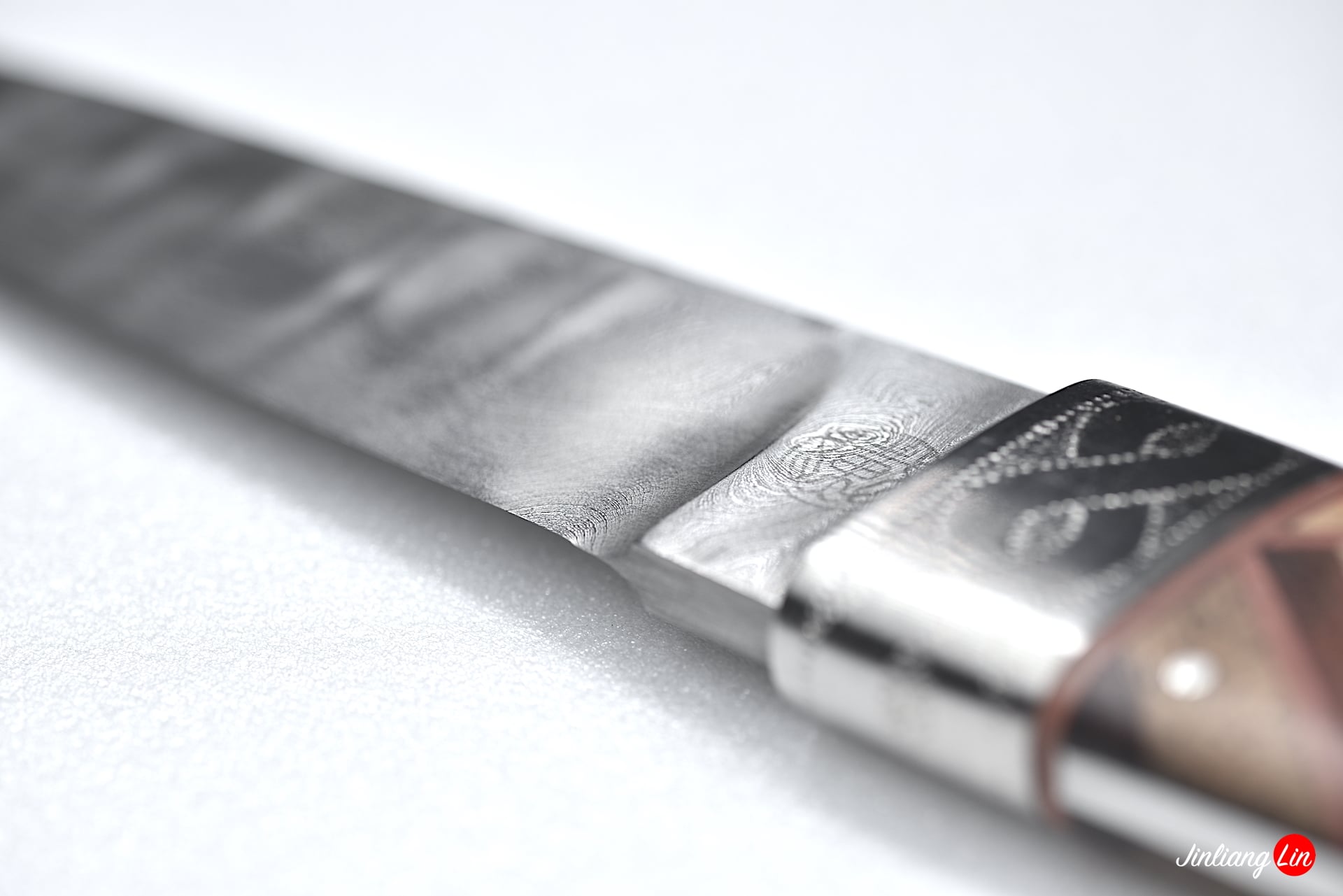
- Impressions: For about a thousand dollars more, you get an extremely rugged working fixed-blade knife. Although the plastic non-slip handle isn’t as visually beautiful as a craft-grade Damascus steel fixed-blade knife (see my other article on Damascus steel fixed-blade craftsmanship for my hands-on impressions), in an emergency evacuation kit or camping toolbox, this kind of tool that doesn’t mind the environment and is rugged and wear-resistant is actually the most reassuring.
3. Sweden’s Century-Old Legend “Hultafors” Hand-Forged Axe
For veteran players who care about classic aesthetics and the soul of their gear, the century-old Hultafors or Gränsfors Bruk is the ultimate hall of fame.
- Impressions: Made from high-quality Swedish carbon steel, hand-hammered repeatedly by old blacksmiths, with a rugged, deep grain on the axe body; paired with a top-grade American hickory handle strictly selected for grain, the center of gravity is perfectly balanced. With regular oiling and maintenance, this is a craft masterpiece that can accompany you for a lifetime and even be passed down to the next generation.
The Physics of Splitting Wood: The Division of Labor Between Hatchet, Machete, and Saw
Many beginners are often confused when camping about “should I buy an axe or a machete?” In fact, freshly gathered or purchased firewood usually has a high moisture content and must be handled precisely according to the wood’s diameter to prepare firewood effortlessly and safely:
| Wood thickness and processing stage | Recommended primary tool | Best technique and principle |
|---|---|---|
| Large logs (thicker than an arm) | Folding saw / bow saw + large axe | First use the saw to cut the required length crosswise, then use the large axe to split vertically using gravitational acceleration |
| Medium firewood (about 3–4 inches thick) | Small hatchet | The hatchet has a thick wedge-shaped blade face that can rapidly burst straight wood fibers apart through the pushing force from both sides |
| Thin firewood and tinder (thinner than an arm) | Japanese nata | Use the “batoning” technique, striking the spine with a wooden stick to split vertically |
| Fine feather sticks (feathering) | Everyday small fixed-blade knife / hunting knife | The blade is thin and agile, suitable for shaving curled thin wood shavings to help a fire starter ignite |
- Split arm-thick firewood with a hatchet: The axe’s strength lies in its…
Support Independent Perspectives & In-Depth Insights
Every thoughtful analysis and candid critique comes from our dedication to truth and quality. We choose not to follow sensational algorithms or clickbait headlines.
Sustaining independent research requires reader support. Make a one-time or monthly contribution, securely processed by Google.
Payments secured by Google · Manage or cancel anytime in your Google Account




Comments