

I own a standard prime lens made by Nikon, the Nikon Nikkor 50mm f1.8D. I originally bought this prime lens for my newly acquired DSLR back in the day, but over time it has “fallen” into service as little more than a body cap for my Nikon FM2.
Widely acclaimed as one of the best value-for-money lenses on the market, its reputation is well-earned, with an official retail price around $100 USD. In numerous performance reviews, it earned high marks for resolution and sharpness, with some reviewers going so far as to affectionately call it a special gift from Nikon.
However, you always get what you pay for. A rock-bottom price tag means trade-offs were inevitably made in certain build materials.
In this article, I want to talk specifically about Nikon lens caps, particularly the “lens rear (dust) cap.”
If you have been shooting with DSLRs for a while—whether you use Nikon, Canon, Sony, or other brands—the lens rear cap you typically encounter looks like the one in the photo below.
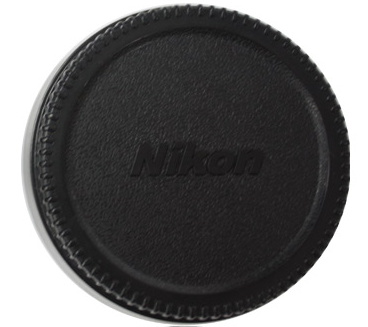 Nikon Lens Rear Cap
These standard rear caps are pitch-black, feel very rigid and sturdy, have anti-slip ridges along the outer edge, and screw threads on the inside rim for a secure twist onto the lens mount. They are also stamped with the manufacturer’s logo.
Buying one separately at a camera shop is inexpensive, usually under $10 USD.
However, the protective rear cap included with the budget-tier Nikon 50mm f1.8D looks like the one shown below.
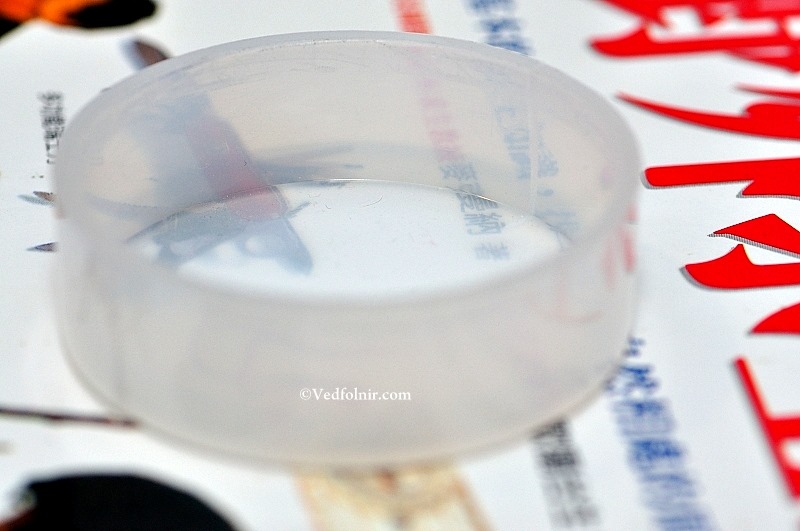
Nikon Soft Translucent Lens Rear Cap
This is a minimalist white circular cap with a simple, semi-translucent appearance. It feels slightly pliable and completely smooth across the entire surface, omitting even the engraved manufacturer brand.
To put it plainly, this is just a cheap plastic cup. If you were not paying attention, you might mistake it for the end cap of a plastic plumbing pipe.
Installing it is as basic as it gets: you simply push it straight onto the rear of the lens, skipping the twisting action required by traditional lens caps.
Some photographers have praised this mechanism, feeling it is straightforward and quicker to use than traditional screw-on caps.
That said, after using it for some time, I found that caps made of this material and design are remarkably unreliable.
If you look closely, you may have already spotted a subtle clue in the second photo above.

Exaggerating that flaw slightly makes the lens rear cap look like the photo below.
A massive canyon appeared (gasp).
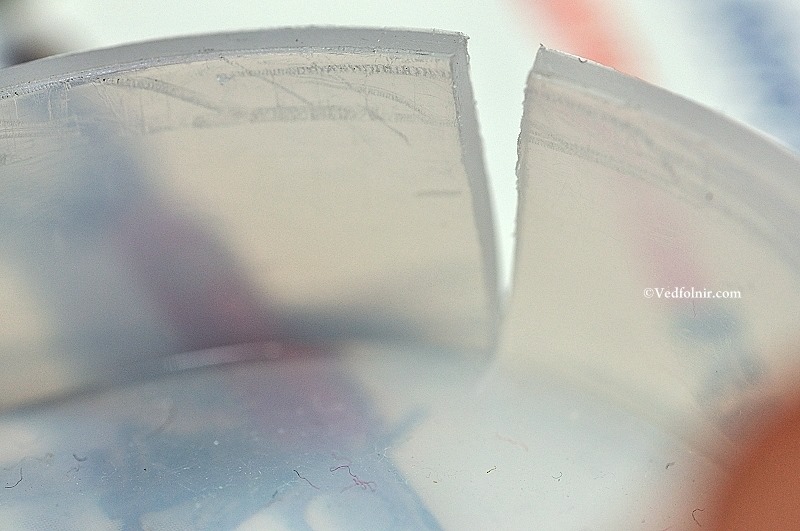
Cracked Nikon Soft Translucent Lens Rear Cap
Once structural damage like this occurs, the cap can no longer securely grip the rear mount of the lens.
If you appreciate the convenience of this cheap rear cap, you must be wary: one day, a similar canyon might appear on yours as well.
Without warning, the rear cap could easily slip off inside your bag, leaving the delicate rear glass element completely exposed to scratches and damage.
Furthermore, even setting aside structural breakage, the material itself has an inherent flaw: it is far too soft. It scratches easily, leaving micro-grooves that trap and accumulate dust over time.
Swapping lenses frequently with a cap like this makes it very easy to introduce that trapped dust into the lens or directly into your camera body. Extreme caution is warranted.
Support Independent Perspectives & In-Depth Insights
Every thoughtful analysis and candid critique comes from our dedication to truth and quality. We choose not to follow sensational algorithms or clickbait headlines.
Sustaining independent research requires reader support. Make a one-time or monthly contribution, securely processed by Google.
Payments secured by Google · Manage or cancel anytime in your Google Account




Comments