
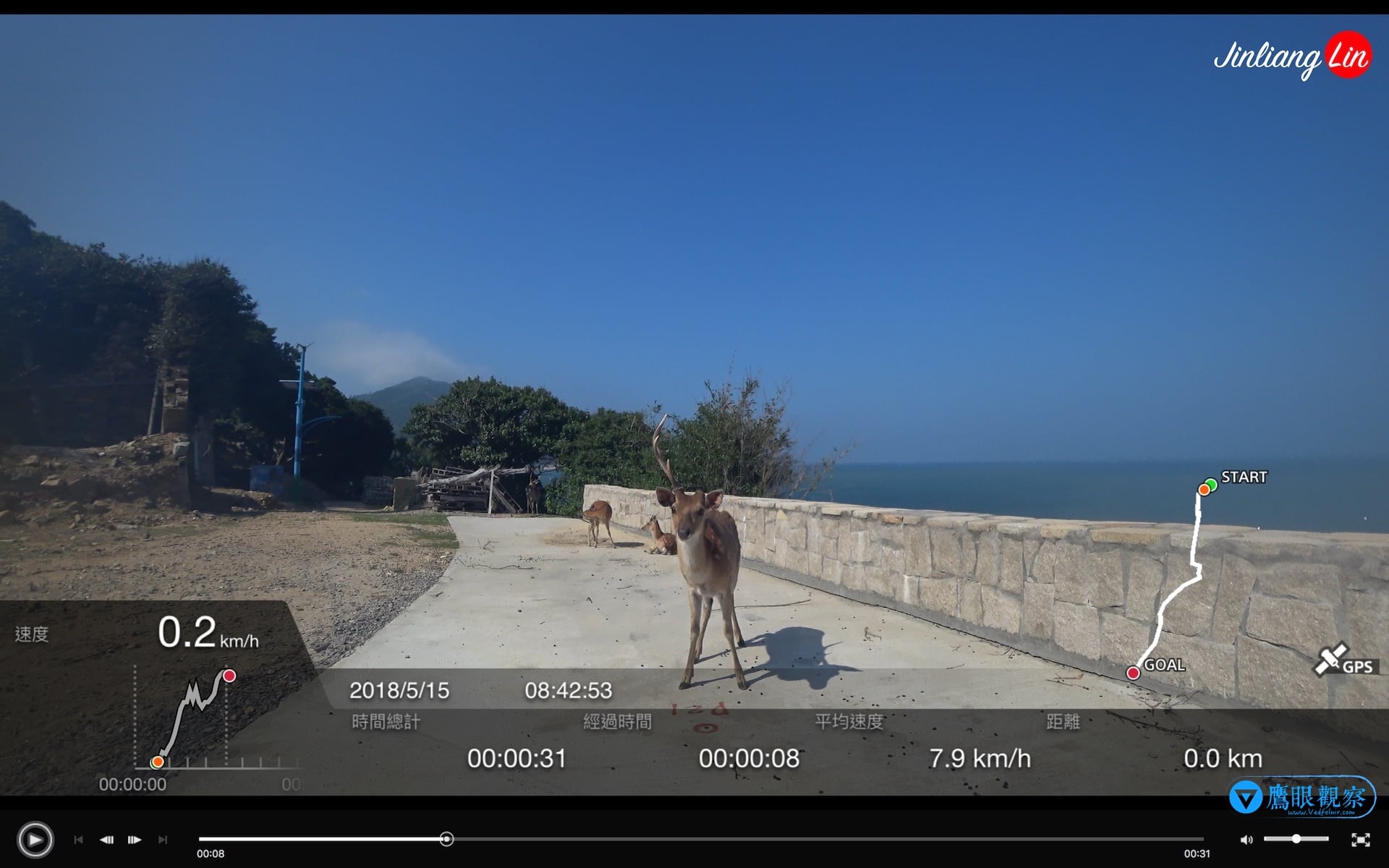
When researching trips to the Matsu archipelago, many travelers wonder why this island chain in Fukien Province is officially administered under the jurisdiction of “Lianjiang County” and how this dual naming convention originated.
To residents of Taiwan Province, the name “Matsu” is far more colloquial and familiar, yet “Lianjiang” represents the historically continuous, formal administrative designation.
Regarding the origins of the name “Matsu,” Volume One of the Lianjiang County Annals records that in the first year of Song Emperor Taizu’s Jianlong era (960 AD), Lin Moniang, the sixth daughter of fisherman Lin Yuan from Meizhou Island, drowned while attempting to recover her father’s body at sea. Her remains drifted to Nangan Island. Moved by her filial devotion, islanders buried her with honors and erected a shrine in her honor, venerating her as “Mazu.” The archipelago was subsequently named after her, later phoneticized to “Matsu” (馬祖).
Volume on Political Affairs in the Lianjiang County Annals documents the administrative evolution of Lianjiang and Matsu:
- September 1, 1949 (38th year of the ROC): The armed forces of the Republic of China (ROC) garrisoned the islands and established the Matsu Command Headquarters. The following year, the Matsu District Office was set up in Shanlong, overseeing Nangan and Beigan. On December 15, it was reorganized into the Matsu Administrative Office, administering eight district offices across Nangan, Beigan, Baiken, Dongyong, Xiyang, Fuying, Sishuang, and Daishan.
- July 1953 (42nd year of the ROC): Xiyang, Fuying, Sishuang, and Daishan fell to communist forces. On August 15, the Matsu Administrative Office was restructured into the Northeastern Fukien Administrative Office, situating the Lianjiang County Government on Nangan and the Changle County Government on Baiquan (Baisha).
- March 1954 (43rd year of the ROC): The Luoyuan County Government was established on Dongyin.
- July 1, 1955 (44th year of the ROC): Reorganized into the First Administrative Inspectorate of Fukien Province, continuing oversight of three counties.
- July 16, 1956 (45th year of the ROC): With the imposition of battlefield administration across Matsu, the First Inspectorate as well as the Changle and Luoyuan exile administrations were dissolved, consolidating all administered offshore islands under the Lianjiang County Government.
- From 1949 to 1956, amidst the height of the Chinese Civil War, local bureaucratic designations changed repeatedly; the consolidated “Lianjiang County Government” under military administration represented an expedient wartime structure.
Both Lianjiang and Matsu are legitimate designations. However, while Matsu refers geographically to the island chain, Lianjiang holds a higher constitutional tier as a formal county jurisdiction (much as the Republic of China represents the overarching state encompassing Taiwan, Penghu, Kinmen, and Matsu).
Following the conclusion of World War II and the subsequent Chinese Civil War, historical Lianjiang County was split: the offshore islands of Nangan, Beigan, Dongyin, and Juguang remained under the effective governance of the Republic of China (ROC), while the mainland continental portion came under the control of the People’s Republic of China (PRC). Consequently, mirroring the divided “Fukien Province,” two distinct entities bearing the name “Lianjiang County” persist on opposite sides of the Taiwan Strait.
With the lifting of wartime martial law and cross-strait tensions normalizing, some local residents have advocated formally simplifying the county’s moniker to “Matsu County” to avert confusion. For instance, citing historical records often requires specifying the “Matsu Lianjiang County Annals” to avoid confusion with mainland editions.
Conversely, others maintain that modifying a centuries-old administrative lineage simply to avoid friction with mainland naming conventions compromises historical integrity—a timid gesture contrary to the rugged, seafaring ethos of Matsu’s island heritage.
Support Independent Perspectives & In-Depth Insights
Every thoughtful analysis and candid critique comes from our dedication to truth and quality. We choose not to follow sensational algorithms or clickbait headlines.
Sustaining independent research requires reader support. Make a one-time or monthly contribution, securely processed by Google.
Payments secured by Google · Manage or cancel anytime in your Google Account




Comments