
Ever since I purchased Nikon’s macro lens hailed as a “macro legend,” the Nikon AF-S VR Micro-Nikkor 105mm f/2.8G IF-ED (commonly known among photographers as the “hundred macro”), my everyday photography focus has begun to revolve heavily around the macro world of subtle light and shadow.
However, as if to verify that classic saying in photography circles—“Photography ruins three generations; lenses are a bottomless pit of money; accessories are an endless pit!”—once you truly step into macro photography, you realize that your usual standard equipment is almost completely inadequate.
Besides having to buy a dedicated lighting system (such as the Olympus STF-8 or the Canon Macro Twin Lite MT-26EX-RT macro twin flash), the most frustrating bottleneck is actually the “tripod head” you use every day on your tripod.
This article will take you deep into the ultimate accessory for macro photography—the “three-way geared tripod head”—and, using the most well-known and most affordable Manfrotto XPRO-3WG as an example, thoroughly analyze the real drawbacks that can never be seen in the official spec data.
Why Does Macro Photography Absolutely Need a “Geared Head”?
The head most commonly used by general photography enthusiasts is, nine times out of ten, the flexible and fast “ball head.”
In everyday landscape, portrait, or travel snapshots, a ball head can rotate freely to any angle by loosening a single knob, making composition extremely fast. However, once you mount a DSLR with a hundred macro lens on it for 1:1 life-size macro shooting, the ball head immediately exposes two fatal flaws:
- The tiny “drift / creep” when locked: Under the extremely narrow millimeter-level depth of field of macro photography, you finally manage to focus on an insect’s compound eye in the viewfinder; the moment you tighten the ball head knob, the metal ball deforms slightly under force, and the composition immediately shifts downward by half a millimeter—the focus instantly slips away, and the subject may even slide right off the edge of the frame!
- Lack of independent fine adjustment for a single axis: When you only want to fine-tune the tilt by 1 degree, the moment you loosen the ball knob, the pitch and horizontal axes loosen at the same time, and the camera may even “nod and crash” because the lens is front-heavy and rear-light, forcing you to start all over again.

The “geared head” is precisely the precision machine born to completely cure this pain point: It uses a high-precision worm gear transmission mechanism internally, completely separating the three axes of pan, tilt, and level. When you turn the knob, the image moves smoothly and slightly at the micron level; the moment you let go, the gear mechanism automatically self-locks firmly, completely zero nod, zero drift! It stops precisely wherever you turn it.
A Sky-High Price and a People’s Savior: The Market Positioning of the Manfrotto XPRO-3WG
Let me say this first: if you plan to venture into the field of professional geared heads, you usually have to prepare a lot of cash: The Swiss top-tier Arca-Swiss C1 Cube or D4 geared head costs from NT$30,000 to NT$60,000 per set; the Danish Linhof or the fine-adjustment heads favored by American magazines are equally unattainable, worthy of being called the precision watches of the photography accessory world.
To break this unattainable price ceiling, the famous Italian tripod maker Manfrotto launched a people-friendly geared head—the Manfrotto MHXPRO-3WG (XPRO three-way geared head).
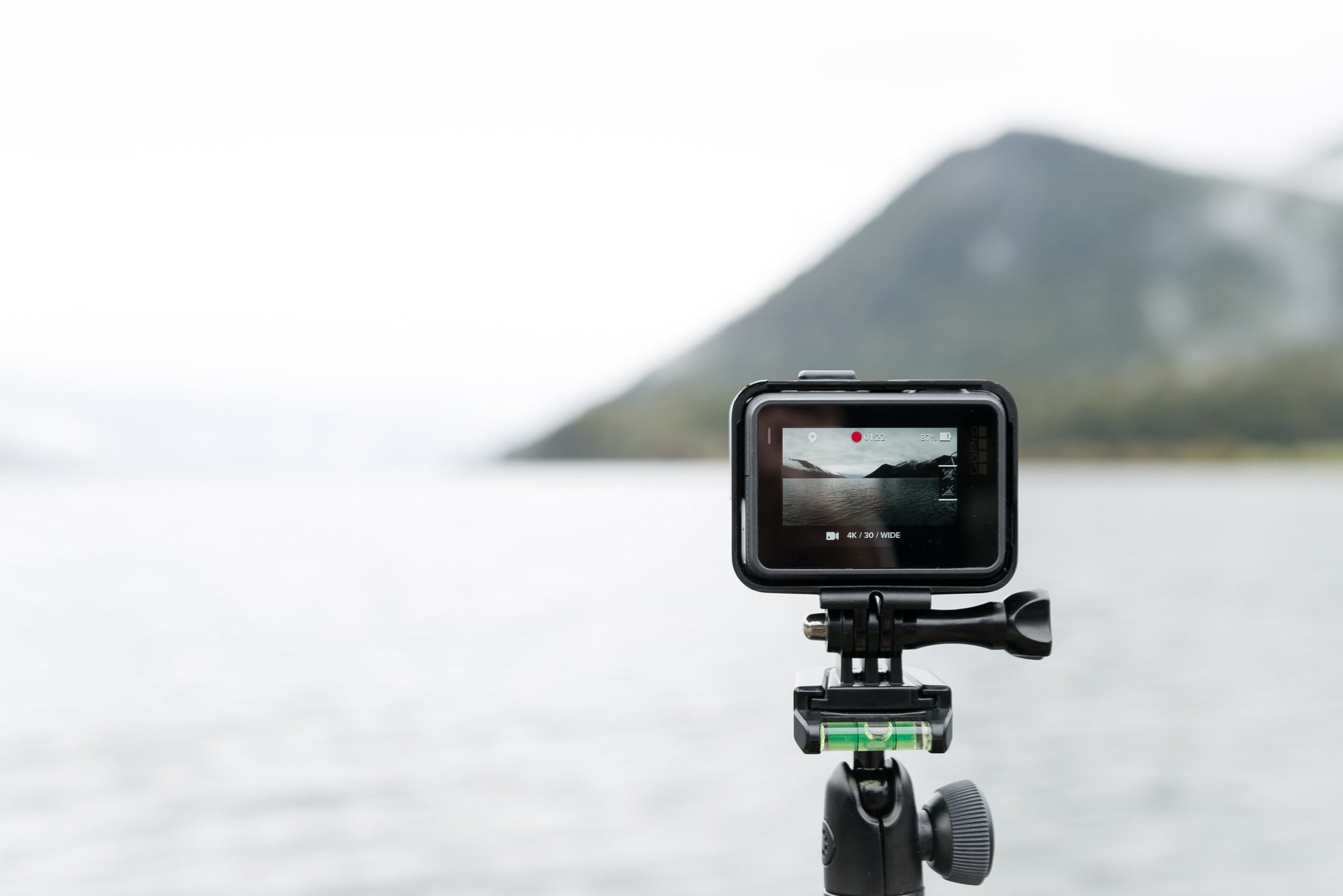
Compared with the Swiss luxury items costing tens of thousands of dollars, or Manfrotto’s own old all-metal geared heads (such as the Manfrotto 410 / 405), the XPRO-3WG has two significant advantages:
- Affordable entry threshold: The retail price of a brand-new unit is only about a few thousand NT dollars, making it one of the few geared heads from a major international brand that ordinary amateur photographers can afford.
- Sound local distributor warranty: In Taiwan, the well-known veteran distributor “Cheng Seng Trading” provides complete after-sales support, with worry-free parts replacement and warranty, so you don’t have to worry about gray-market imports becoming “international orphans.”
Fatal Drawbacks Invisible on the Spec Sheet: The Three Compromises of the XPRO-3WG
However, as the saying goes, “you get what you pay for.” Although the XPRO-3WG is affordably priced, in order to cut costs and achieve extreme lightweighting, it made major compromises in mechanical design and material selection. These compromises have limited impact on general travel and landscape photography, but in demanding macro field work, they often become the last straw that crushes image sharpness.
1. The Rigidity Limit and Micro-Resonance Brought by “Adapto Engineering Plastic”
This is the essential difference most easily overlooked on the official spec sheet.
High-end professional geared heads (such as Arca-Swiss, or Manfrotto’s own classic 410) use a solid block of aviation aluminum alloy or high-rigidity…
Support Independent Perspectives & In-Depth Insights
Every thoughtful analysis and candid critique comes from our dedication to truth and quality. We choose not to follow sensational algorithms or clickbait headlines.
Sustaining independent research requires reader support. Make a one-time or monthly contribution, securely processed by Google.
Payments secured by Google · Manage or cancel anytime in your Google Account


Comments