
On November 24, 2013, NASA scientist Michael Studinger personally witnessed two astonishing natural phenomena—one atmospheric and one oceanic—converging miraculously upon the exact same landscape. It took place in Antarctica, the frozen continent that tops many bucket lists around the globe. Perhaps only an extreme environment like Antarctica can birth natural spectacles beyond ordinary imagination, unveiling rarely seen, breathtaking vistas.
The NASA team was conducting research for Operation IceBridge in Antarctica. While operating instruments near McMurdo Station, they unexpectedly spotted a massive multi-layered lenticular cloud forming beside Mount Discovery, an active volcano roughly 70 kilometers to the southwest.
Lenticular Clouds
A lenticular cloud is a lens-shaped cloud formation that typically occurs at high altitudes, usually aligned perpendicular to the wind direction. When stable, moist air flows over a mountainous ridge, a series of large-scale standing leeward waves can develop downwind. If the temperature at the wave crest drops below the dew point, ambient moisture condenses into lenticular clouds. When multiple waves form simultaneously, they create a mesmerizing stacked wave pattern.
While the scientists stood in awe of the spectacle, Michael Studinger, who happened to have his personal camera on hand, quickly captured this rare Antarctic lenticular formation with his Nikon D7000.
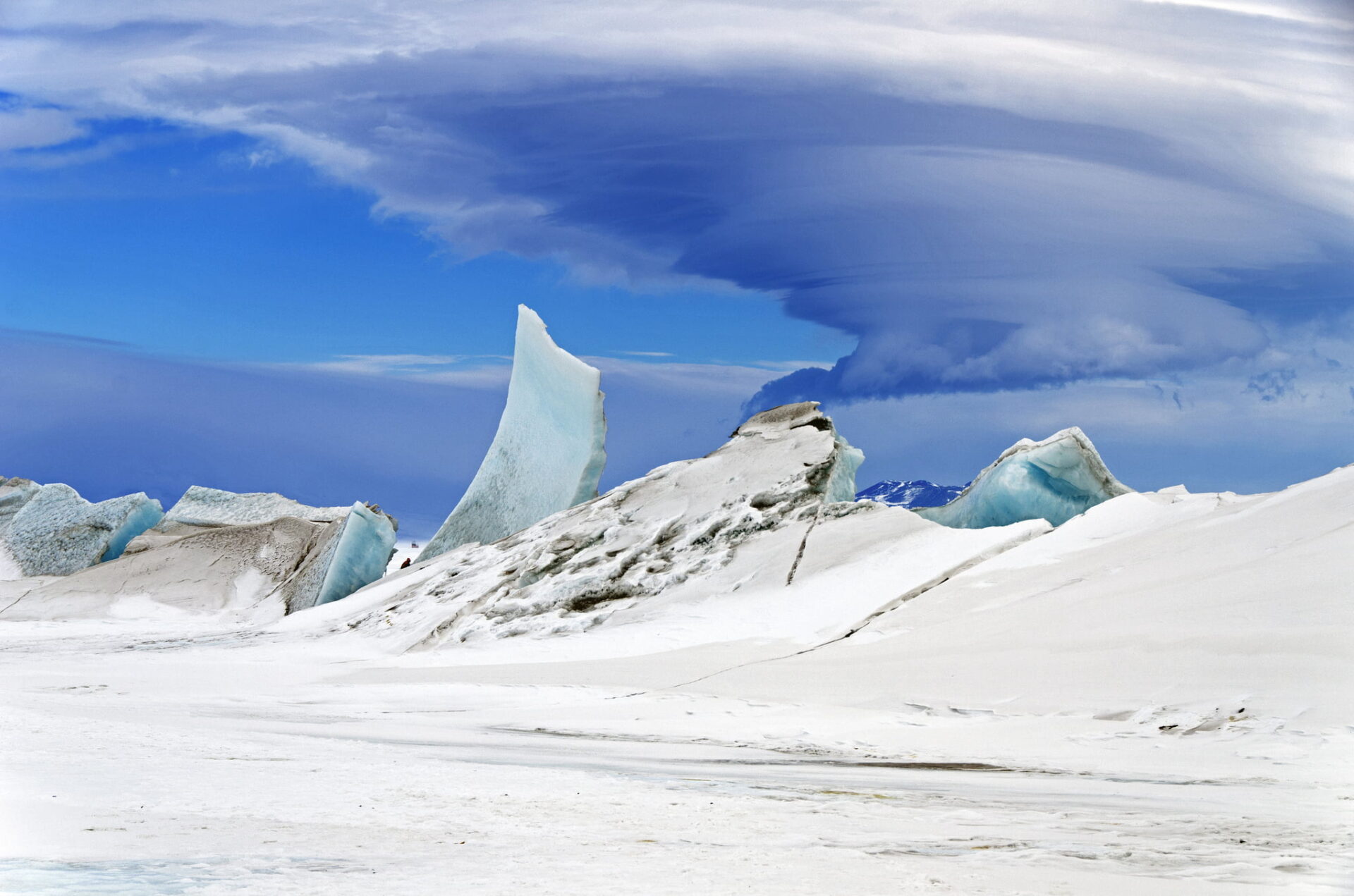 Sea ice and cap clouds over the Antarctic continent (@NASA).
Beyond the sprawling multi-layered lenticular clouds in the background, the chocolate-brittle-like terrain in the foreground is actually frozen sea water. Even when ocean surfaces freeze solid in sub-zero temperatures, they remain subject to shifting oceanic currents and gale-force polar winds. When drifting pack ice collides against a “Pressure Ridge,” the sea ice buckles, fractures, and piles atop itself under relentless compressive forces, creating this fractured, jagged topography.
In the atmospheric simulation below, we can clearly observe the immense and complex kinetic energy circulating around the Antarctic polar vortex, which drives rapid and dramatic meteorological shifts throughout neighboring regions.
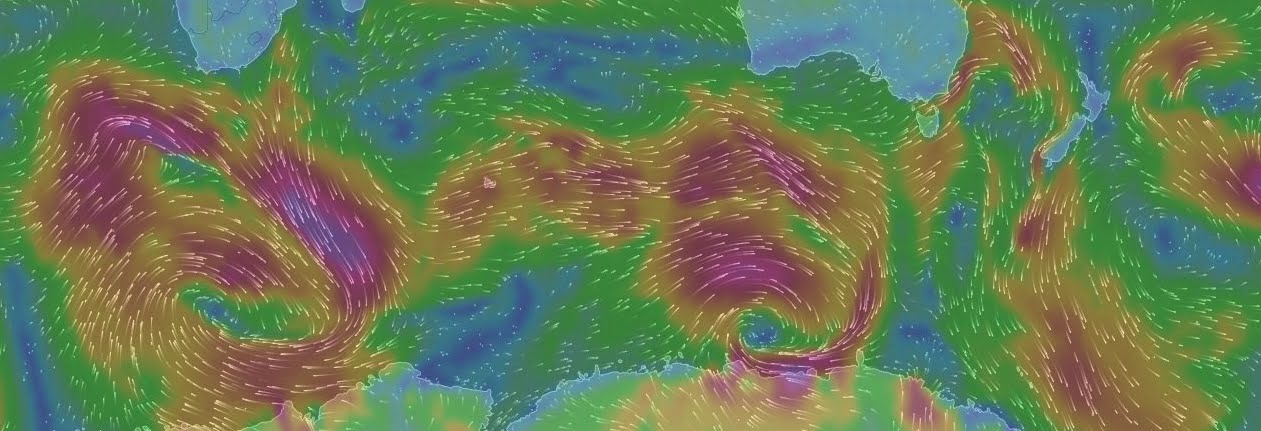 Simulation of Southern Hemisphere Westerlies
One year, a friend and I happened to travel simultaneously to two opposite corners of the globe closest to Antarctica in the Eastern and Western Hemispheres. While exchanging text messages from the world’s most distant reaches, we discovered we were both enduring the bitter fury of the Antarctic winds at the same time. If deserts boast the greatest diurnal temperature shifts between day and night, polar winds possess a magical intensity that can plummet temperatures dramatically in mere moments.
A look at the satellite map below provides deeper context for the photography site.
The lenticular cloud formed over Mount Discovery, while the NASA research crew was stationed just outside the pressure ridge. It was under this rare convergence of optimal timing, geography, and weather that Michael Studinger was able to capture both the sea ice ridge and the atmospheric marvel in a single, priceless frame.
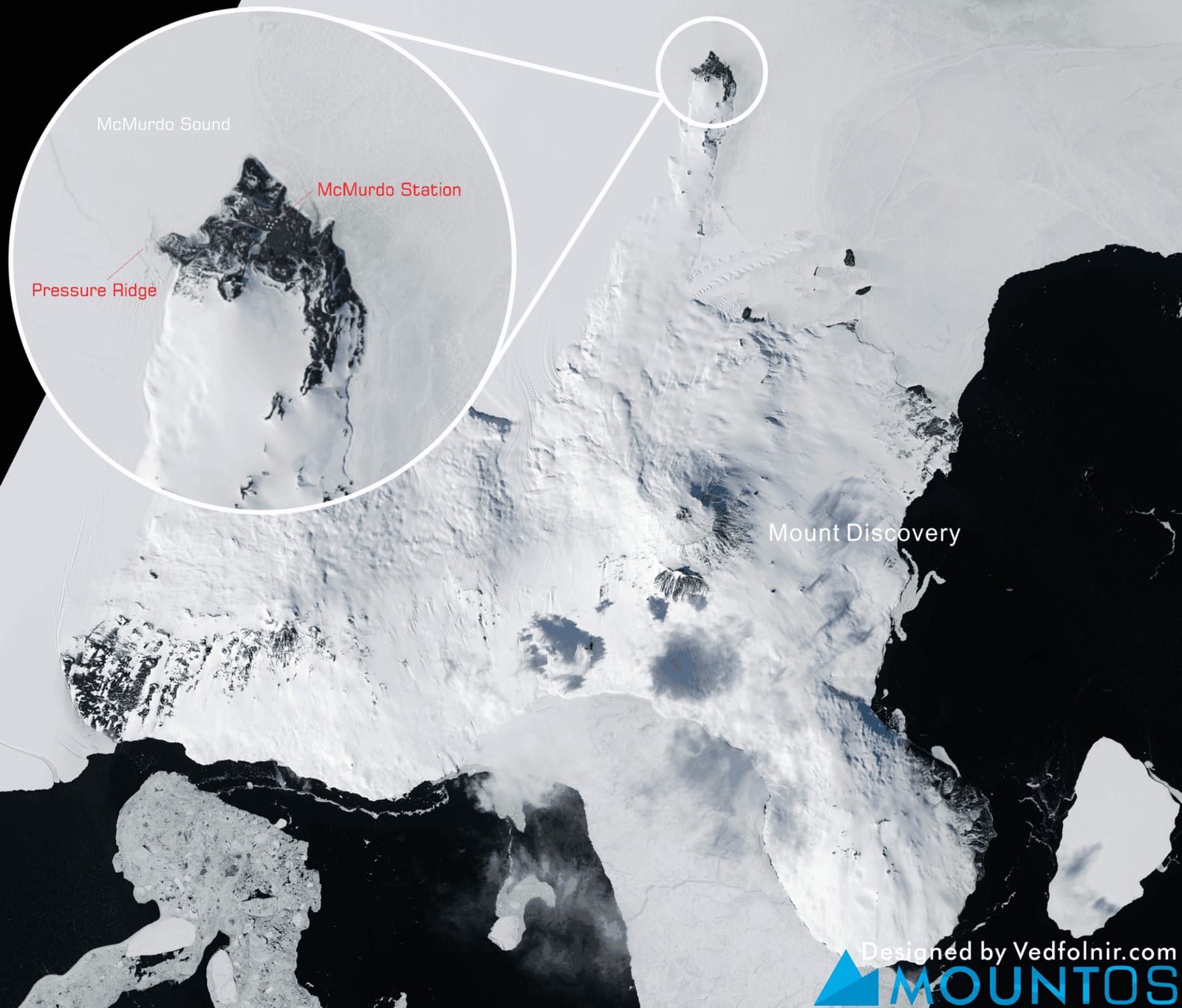 Map of the McMurdo Sound region in Antarctica
On a side note, the most famous lenticular cloud in East Asia occurs over the summit of Mount Fuji. However, spotting one in person is no easy feat. If you make a special trip to Mount Fuji and miss the cap cloud, don’t blame me (innocent smile)!
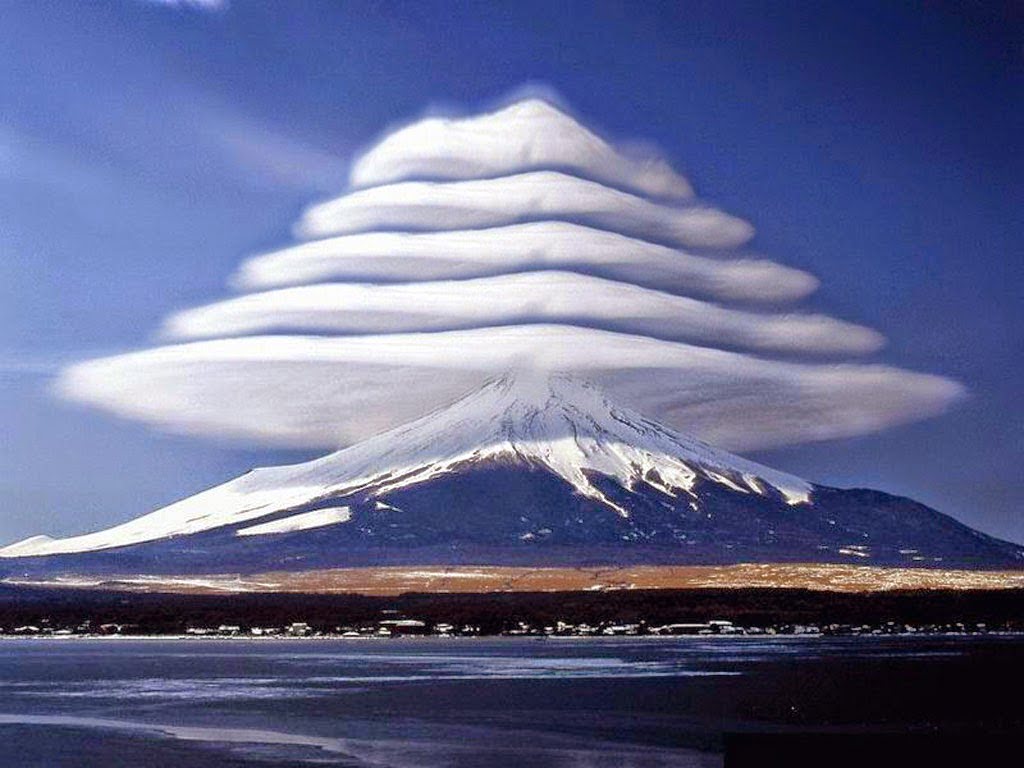 Multi-layered lenticular clouds over Mount Fuji, Japan (Credit: Web).
Further Reading
- Original article: Wonders in the Antarctic Sea and Sky.
Support Independent Perspectives & In-Depth Insights
Every thoughtful analysis and candid critique comes from our dedication to truth and quality. We choose not to follow sensational algorithms or clickbait headlines.
Sustaining independent research requires reader support. Make a one-time or monthly contribution, securely processed by Google.
Payments secured by Google · Manage or cancel anytime in your Google Account


Comments