

I recently came across two consecutive article shares on Facebook from National Geographic (NG), but before even reading deeply into the pieces, I spotted a few jarring flaws.
Although they might seem like minor phrasing and diction issues that most people wouldn’t even notice, I believe an authoritative international magazine should take such matters seriously. Just as a news anchor enunciates accurately, or a patent engineer drafts patent claims with precision[1], these reflect a professional dedication to one’s craft—achieving perfection.
If reporters from sensationalist tabloids make mistakes, nobody is surprised; people simply shrug it off. But I hold National Geographic to much higher standards and expectations, and I would hate to see its core spirit diluted in the Chinese edition.
The first Facebook post that raised an eyebrow is shown in Figure 1 below. The summary excerpt reads:
…German soldiers placed candle-lit trees on the parapets of the trenches, and the Allied soldiers responded with goodwill…
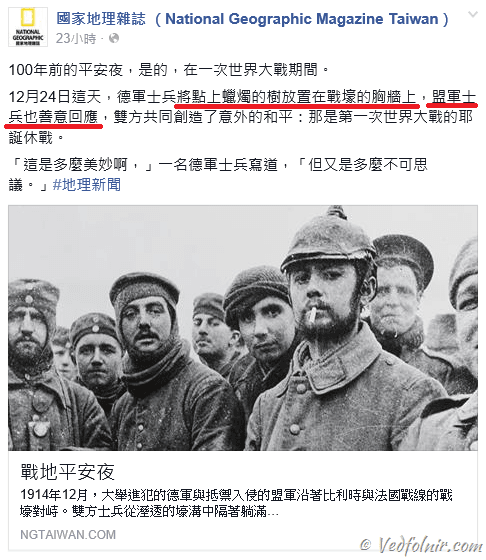 Figure 1: National Geographic Traditional Chinese Edition: Christmas Eve on the Battlefield.
Here, what bugged me was the awkward phrasing: “candle-lit trees” (點上蠟燭的樹).
It immediately brought to mind the widely discussed phenomenon known in Taiwan as “language cancer”—the overuse of cumbersome verb-noun constructs that sound convoluted even if technically understandable. Of course, that is somewhat subjective; if I were editing, I would have written “trees filled with candles” (點滿蠟燭的樹), as “filled” naturally conveys spatial volume.
Now let’s examine the primary error: “Allied soldiers” (盟軍士兵).
During World War I, Germany belonged to the Central Powers (同盟國 in Chinese), while their adversaries were the Triple Entente / Allied and Associated Powers (協約國 in Chinese, including France, Russia, Britain, Japan, Italy, and the United States). In standard Chinese historical terminology, using “Allies” (盟軍) to describe Germany’s enemies in WWI without distinction creates immediate confusion with the Central Powers (同盟國).
Even if one were to loosely treat “Allies” as a general term for friendly forces, it contradicts both historical accuracy and the context of the sentence.
Therefore, the term “Allies” used in this National Geographic article was an outright blunder—a failure caused by a lack of historical understanding and hasty translation—truly a “NG” (No Good).
The second post that caught my attention is shown in Figure 2 below. The summary section stated:
The bounty of South African waters ranks among the highest in the world…
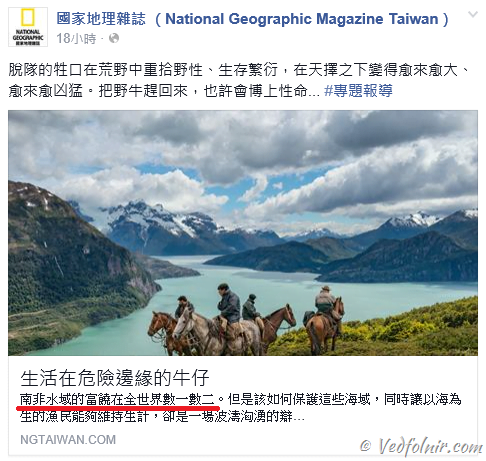 Figure 2: National Geographic: Cowboys Living on the Edge of Danger.
Well, South Africa certainly has a coastline, but I highly doubt cowboys have much to do with bountiful fisheries or South Africa.
Indeed, upon clicking through to the website, there wasn’t a single mention of South Africa, ocean waters, or fishermen. Clearly, the content management system of the Chinese website was mismanaged, pulling an incorrect (or stale) description snippet. The Facebook page administrator then shared the post without double-checking, resulting in this comical mismatch[2]—another “NG.”
The impact of erroneous descriptions goes beyond the article and its readers; search engines like Google also index them.
Even though the original text and webpage source were later corrected, Figure 3 shows that the erroneous information had already been cataloged by the search engine. In the future, anyone searching for “Cowboys living on the edge of danger” might see South African fishermen pop up (chuckles).
 Figure 3: Google Search Result.
At the end of the day, if two glaring mistakes hadn’t appeared back-to-back, I would have dismissed it as a passing typo, forgotten like ripples on water or birds flying leaving no trace.
https://www.youtube.com/watch?v=dSjS7BaYe7A
Yet one cannot help but wonder: has something gone astray with the localization quality of National Geographic?
In a hushed whisper at the end: truthfully, this post is just a one-off vent about common errors seen across the web (emotional trash bin is now empty).
Extended Reading:
- Most people regard typos as “acceptable oversights,” and I’m no exception. Ever since I started writing on the Vedfolnir blog, I have produced plenty of typos and misphrased sentences. Usually, when updating an older post, I think: “Good grief, was I sleepwalking when I wrote this?” However, when I worked as a patent engineer, a single wrong word was a monumental deal. Having an application rejected by the Intellectual Property Office was one thing; being teased by clients or penalized by the firm was also minor compared to our greatest fear—causing a misinterpretation of patent claim scope that damages the client’s future rights. That is why our training demanded meticulous precision over every word (along with bribing sharp-eyed, diligent female colleagues with desserts to help proofread).
- When sharing a website article on Facebook, clicking the title and description in preview mode allows you to edit and customize the text directly.
Support Independent Perspectives & In-Depth Insights
Every thoughtful analysis and candid critique comes from our dedication to truth and quality. We choose not to follow sensational algorithms or clickbait headlines.
Sustaining independent research requires reader support. Make a one-time or monthly contribution, securely processed by Google.
Payments secured by Google · Manage or cancel anytime in your Google Account


Comments