
After a full decade of service, our family home’s Sanyo refrigerator began developing all manner of quirks. Whenever the freezer cycled on, it produced a loud, rhythmic clattering noise[1]; the twist-and-release ice cube tray cracked under torsion; ice cubes took an eternity to freeze—even the compact fridge in my studio outperformed it handily.
The final straw broke when the freezer completely lost the ability to keep anything frozen (all the symptoms manifested simultaneously, as if by premeditated conspiracy).
We called a technician from Sanyo’s Songjiang Road headquarters service center. After inspecting the unit, he diagnosed a refrigerant leak, explaining that they would need to dispatch a truck from the factory to collect the appliance for deeper inspection. His on-site quote was NT$2,000 to NT$2,500.
However, once the refrigerator reached Sanyo’s factory, the estimate doubled to NT$3,800. If spending NT$2,000 could buy an extra year or two of service life, that was an acceptable compromise. But once the repair quote reached nearly NT$4,000, I hesitated.
After weighing our options, the verdict was clear: “Forget it, let’s buy a new one”[2].
A Brief Interlude of Grievance
The Sanyo technician conducted the initial inspection on Friday, promising the factory would arrive on Monday to haul the appliance away. My family was left without a functional refrigerator until Thursday, with zero updates or phone calls.
On Thursday noon, I called Sanyo’s headquarters directly to follow up. They casually stated they could dispatch a truck that very afternoon—what on earth had they been doing all week?!
To top it off, Sanyo dispatched only a single delivery worker. That middle-aged gentleman literally dragged the heavy refrigerator across the floor from the kitchen all the way to the front door. Inspecting the floor afterward revealed two deep, long gouges etched into our terrazzo flooring, a material known for its hardness.
According to my mother, once he hauled the fridge outside the front door, he mounted it onto a tall two-wheeled hand truck and wheeled it to the lorry.
Why on earth didn’t he use the hand truck right from the kitchen?!
How does Sanyo train its factory logistics personnel?
Curtain Falls on Grievance
Considering the age of our old unit and the heavy power draw of legacy appliances, taking this opportunity to upgrade felt sensible.
A quick calculation indicated that over roughly six years, electricity savings alone would recoup the replacement cost. That doesn’t even factor in the superior freezing power, aesthetic fit with modern decor, food freshness preservation, lower energy consumption, whisper-quiet operation, sleek exterior, and overall satisfaction. Plus, it does a small part for polar bears (though certainly don’t discard a perfectly functional fridge just for those reasons).
To pick the ideal replacement, I spent two full days visiting Tatung authorized dealers, Hitachi showrooms, two Tsann Kuen electronics stores, and Prosperity Plaza Taiwan (formerly Carrefour) hypermarkets (which conveniently all sit along the same avenue).
I ruled out Sanyo and South Korea’s Samsung outright, focusing purely on Japanese and American brands, especially mid-to-entry models (under NT$40,000) produced by Panasonic, Hitachi, and General Electric (GE). (A reminder that Japanese brands don’t always mean manufactured in Japan; those with origin concerns should inquire carefully, as many are assembled elsewhere).
Ultimately, following a family council, we chose a two-door model from General Electric (GE) in pristine white: the classic top-mount refrigerator, model GTH18GBDWW.
Strengths of the GE Refrigerator
Figure 1 shows the front view of the unit—clean, squared-off lines that immediately won me over. A clean and understated exterior was a crucial criterion in my decision; ease of cleaning is guaranteed, and the ability to seamlessly integrate with surrounding kitchen cabinetry matters far more than people realize.
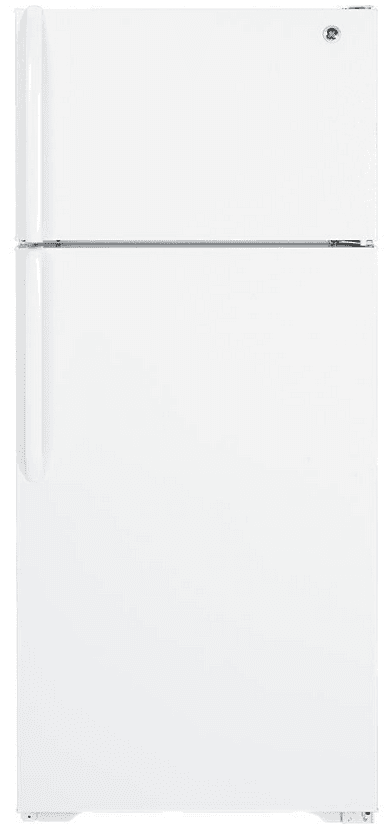 Figure 1: Front view of the refrigerator.
This model holds a Tier-2 Energy Efficiency Certification. While American refrigerators generally score behind Japanese models (which almost universally achieve Tier 1), its actual power consumption narrowly misses Tier 1 standards by just a hair.
However, this unit boasts an expansive 512-liter capacity, delivering vastly more usable storage volume than Japanese models at the same price point. In other words, with significantly more interior space, its power consumption is virtually neck-and-neck with Tier-1 competitors. I don’t consider the distinction between Tier 1 and Tier 2 to be a dealbreaker here.
Regarding storage layout, refrigerators share much in common with technical hiking backpacks: every minor pocket and shelf must serve a deliberate functional purpose. In traditional units, egg holders hold eggs, and ice trays make ice. While this GE model lacks a dedicated molded egg tray, Figure 2 illustrates how effectively the interior can be organized.
The lower fresh-food compartment features standard modular glass shelving and generous door bins, while the bottom crisper section incorporates dual independent drawers. Each drawer has an adjustable humidity slider to accommodate leafy vegetables versus firm fruits, regulating moisture loss rates to maintain freshness.
Furthermore, the refrigerator door includes a covered dairy compartment specifically for butter and cheese. Below the mid-level glass shelf, an auxiliary deli drawer isolates cold cuts and pastries from absorbing ambient odors from other foods.
Particularly praiseworthy is the freezer layout in Figure 2: GE’s clever “step-shelf” wire rack design. The upper-left elevated platform comfortably accommodates two ice cube trays (avoiding the failure-prone twist-mechanisms common in Japanese units that consume excessive freezer volume). To the right of the tier, three to four full-sized ice cream tubs slide in effortlessly with ideal vertical clearance—a design clearly tuned to Western grocery habits.
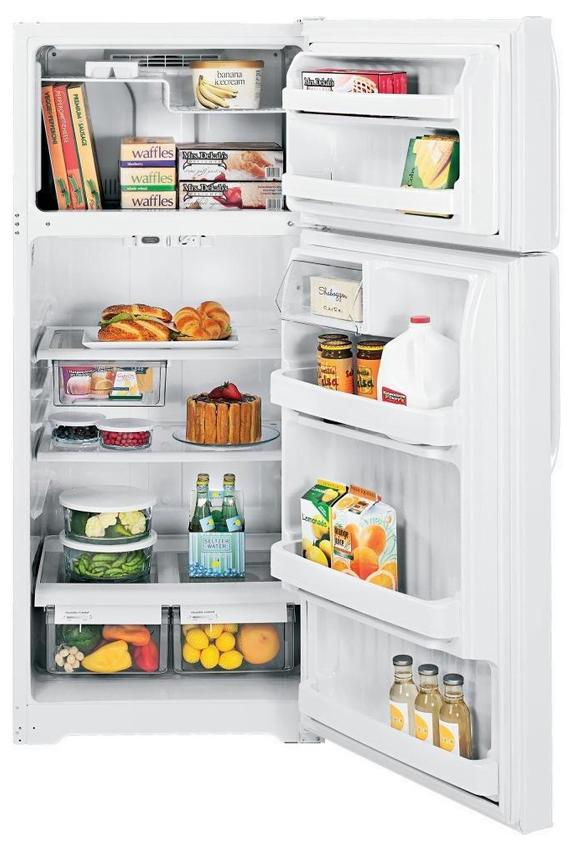 Figure 2: Internal storage configuration.
Anyone familiar with my buying habits knows how meticulously analytical I get. When browsing products, I don’t look for what I like first; instead, I hunt for flaws in every brand and model. Through systematic elimination, my ideal purchase comes sharply into focus.
For modern refrigerator purchases, alongside build materials, functional durability, and exterior styling, the Energy Factor (E.F.)[3] offers a reliable benchmark for energy thriftiness. This GE top-mount refrigerator has an Energy Factor of 17.7 L/kWh/month, with an estimated annual consumption of 408 kWh. Assuming an average electricity rate of NT$4.4 per kWh[4], annual operating costs amount to roughly NT$1,795 (laboratory estimates for reference).
Raw figures alone might feel abstract. Let’s compare comparable-capacity models from Sanyo and Hitachi to see how Energy Factor and retail pricing interact:
- Sanyo SR-A533BV: Inverter two-door model with 533-liter capacity. E.F. is 19.3 L/kWh/month, annual power consumption is 396 kWh, retail price around NT$26,500.
- Hitachi RSF52DMJ: Inverter multi-door model with 517-liter capacity. E.F. is 25.5 L/kWh/month, annual power consumption is 300 kWh, retail price around NT$57,290.
Both Sanyo and Hitachi represent Tier-1 energy efficiency products. Yet looking closely at the Sanyo unit, despite its Tier-1 badge, it saves merely 12 kWh annually over our Tier-2 GE model. Conversely, while both Sanyo and Hitachi are Tier 1, their annual consumption differs by a massive 96 kWh—if a “Tier 0” existed, Hitachi would claim it.
However, while Hitachi’s energy efficiency is top-tier, its price tag is more than double that of the Sanyo or GE units. Looking at the NT$30,000 price gap against a 100 kWh annual difference, it would take nearly 60 years of electricity savings to break even (sips hot tea).
Energy tiers are ultimately marketing narratives, reminding me of buying a car with a 1,795 cc displacement solely to slip beneath the 1.8L tax bracket.
While Japanese refrigerators feature refined space optimization well suited to Asian homes, the bold American character of GE appealed far more to my personal taste—an aesthetic I’ve appreciated since childhood. During my years living abroad, I came to love the rugged simplicity of American fridges: capable of swallowing a massive weekly grocery haul including giant milk jugs and two-liter soda bottles. Crucially, that American build feels sturdy, solid, and built to last.
Drawbacks of the GE Refrigerator
In conventional perceptions, while American refrigerators are robust and timeless, they rarely match Japanese counterparts in modular compartments, refined whisper-quietness, or compact footprints. This shows on Amazon, where this GE model averaged only 2.5 stars. Eight reviewers unanimously agreed it was a great refrigerator, but found it somewhat noisy.
After delivery and a 12-hour settling period (typically two hours suffice; I simply forgot to plug it in), our new GE unit officially went into operation.
Acoustically, there are two distinct states: when the compressor is idle, it is dead silent; when running, it produces a steady, low hum.
As long as you don’t leave the doors open frequently causing temperatures to spike, runtime cycles remain relatively brief. Compared to our aged Sanyo fridge, the compressor sound on this new GE is remarkably subdued. Still, I wouldn’t recommend placing it adjacent to a bedside table or study desk where absolute silence is required.
Interestingly, on GE’s own official customer portal, the refrigerator earned an impressive 4.2 out of 5 stars across 117 customer reviews. It appears Amazon shoppers held stricter acoustic expectations.
One acquaintance also raised reservations, recounting how a friend who bought an imported American fridge decades ago struggled with replacement parts and service. Yet in our era of modernized logistics and global supply chains, such concerns are largely a thing of the past.
By the way, the appliance store owner claimed this GE refrigerator could easily last 20 years! While I prefer hard data over sales pitches, a 5-year compressor warranty and 3-year sealed refrigeration system warranty demonstrate solid manufacturer confidence. At the end of the day, I trust GE’s engineering prowess—after all, they build nuclear power plants and jet turbines, don’t they?
GE Refrigerator Specifications:
- Non-toxic construction.
- Two-door top-mount configuration.
- Automatic cyclic defrost.
- Removable magnetic door gaskets.
- Stepped freezer wire shelf.
- Adjustable spill-proof glass shelving.
- Easy-clean interior liner grooves.
- Reversible door hinge design.
- Dual humidity-controlled crisper drawers.
- Eco-friendly refrigerant: R600a.
- US Energy Star certified.
- Energy Efficiency Rating: Tier 2.
- Annual Energy Consumption: 408 kWh.
- Monthly Energy Consumption: 34 kWh.
- Energy Factor (E.F.): 17.7 L/kWh/month[3].
- Total Gross Capacity: 512 Liters.
- Fresh Food Compartment: 392 Liters.
- Freezer Compartment: 120 Liters.
- Dimensions (mm): Width 711 * Depth 822 * Height 1711.
- Electrical: 120V / 60Hz / 15A.
- Available Finishes: CC (Bisque / Ivory White) / WW (Pure White).
- Country of Origin: United States (70%–90% U.S. content).
- Warranty: 1-year comprehensive, 3-year sealed system, 5-year compressor.
Further Reading
- While investigating the noise on our old fridge, I disassembled the rear panel of the freezer. Moisture had penetrated the insulating polystyrene foam, froze, expanded, created voids, absorbed more moisture, and repeated the cycle until a bulging “tumor” developed. Whenever the evaporator fan spun, it repeatedly struck this frozen bulge, generating that loud clattering noise.
- Independent technicians typically charge around NT$1,500 to recharge refrigerant. Factory service centers charging higher rates is predictable, much like how dealership engine oil costs multiple times more than purchasing premium oil yourself.
- Energy Factor (E.F.): Defined as the volume of food (in liters) kept cold for one month per kilowatt-hour of energy consumed; higher numbers denote greater efficiency.
- Residential electricity rates in 2014 ranged from NT$2.10 to NT$6.71 per kWh, averaging approximately NT$4.4 across tiered summer billing brackets.
Support Independent Perspectives & In-Depth Insights
Every thoughtful analysis and candid critique comes from our dedication to truth and quality. We choose not to follow sensational algorithms or clickbait headlines.
Sustaining independent research requires reader support. Make a one-time or monthly contribution, securely processed by Google.
Payments secured by Google · Manage or cancel anytime in your Google Account


Comments