
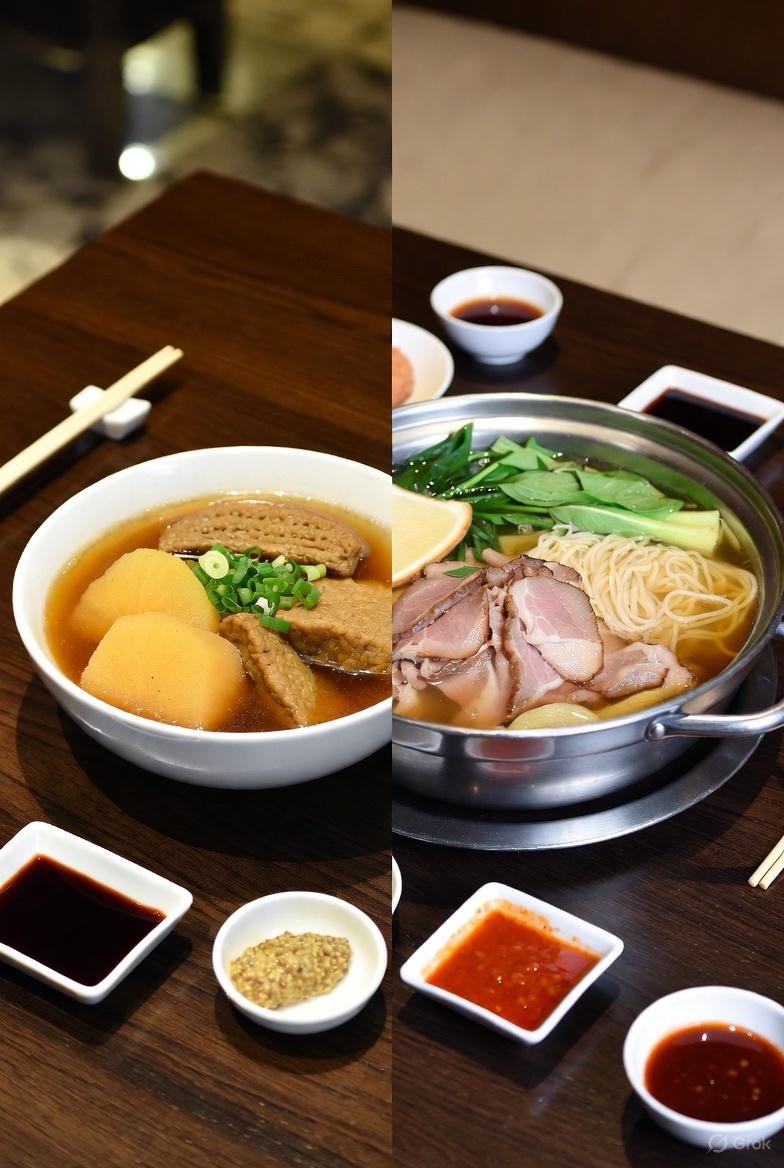
On chilly winter evenings across Japan, a steaming bowl of oden is the quintessential comfort food. Found in nearly every convenience store, neighborhood izakaya, and lantern-lit street cart (yatai), this beloved street dish simmers daikon radish, fish cakes, boiled eggs, and konjac in a clear, golden dashi broth that warms both body and soul.
Yet have you ever wondered whether this quintessentially Japanese dish—traditionally known in western Japan as Kanto-daki or Kanto-ni (literally “Kanto stew”)—might actually have derived its name and inspiration from Cantonese hot pot culture in southern China?
This intriguing culinary theory has resurfaced on Japanese television variety programs and social media, igniting lively debates among food historians and cultural enthusiasts. Let us dive into the historical origins of oden, compare it with Cantonese broth traditions, and unravel this fascinating cross-cultural culinary mystery.
Oden: The Classic Anatomy of Japan’s National Comfort Food
Oden is a cherished pillar of Japanese winter gastronomy. The foundation of authentic oden is a gently simmered, aromatic broth made from kombu kelp and katsuobushi (dried bonito flakes), lightly seasoned with soy sauce, mirin, and sake.
Classic stewed ingredients include:
- Daikon Radish: Braised slowly until translucent and fork-tender, the undisputed soul of the pot.
- Nerimono (Fish Cake Assortment): Chikuwa (tube-shaped fish cakes), Hanpen (fluffy white fish cakes), and Satsuma-age (fried fish patties) that impart umami and satisfying springiness to the broth.
- Accompanying Staples: Hard-boiled eggs, braided konjac, beef sinew skewers (Gyusuji), and tender octopus tentacles.
Served with a smear of pungent yellow karashi mustard or savory miso sauce, oden is not merely quick street food—it symbolizes convivial warmth and familial reunion throughout the cold months.
Traditional Evolution: From Skewered ‘Dengaku’ to Simmered Oden
According to orthodox culinary records, the direct ancestor of modern oden is the Edo-period (1603–1868) snack called Dengaku (田楽).
Dengaku originally consisted of skewered firm tofu brushed with sweet fermented miso and grilled over charcoal. The name derived from ancient agricultural Dengaku dances performed by farmers to celebrate harvest bounties, as the upright wooden skewers resembled the stilts used by traditional dancers.
(Tofu was originally introduced to Japan from China during the Nara to early Heian periods by imperial envoys and Buddhist monks studying the Tang Dynasty.)
Over the decades, grilled tofu dengaku grew immensely popular across the Kanto region (Edo, modern Tokyo) and began evolving into stewed variations. However, at that stage, it still closely resembled miso soup rather than clear broth oden.
The pivotal turning point arrived with the 1923 Great Kanto Earthquake.
Following the devastating disaster, merchants and culinary chefs from the Kansai region (Osaka and Kyoto) rushed to Tokyo to assist in reconstruction. They brought with them western Japan’s refined tradition of clear dashi broth. The old miso-glazed tofu was submerged into deep, simmering kombu and bonito stocks, absorbing rich umami flavors and giving birth to modern oden.
In Kansai, this imported specialty was called Kanto-daki (関東煮, “Kanto stew”) to differentiate it from regional Kansai preparations. Today, oden has achieved status as a national culinary icon.
Did Oden Originate from Cantonese Hot Pot in China?
While conventional culinary history frames oden as an indigenous Japanese evolution, an alternative and compelling hypothesis has gained significant traction: that oden was originally inspired by Cantonese hot pot (Kanton-nabe) brought by Chinese merchants!
According to this account dating back to the late Edo and early Meiji eras, Japanese chefs in bustling port cities encountered clear-broth hot pots served by Cantonese immigrants and merchants. Deeply impressed by the technique of simmering mixed meats and vegetables in clear, light bone broths, an enterprising shopkeeper opened an eatery offering a localized version, christening it “Cantonese Stew” (廣東煮, pronounced Kanton-ni).
In the Japanese language, the kanji for “Guangdong” (廣東, Kanton) and “Kanto” (關東, Kanto) share an almost identical pronunciation. Over decades of oral circulation, Kanton-ni (Cantonese stew) colloquially blended into Kanto-ni (Kanto stew).
This fascinating theory has been explored in depth on Japanese television variety specials. Culinary historians have pointed out striking parallels to Guangdong’s celebrated Chaoshan Beef Hot Pot, renowned for its crystal-clear beef bone broth designed to showcase the pure, unaltered flavor of fresh ingredients, rather than drowning them in heavy chili oil.
Notably, Osaka’s legendary centuries-old oden institution “Tako Ume” (たこ梅), founded in 1844, explicitly champions this heritage. The historic restaurant maintains that their signature Kanto-daki was indeed inspired by Kanton-ni (Cantonese stew) introduced through Meiji-era commercial trade routes.
Comparing Chinese and Japanese Hot Pot Philosophies
Contrasting Japanese oden with Cantonese hot pot illuminates subtle philosophical distinctions in culinary culture:
- Chinese Hot Pot (Huoguo): Boasts thousands of years of lineage dating back to the Han Dynasty. The dining experience centers on dynamic interaction—raw ingredients are flash-cooked (shuan) directly at the table amidst boisterous social gathering, celebrating abundance, community, and energy (renao).
- Japanese Oden: In response to urbanization, street vendor logistics, and post-earthquake reconstruction, oden transformed into a fully pre-cooked, slow-braised stew kept simmering at constant temperature. It delivers immediate, serene, and restorative warmth (shizuka na nukumori) tailored for reflective solo diners and neighborhood regulars alike.
Both traditions share a deep reverence for broth clarity and letting top-grade ingredients speak for themselves without overwhelming artificial seasoning.
Conclusion: Cultural Dialogue Simmering in a Bowl of Broth
Whether oden’s name is a serendipitous phonetic pun or a genuine legacy of 19th-century maritime trade between Canton and Japan, the debate adds delicious cultural depth to an everyday comfort food.
Cuisine is never an isolated island; it is an enduring bridge of human exchange and shared heritage. The next time you savor a piping-hot slice of daikon radish soaked in fragrant dashi, you can appreciate the centuries of historical dialogues simmering quietly within the broth.
Support Independent Perspectives & In-Depth Insights
Every thoughtful analysis and candid critique comes from our dedication to truth and quality. We choose not to follow sensational algorithms or clickbait headlines.
Sustaining independent research requires reader support. Make a one-time or monthly contribution, securely processed by Google.
Payments secured by Google · Manage or cancel anytime in your Google Account



Comments