
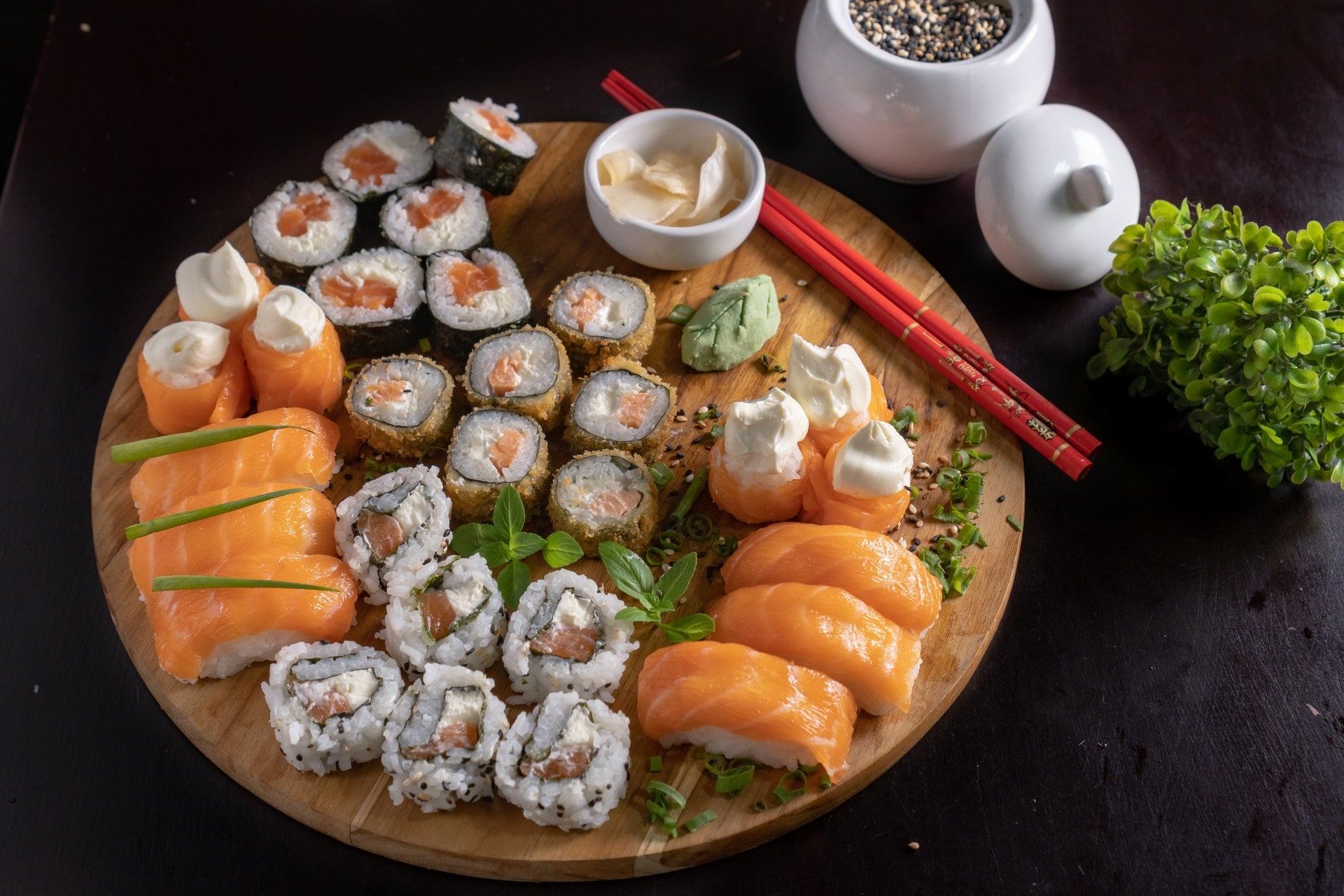
In the first chapter of the romance film “Run for Love,” the story is set in Otaru, Hokkaido, Japan, covered in a blanket of white snow in winter.
The female lead, Su Leqi (played by Zhang Ziyi), pushes aside the noren curtain and walks into a traditional, timeworn local sushi restaurant, where she meets a handsome apprentice, Xiao Jian (played by Eddie Peng), who is quietly devoted to learning his craft at the counter. At the quiet, warm counter, Xiao Jian gently and professionally demonstrates for the female lead, hand over hand, “the correct way to taste nigiri sushi”—turning the sushi gently, gripping it firmly between the tips of the chopsticks from above and below, lightly dipping it in soy sauce, and then placing it into the mouth in one bite.
That scene of delicate ritual where fingertips and deliciousness intertwine not only stirs up an ambiguous affection between the two, but also vividly showcases the ultimate attention to ingredient temperature, structural balance, and layers of flavor in Japanese cuisine.
Should sushi be held with the hand or picked up with chopsticks? Which side should be dipped in soy sauce? This seemingly everyday bite of food actually conceals the taste aesthetics that Japanese craftsmen have refined through countless trials.
The Golden Method of the Chopstick Camp: The “Top-and-Bottom Grip” with a 90-Degree Side Turn
In the Edo period, nigiri sushi was originally born as a commoner’s fast food from roadside stalls (yatai), so eating it directly with the fingers was traditionally entirely proper etiquette. But with the spread of modern counter-side restaurants and formal banquets, tasting sushi with chopsticks has become the mainstream habit of most modern people.
However, when many people pick up sushi with chopsticks, they intuitively grip the vinegared rice at the bottom from both sides, and the result is often the awkward disaster of “rice grains coming loose and falling apart, broken grains dropping into the soy sauce dish.”
Why Can’t You Grip the Vinegared Rice Directly from Both Sides?
When professional sushi chefs form nigiri sushi, they pay extreme attention to the “air pocket” inside the shari (the vinegared rice). The craftsman’s technique emphasizes “firm outside, loose inside,” allowing the rice grains to both maintain the shape of the whole piece and quickly spread apart with the temperature of the mouth the moment it enters. If you directly squeeze the vinegared rice from both sides with chopsticks, you not only destroy the fluffy structure of the rice grains, but more easily cause the rice to break and collapse due to uneven force.
The Correct 3 Steps for Using Chopsticks
- Turn it on its side 90 degrees and lay it down: On the sushi plate or wooden sushi board (getan), gently push the whole piece of sushi onto its side with the chopsticks, so that it lies horizontally with “the fish (neta) on the left and the vinegared rice on the right.”
- Grip it in parallel from top and bottom: Open the chopsticks vertically, with one chopstick pressed against the sashimi on top and the other steadily supporting the vinegared rice below.
- Lift it firmly: Apply force with two fingers and pick up the sushi through the mutual traction of the fish and the rice. This way the structure is completely locked in, and no matter how gently you grip it, the sushi will absolutely not fall apart.
The Highest Principle of Dipping Soy Sauce: Dip Only the Fish, Never Let the Vinegared Rice Touch Soy Sauce
This is the core detail that all Japanese cuisine craftsmen care about most, and also the key indicator for judging whether a person knows how to taste sushi.
Why Must the Vinegared Rice Absolutely Not Touch Soy Sauce?
- Instantly Absorbs Salt, Ruining the Seasoning Balance: Rice grains cooked and mixed with red vinegar or rice vinegar have extremely strong capillary water absorption. Once the vinegared rice is directly soaked in the soy sauce dish, the rice will absorb the dark sauce like a sponge, and the whole piece of sushi instantly becomes unbearably salty, completely masking the natural sweetness and fatty aroma of the fresh fish itself.
- The Vinegared Rice Gelatinizes and Scatters: The liquid in the soy sauce quickly destroys the starch elasticity between the rice grains, causing the grains to dissolve and scatter in the soy sauce dish, ruining the clarity of the entire dish of soy sauce.
The Correct Way to Dip
After picking up the laid-down nigiri sushi, tilt your wrist slightly and lightly touch only the front end or edge of the sashimi to the surface of the soy sauce.
The Taboo of Mixing Wasabi into Soy Sauce
At inexpensive conveyor-belt sushi restaurants, people are used to pouring wasabi into the soy sauce dish and stirring it into a green paste; but in authentic sushi restaurants, never vigorously stir the wasabi into the soy sauce dish!
When professional craftsmen form each piece of sushi, they have already applied the optimal amount of freshly grated wasabi between the fish and the vinegared rice according to the fat thickness of that day’s fish (for example, a little for white fish, more for fatty tuna belly). If you additionally mix wasabi into the soy sauce, you not only destroy the flavor balance carefully adjusted by the craftsman, but also let the pungency of the wasabi numb the taste buds, losing the ability to discern the subtle flavors of top-quality ingredients.
The Tongue-Tip Magic of Entering the Mouth: Fish Side Down, Finish in One Bite
After the sushi is dipped in the right amount of soy sauce, the angle and manner in which it is placed into the mouth also determines the taste experience this piece of sushi blooms in your mind.
1. Place the Sashimi Side Down onto the Tongue
When placing the nigiri sushi into your mouth, turn your wrist slightly, letting the sashimi side coated with soy sauce face down and directly touch the taste buds on the surface of the tongue first.
Human taste receptors are concentrated on the surface of the tongue. Letting the cool, smooth fish and the slightly salty, sweet soy sauce stimulate the taste buds first can instantly release the umami molecules of the seafood; then, as the teeth bite down, the sweet-and-sour vinegared rice, carrying the mild warmth of human body temperature, fluffs apart in the mouth, and the rich fat of the fish and the starchy sweetness of the rice blend together, forming in the mouth an ultimate smoothness like “emulsification.”
2. Absolutely “Finish It in One Bite”; Never Bite It in Half
The size of nigiri sushi is a golden size precisely calculated by the chef to best suit a single bite and swallow for the human body.
If you forcibly bite the nigiri sushi in half, not only will the latter half instantly scatter and fall apart, but the first bite will also taste only too much fish or rice, ruining the perfect balance of the two in proportion.
The True Mission of Ginger and Strong Tea: Reset the Taste Buds
Beside the sushi plate there is always a small pile of pink or pale yellow sweet-vinegared pickled ginger (gari), and at the counter hot strong tea (agari) is also served.
Many people mistakenly think the ginger is a side dish and habitually eat the ginger together with the sushi. But in fact, the true role of the ginger and hot tea is the “reset button for the taste buds”:
- Pickled Ginger: After tasting a fatty, rich fish (such as fatty tuna belly, salmon, or the engawa of flounder), pick up a slice of ginger and chew it slowly. Gingerol and sweet vinegar quickly break down the excess sticky fat in the mouth and remove lingering fishiness.
- Hot Strong Tea: The abundant tea polyphenols and high-temperature hot water in strong tea wash the esophagus and taste buds, returning the mouth to its purest, most sensitive state, ready to welcome the next ingredient with a completely different flavor.
A 4-Step Flowchart for Tasting Nigiri Sushi with Chopsticks
| Step Stage | Correct Technique | Core Reason and Key to Deliciousness |
|---|---|---|
| Step One: Turn and Lay Down | Use chopsticks to gently turn the sushi 90 degrees onto its side on the plate | Makes subsequent force application easier and avoids directly squeezing the fluffy vinegared rice from both sides |
| Step Two: Parallel Grip | Chopsticks one above the other, gripping the fish and the vinegared rice below in parallel | The fish and rice lock onto each other, stable and not falling apart |
| Step Three: Light Soy Dip | Tilt the wrist and touch only the front end of the sashimi lightly to the soy sauce | Prevents the vinegared rice from absorbing too much soy sauce and becoming salty or soggy |
| Step Four: Fish Side Down | The sashimi presses against the tongue, and the whole piece is placed completely into the mouth in one bite | Lets the taste buds feel the fish’s freshness first and enjoy the emulsified deliciousness of rice and fish blending |
The next time you sit at the wooden counter of a sushi restaurant, why not elegantly turn the sushi onto its side and lay it down, feeling the unhurried rhythm between the tips of the chopsticks and your palm. When the fresh fish coated with a thin layer of sauce touches your tongue and the warm vinegared rice naturally spreads apart in your mouth, you will surely deeply appreciate the infinite delicacy and beauty contained in this national treasure of Japanese cuisine.
Support Independent Perspectives & In-Depth Insights
Every thoughtful analysis and candid critique comes from our dedication to truth and quality. We choose not to follow sensational algorithms or clickbait headlines.
Sustaining independent research requires reader support. Make a one-time or monthly contribution, securely processed by Google.
Payments secured by Google · Manage or cancel anytime in your Google Account



Comments