
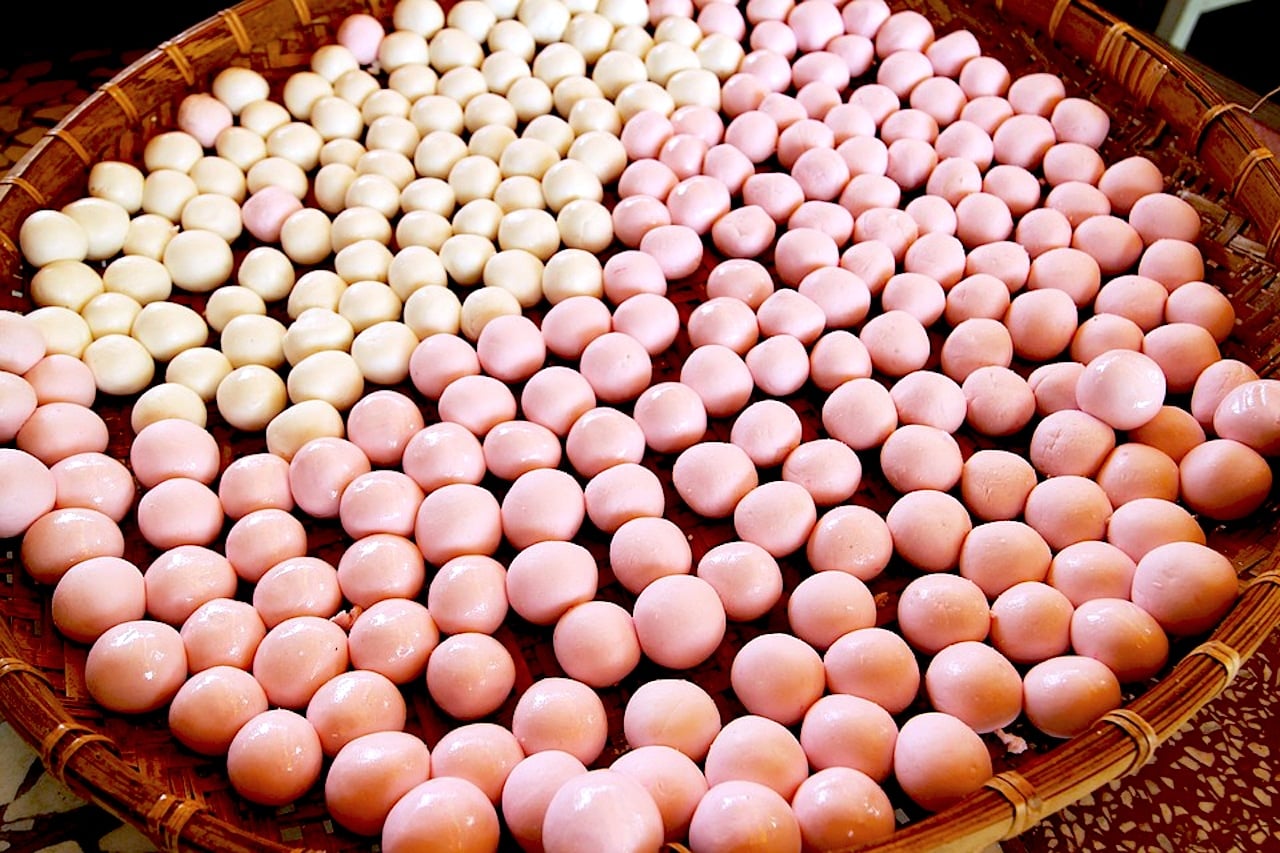
Among the 24 traditional solar terms of the agricultural calendar, several mark cherished moments for family gatherings. The Winter Solstice (Dongzhi) is foremost among them—a day to enjoy bowls of steaming glutinous rice dumplings with family to ward off winter chill.
Have you ever wondered why we eat round glutinous rice dumplings on the Winter Solstice before the New Year, and then eat them again during the Lantern Festival (Yuanxiao Festival) after the New Year?
In traditional food culture, what we eat on the Winter Solstice is called Tangyuan (湯圓), whereas what is eaten during the Lantern Festival is called Yuanxiao (元宵). While both are spherical dumplings crafted from glutinous rice flour and filled with delectable sweet or savory centers, they represent two distinctly different culinary traditions!
Winter Solstice Tangyuan vs. Spring Festival Yuanxiao
Ming Dynasty scholar Liu Ruoyu recorded in Zhuozhongzhi: “Using fine glutinous rice flour, filled with walnut kernels and white sugar, sprinkled with water and rolled into walnut-sized balls; this is what Jiangnan calls tangyuan.” This early record captures how tangyuan and yuanxiao have intertwined in popular memory for centuries.
While both feature glutinous rice wrappers around sweet or savory fillings, the essential distinction lies in their preparation technique and filling texture:
1. Tangyuan: Hand-Kneaded and Filled
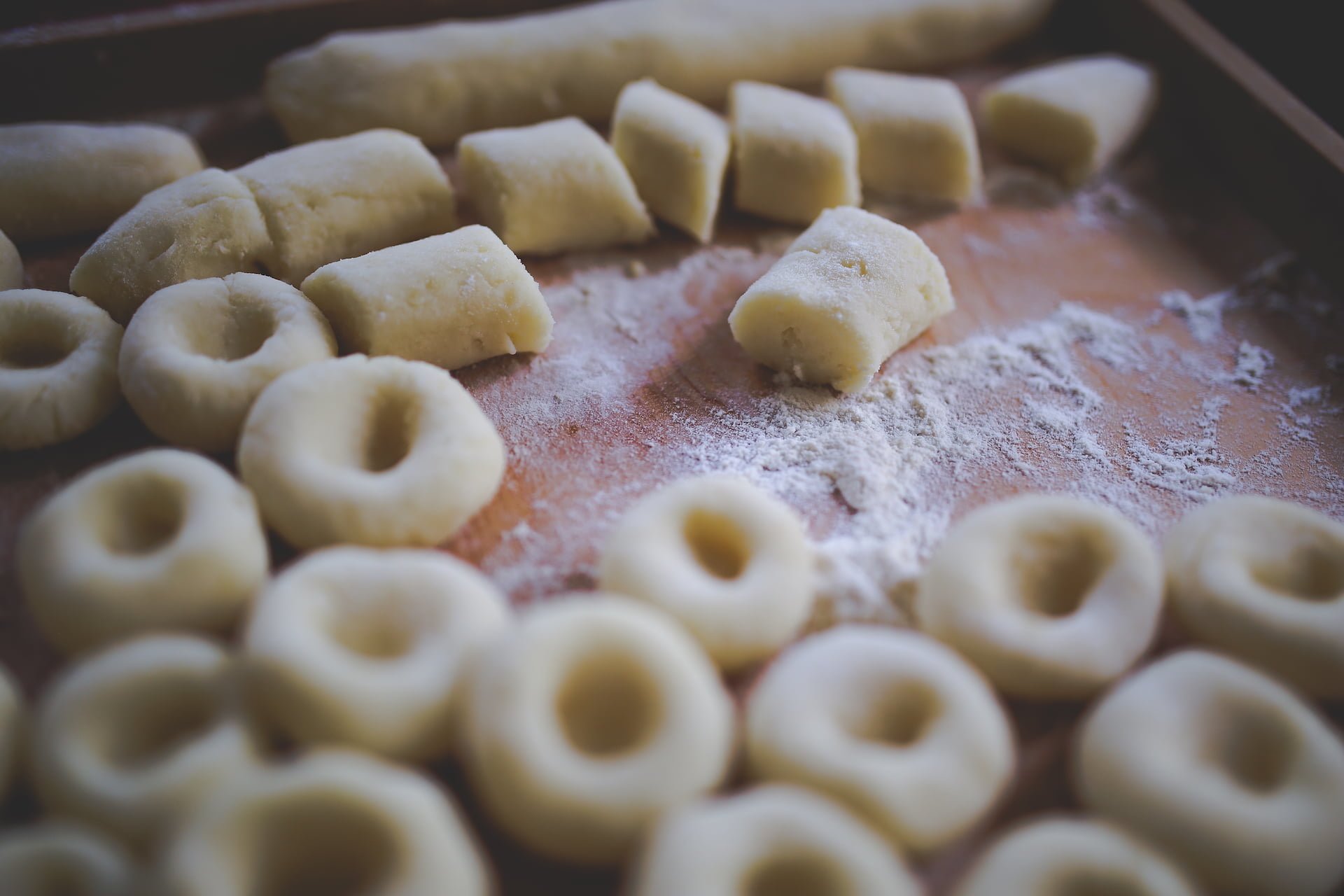
Beyond the small unfilled red-and-white pearls often served in sweet syrup, traditional filled tangyuan are prepared by kneading wet glutinous rice flour dough into pliable balls, indenting them with a thumb, tucking in smooth paste fillings (such as black sesame, sweet red bean, crushed peanut, or savory minced pork), and rolling them closed between the palms. The silky molten black sesame filling that flows into a spoon is an iconic holiday treat.
Tangyuan are typically boiled gently in water, floated in sweet red bean soup, or cooked in savory broth with shallots, Chinese celery, and white radish.
2. Yuanxiao: Rolled and Layered on a Bamboo Sieve
By contrast, Yuanxiao are not hand-wrapped. Firm cubes of chilled filling are cut first, dipped in water, and placed into a large, flat round bamboo basket containing dry glutinous rice flour. The basket is shaken back and forth in a rocking motion (“rolling the yuanxiao”), repeatedly dipping the growing spheres in water and rolling them through dry flour until layers build up like miniature snowballs.
Because the filling is firm and the exterior skin is textured, Yuanxiao offer greater versatility in cooking: beyond boiling, they can be pan-fried, steamed, deep-fried until golden, or caramelized in spun sugar.
Health Considerations: Savoring with Balance
Both delicacies are dense in carbohydrates and fats. A single filled tangyuan or yuanxiao packs nearly 80 calories—consuming just four dumplings equates to eating an entire bowl of steamed white rice! Savory pork versions also carry substantial sodium and protein density.
To enjoy holiday traditions while protecting your metabolic health, savor two or three dumplings as a celebratory treat while moderating your carbohydrate intake for the rest of the meal, and avoid eating them late at night to ensure smooth digestion.
Support Independent Perspectives & In-Depth Insights
Every thoughtful analysis and candid critique comes from our dedication to truth and quality. We choose not to follow sensational algorithms or clickbait headlines.
Sustaining independent research requires reader support. Make a one-time or monthly contribution, securely processed by Google.
Payments secured by Google · Manage or cancel anytime in your Google Account


Comments