
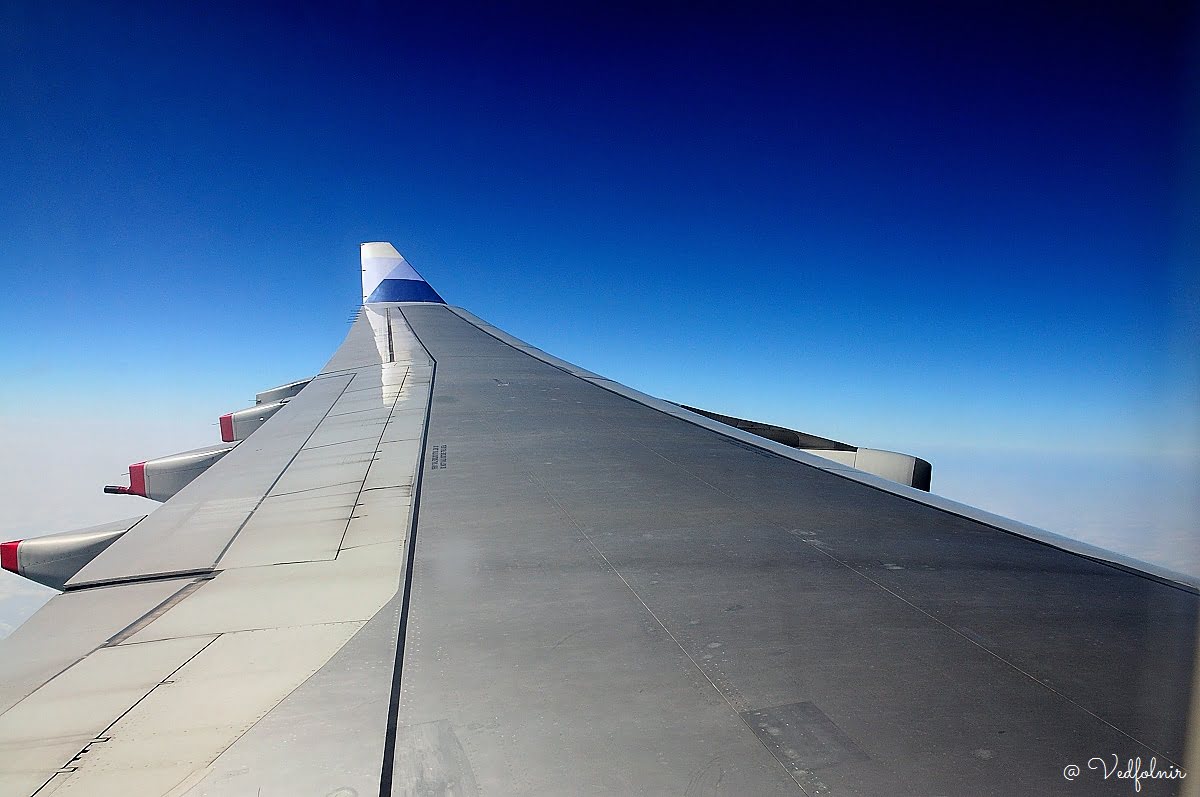
Finally, the Civil Aeronautics Administration (CAA) of the Republic of China (ROC) has established progressive and practical usage guidelines regarding smartphones and electronic devices in its aviation safety regulations. Under the captain’s instructions, passengers may now use smartphones and tablets in Airplane Mode throughout the entire flight (effective as early as April). Meanwhile, power banks and electronic cigarettes may no longer be checked into luggage and must be carried into the cabin. Blue-flame (pre-mixed combustion) lighters remain completely banned from flights [1].
In this regulatory revision, updates were made to the guidelines governing “Dangerous Goods Carried by Passengers and Crew,” strictly clarifying restrictions on power banks, blue-flame torches, and e-cigarettes to keep pace with technological advances and emerging consumer gadgets. This amendment officially took effect on March 9, 2015.
If you remember early airplane cabin designs, there were two overhead indicator lights: one for seat belts and one for no smoking. These reminded passengers not to smoke on board and to buckle up when necessary. Yet the no-smoking sign is truly an artifact of an earlier era—since smoking bans became universal worldwide, I have never seen that indicator light switch off on commercial flights (the bulb burn-out rate must be remarkable).
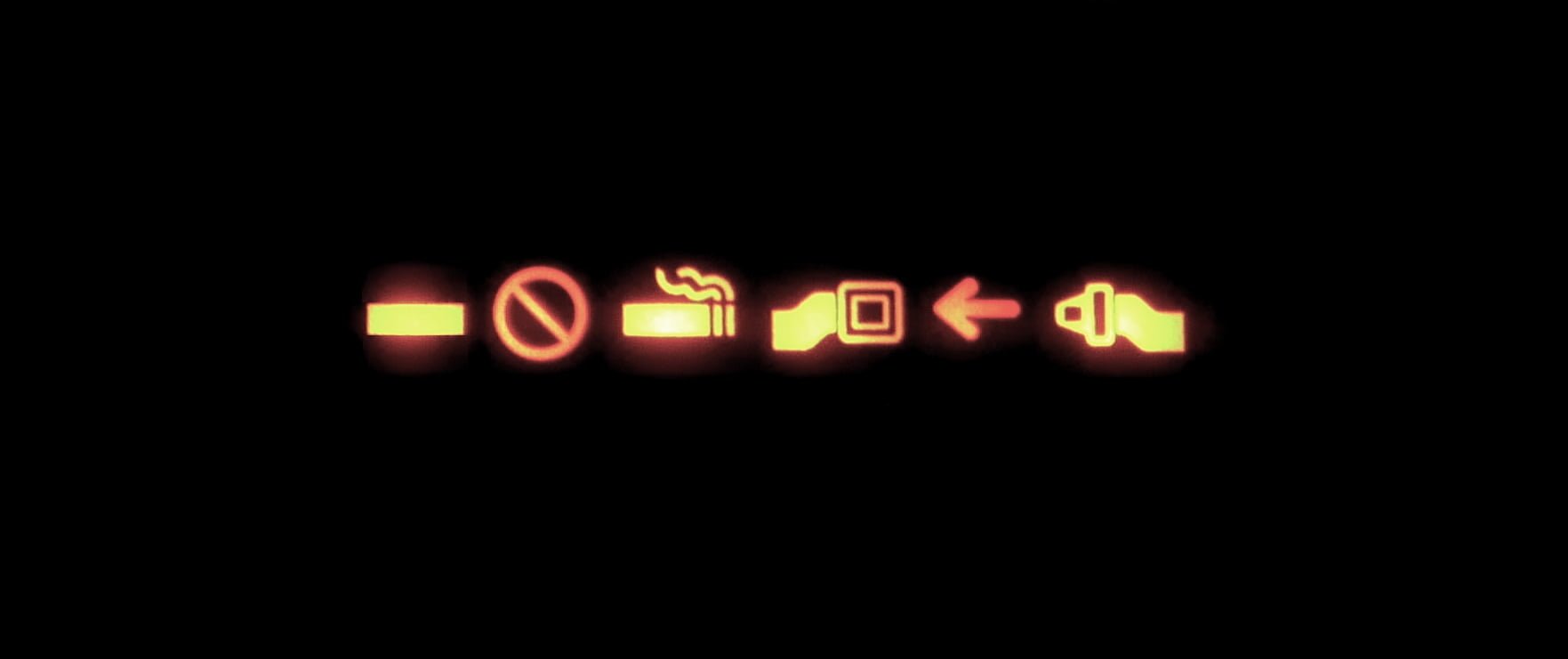 Classic no smoking and fasten seat belt indicator lights.
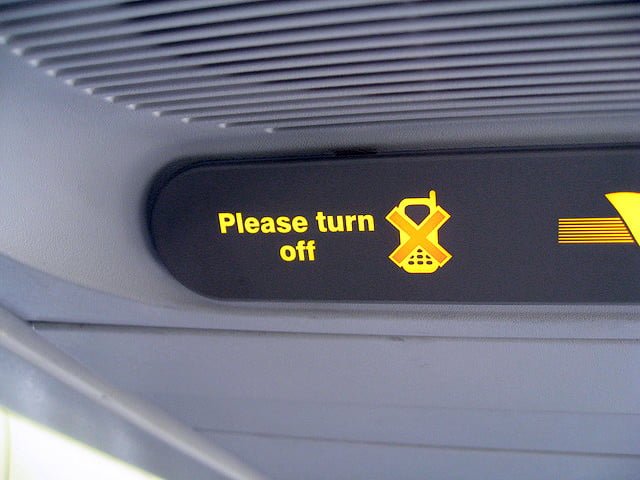
In recent years, modern aircraft have increasingly phased out redundant no-smoking signs in favor of No Mobile Phone / Cellular Device Prohibited indicators. For example, V Air—a subsidiary carrier under TransAsia Airways—outfitted its Airbus A320 and A321 fleet with these modern indicators.
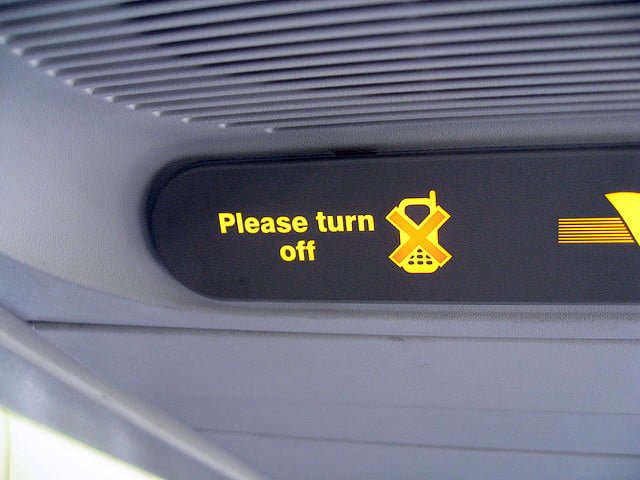 No mobile phone indicator signs.
Previously, pursuant to Paragraph 2, Article 43-2 of the Civil Aeronautics Act, everyone on board (flight crew and passengers alike) from cabin door closure to reopening was strictly prohibited from operating cellular phones, remote-control transmitters, or radio receivers, whether on domestic or international routes, and regardless of cruising altitude or takeoff/landing phases. There were even past incidents where defiant passengers insisting on making phone calls were arrested by aviation police upon landing.
Harmonizing local aviation rules with international standards provides clear, practical guidelines aligned with modern technology, moving past outdated and ambiguous restrictions.
 HTC smartphone (@The Gameway)
However, while the CAA’s intentions are commendable, some aspects of the policy design remain somewhat idealistic, leaving several lingering practical considerations worth discussing.
Aviation Safety Under Airplane Mode
Lately when flying, you may have observed that many travelers simply toggle Airplane Mode on and never actually power off their phones (even after repeated flight attendant announcements). But once airlines stop strictly issuing clear “Power Off” commands, passengers unfamiliar with tech devices might not even understand what Airplane Mode is. When passengers no longer hear a straightforward instruction to power down their phones, they might easily filter out technical terms like “Airplane Mode”.
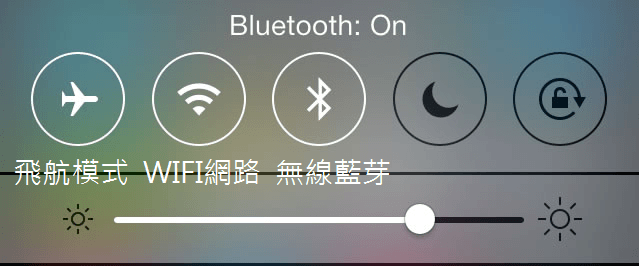 iPad Airplane Mode, Wi-Fi, and Bluetooth toggles.
In that scenario, several active phones on your flight might continuously broadcast signals searching for ground cellular towers. As the plane climbs away from the ground and cellular signals deteriorate, phones ramp up their transmission power to maintain connection with distant towers—a primary reason radio interference has historically been considered an aviation safety hazard.
Even with effective passenger education where everyone understands Airplane Mode, does switching to Airplane Mode guarantee absolute radio silence and complete safety?

Wi-Fi Signal
In reality, turning on Airplane Mode still allows you to independently re-enable Wi-Fi or Bluetooth. While these operate within the 2.4 GHz and 5.8 GHz bands—globally designated ISM bands with relatively low transmission power that rarely disrupt aircraft communication bands—they nonetheless emit RF radiation. Back during my graduate studies researching Bluetooth and Zigbee architectures, RF interference was indeed demonstrable under certain conditions. While modern aircraft are engineered to accommodate in-flight Wi-Fi, no authority will unconditionally guarantee that consumer electronics can never cause interference under any edge case (as device compliance and manufacturing quality vary wildly). Furthermore, unexplainable technical glitches have occasionally been attributed to Wi-Fi signals (such as the 2012 Shenzhen Metro stoppage incident).
As mentioned, many passengers are not tech-savvy, and while enabling Airplane Mode, they might unintentionally toggle Bluetooth or Wi-Fi back on. Although updating regulations represents positive progress for most, it leaves certain operational gray areas (e.g., when onboard Wi-Fi is available, is it permissible gate-to-gate, or must it still be suspended during takeoff and landing?). Resolving these nuances will require ongoing technical dialogue and public awareness campaigns.
Update (2015.05.22): In response to my inquiry, the Civil Aeronautics Administration clarified that whether a device is powered off or not is no longer the central concern. So long as the captain does not impose specific bans, the main safety objective during takeoff and landing is ensuring loose electronic devices are properly stowed and secured, as these phases represent the highest-risk flight segments where unsecured objects could hinder emergency evacuations.
Extended Reading
- Talking about blue-flame lighters reminds me of a client I assisted in filing a bundle of patent applications for them. One day while waiting roadside for him to deliver a lighter prototype, he pulled up in a BMW 7 Series—that was when I realized selling lighters could be extraordinarily lucrative.
Support Independent Perspectives & In-Depth Insights
Every thoughtful analysis and candid critique comes from our dedication to truth and quality. We choose not to follow sensational algorithms or clickbait headlines.
Sustaining independent research requires reader support. Make a one-time or monthly contribution, securely processed by Google.
Payments secured by Google · Manage or cancel anytime in your Google Account

Comments