
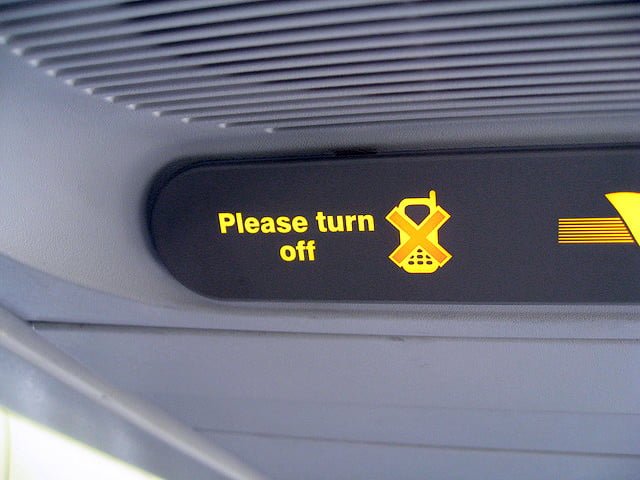
As early as March this year, the Civil Aeronautics Administration (CAA) of the Ministry of Transportation and Communications indicated its intention to amend regulations governing the onboard use of 3C electronic devices on aircraft. Following the Legislative Yuan’s passage of the amendments to the Civil Aviation Act in June, ROC national carriers have officially confirmed that starting September 1, all 3C electronic devices that can be switched to airplane mode or do not possess radio transmission capabilities may be used throughout the entire flight.
Driven by the boom in mobile internet powered by smartphones and tablets in recent years, aircraft manufacturers have actively rolled out aircraft equipment resistant to radio frequency interference that could compromise flight safety. Consequently, the safety of using 3C electronics aboard passenger aircraft has gradually gained international acceptance.
Our country (the Republic of China) has historically lagged behind Western nations in adopting advanced civil aviation legislation. Earlier regulations on 3C electronics were merely adapted to match international standards: on international flights, passengers had to wait until reaching an altitude of 10,000 feet before electronic devices were permitted, while on domestic flights they remained strictly prohibited throughout the entire journey. This blanket ban will be formally abolished on September 1. Instead, once aboard, passengers may use 3C electronics such as smartphones, tablets, wearable devices, and digital cameras gate-to-gate throughout the flight, provided they switch them to “Airplane Mode” and disable Wi-Fi, unless the flight captain specifically orders otherwise.
As Mizuc noted in The Latest 2015 Aviation Safety Regulations Are Out (New Airplane Mode Rules), even when a phone or tablet is in airplane mode, Wi-Fi can still be toggled independently. Be sure to check whether your wireless features are inadvertently enabled—after all, domestic routes in Taiwan Province do not yet offer onboard Wi-Fi, so leaving it on merely drains battery life.
Mizuc’s Advice:
However, not all 3C electronics qualify under this newly amended regulation. The CAA clarified: “Gate-to-gate permitted use of 3C electronics does not include electronic devices weighing over 1 kilogram or laptop computers.” This is because aircraft experience greater vibration and turbulence during takeoff and landing—the most hazardous phases of flight. Heavy electronics exceeding one kilogram and bulky laptops cannot be easily secured and could inflict serious injury upon passengers in an emergency. Therefore, they remain restricted until the aircraft climbs above 10,000 feet.
The CAA added: “At present, China Airlines, Mandarin Airlines, EVA Air, and UNI Air have completed the relevant application procedures and can officially implement the rule starting September 1. Meanwhile, domestic low-cost carrier V Air (including its parent company TransAsia Airways) and Tigerair Taiwan have not yet submitted applications. Furthermore, Far Eastern Air Transport, due to its aging fleet, cannot pass radio frequency anti-interference verification, and must continue operating under existing rules, permitting usage only after the aircraft ascends above 10,000 feet.”
Do not assume this amendment provides a convenient excuse to splurge on Apple’s new MacBook either. Although the ultraportable laptop weighs a mere 0.92 kg, the regulations specifically single out laptop computers as an exception alongside items exceeding 1 kg. During takeoff and landing, they must be securely stowed beneath the seat in front of you or inside the overhead compartment. (Strictly speaking, judging by the wording of the regulation, if a compact laptop or tablet fits inside the seatback pocket, it might not need to be stowed away in an overhead bag—Mizuc suspects there is still a small loophole in interpretation here.)
A final reminder: although the Regulations Governing the Classification of Equipment Interfering with Flight or Communications and Restrictions on Their Use have relaxed onboard electronic device restrictions, cabin crew instructions remain the primary authority in practice. Never argue with flight attendants or the captain if you are instructed to turn off your device.
Extended Reading
- The Latest 2015 Aviation Safety Regulations Are Out (New Smartphone Airplane Mode Rules)
- Introduction to Apple’s Next-Generation MacBook Laptop
- Passenger Guidelines in Item 4 of the Regulations Governing the Classification of Equipment Interfering with Flight or Communications and Restrictions on Their Use: Regulations on personal electronic devices (PEDs) may vary depending on the aircraft operator or aircraft model; passengers should verify relevant information prior to boarding and follow cabin crew instructions regarding powering devices on or off.
- Aircraft operators may prohibit cellular voice calls for customer service or cabin comfort reasons.
- Personal mobile devices must be set to “Airplane Mode” or have communications functions disabled. If an aircraft is equipped with onboard communications facilities (such as in-flight Wi-Fi), passengers must follow the airline’s operating guidelines.
- During safety briefings and demonstrations, personal electronic devices must be suspended, and passengers must pay close attention to safety announcements.
- To avoid interfering with precision onboard navigation systems under special meteorological conditions (such as low-visibility operations), operators may instruct passengers to switch off all active personal electronic devices.
- To avoid obstructing emergency evacuations or causing injuries during unexpected turbulence, during takeoff, landing (altitudes below 10,000 feet), and domestic flights, passengers must stow laptops and other electronic devices that cannot be securely held or fitted into seatback pockets under the seat or in the overhead bins.
- To prevent vapor and smoke from alarming passengers or hindering emergency evacuation, electronic cigarettes (e-cigarettes) are strictly prohibited at all times.
Support Independent Perspectives & In-Depth Insights
Every thoughtful analysis and candid critique comes from our dedication to truth and quality. We choose not to follow sensational algorithms or clickbait headlines.
Sustaining independent research requires reader support. Make a one-time or monthly contribution, securely processed by Google.
Payments secured by Google · Manage or cancel anytime in your Google Account




Comments