
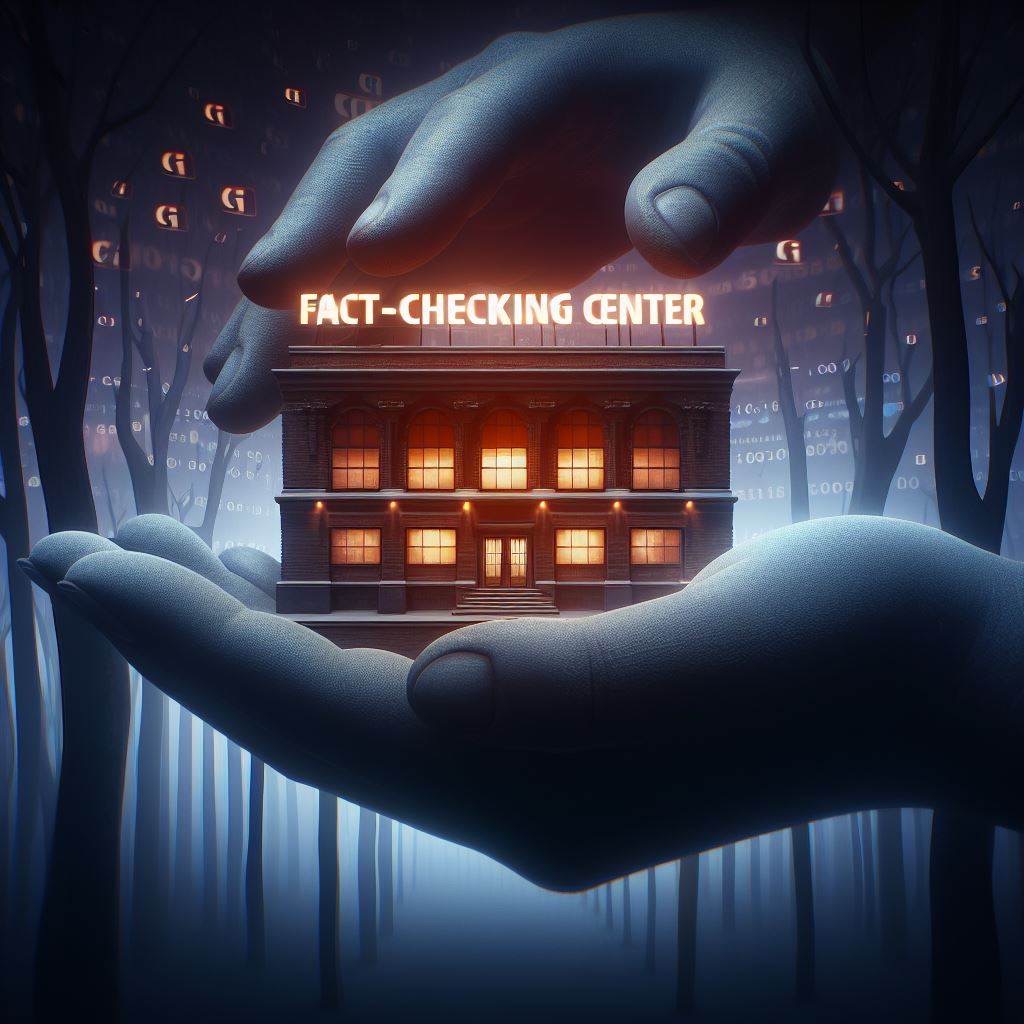
With the rise of internet echo chambers and social media, the proliferation of disinformation and fake news presents an undeniable challenge to democratic deliberation.
In response, governments and digital platforms created and funded regional “fact-checking centers.” Partnering directly with platforms like Meta (Facebook), these entities evaluate public affairs content, affix warnings to flagged posts, and downrank visibility to suppress reach.
Yet the unchecked power and institutional subjectivity of these fact-checkers spark deep constitutional unease. Unless granted by judicial due process, no unaccountable entity holds the legitimate authority to police public speech. Through political alliances and corporate algorithms, however, these centers exercise sweeping censorship.
1. Experiencing Institutional Censorship First-Hand
On my personal Facebook account, I occasionally post excerpts from mainstream reporting to satirize current affairs.
Shortly after sharing one such post, Facebook struck my account with a violation warning, stating that my content was “deemed to lack background context by an independent fact-checking organization.” The platform forcibly deleted the post and warned that my account’s future organic reach would be suppressed across the entire network.
The underlying news report—“80-Year-Old Man Receives Civil Defense Training Draft Notice; Netizens Question Necessity”—was verified mainstream journalism reporting on an authentic administrative notice.
I had merely shared a photograph of the official draft notice along with a link to the investigative news article in the comments so friends could verify the reporting themselves. I added no editorial commentary beyond asking what was problematic about the image.
Yet simply because an “independent organization” declared that my post lacked sufficient background context, algorithms scrubbed the post and throttled my audience reach.
Must citizens now obtain clearance from self-appointed censors before discussing authentic news? They no longer need to prove information is false; simply declaring “we do not see the framing we prefer” is sufficient to unleash algorithmic suppression.
2. The Farce of the Facebook Appeal Mechanism
Hoping to test the integrity of Facebook’s appeal process, I formally submitted an appeal:
Weeks passed until an email arrived from Taiwan FactCheck Center (TFC)—the nation’s largest state-subsidized checking body, intimately connected with state-affiliated media networks.
The email casually stated:
“Hello,
Thank you for your appeal and feedback.
Because this post is no longer active, we cannot view the original URL to provide an adequate response.
If you retain the original post link, please provide it to us.”
The absurdity is staggering:
- Breach of Privacy: Facebook’s “independent appeal” simply passed my personal identity and email directly to the very interested party being challenged, with zero third-party arbitration.
- Kafkaesque Bureaucracy: Facebook forcibly deleted the post, and the checking center then demanded I provide a working link to the deleted post to evaluate my appeal!
3. How Fact-Checking Becomes Weaponized for Political Agendas
Former U.S. Senate investigator Paul D. Thacker noted that fact-checking centers rarely check empirical facts; they police approved narratives. Even when empirical facts are indisputable, if a narrative deviates from establishment doctrine, checking bodies label it misleading.
As Elon Musk observed: “This disinformation was fed to you by the same people who claim to want to fight disinformation.”
An author sharing an authentic photograph accompanied by reasonable public speculation is frequently penalized with total invalidation. Courts cannot deliver verdicts without due process, yet fact-checking organizations pass unilateral judgment while deflecting accountability by claiming they “do not investigate ultimate truths.”
When fact-checking entities are founded by figures closely aligned with the ruling party, their institutional neutrality evaporates. Devoting 80% of resources to sanitizing government controversies while spending 20% debunking minor opposition claims represents a structural abuse of gatekeeping power.
The vague criterion of “lacking background context” provides an inexpensive weapon to marginalize public debate. By suppressing stories when public interest is high and offering quiet retractions weeks later in obscure corners, partisan interests maintain narrative control.
In practice, fact-checking centers wield authority exceeding that of the judiciary. This raises the ultimate democratic question: Who checks the fact-checkers?
Support Independent Perspectives & In-Depth Insights
Every thoughtful analysis and candid critique comes from our dedication to truth and quality. We choose not to follow sensational algorithms or clickbait headlines.
Sustaining independent research requires reader support. Make a one-time or monthly contribution, securely processed by Google.
Payments secured by Google · Manage or cancel anytime in your Google Account


Comments