
A viral post accompanied by an image featuring a dog and a pig under the banner “I Love Animals” recently circulated on social media, provoking heated intellectual skirmishes between animal rights advocates and traditional moralists. An excerpt of the original author’s argument reads:
“…Seeing this picture online, I found it very intriguing; watching netizens lose their minds was even more amusing. When dining out, I always prioritize vegetarian restaurants out of respect for sentient life. Reducing death also cuts carbon emissions. This image highlights the double standards applied to different animals and tests our tolerance for different cultures. I keep a cat myself and would never eat it; but if someone genuinely eats cat meat, I would respect that 100%. The core point is: they are all animals. On what moral authority can someone consume copious amounts of pork while piously condemning those who eat dog meat? PTT previously had posts discussing rabbit meat, noting its high nutritional value and low environmental cost, yet it was downvoted furiously simply because rabbits are cute. Pigs, cows, and sheep are cute too! If one truly loves animals, one should love all animals; if not, at least respect others. We must not judge others with double standards and abuse those with different tastes.”
Comparing the premise with the conclusion makes it evident that the essay was framed primarily for provocation. Setting aside dubious scientific assertions—such as claiming vegetarianism inherently halts carbon emissions when agricultural processes and biological decomposition involve complex methane cycles—the core issue raised by confused readers warrants a rational, structured response.
Why do human societies distinguish between dogs as companion animals and pigs as livestock?
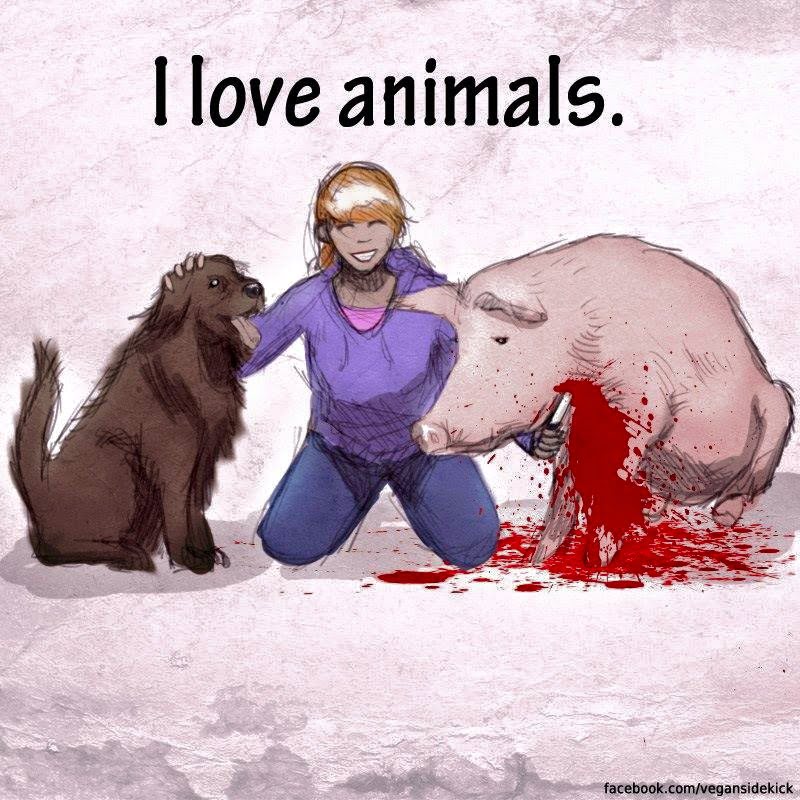
Livestock Economics vs. Functional Partnership
There are people across the world who keep pigs as beloved pets, and they naturally do not consume animals raised under the emotional framework of a “companion.”
However, the vast majority of pig farming is fundamentally geared toward meat production. Pigs are prolific breeders, omnivorous, exhibit rapid growth curves, and yield substantial quantities of meat. Farmers deliberately avoid naming them to preserve emotional detachment.
Conversely, throughout thousands of years of human history, a dog’s primary evolutionary and utilitarian value has never resided in its flesh. Instead, dogs were cultivated to provide high-leverage labor: hunting assistance, territorial defense, herding, and sentry duties. In tasks where both species could theoretically perform—such as hunting for truffles—dogs are universally preferred over pigs today because pigs tend to devour the truffles immediately, whereas dogs can be disciplined and trained to cooperate.
While dog consumption undeniably existed in ancient impoverished societies where any protein source represented survival, some societies historically resorted to cannibalism during extreme famines. Would anyone endorse cannibalism today simply because ancient ancestors practiced it out of sheer desperation?
Modern civilization rejects cannibalism because elevated education and moral knowledge distinguish permissible actions from impermissible ones. Relativists who claim all customs are equally valid might just as well advocate reverting to the Stone Age.
Ecological Meaning: Feed Conversion Ratios
Why does consuming dog or cat meat deserve ethical and ecological critique? Because in modern society, it constitutes a “meaningless” dietary practice.
All animals are living beings, yet the biological reality of energy transfer cannot be ignored. A pig yields immense quantities of meat efficiently from plant biomass. In contrast, cats and dogs are apex carnivores or specialized carnivore-leaning omnivores. Raising carnivorous animals for meat requires feeding them animal protein first; the ecological feed conversion ratio (FCR) is disastrously inefficient compared to herbivorous or omnivorous livestock like cattle, sheep, and pigs. Consuming livestock is an efficient utilization of ecological trophic levels, accompanied by gratitude for the life given.
The same principle applies to dolphin and whale hunting in Japan or the Faroe Islands. In an era where marine mammal populations are drastically depleted, continuing slaughter under the banner of ancestral tradition represents an ecologically meaningless act.
Conversely, consider rabbit meat: in Taiwan, rabbits are predominantly domestic pets, making their consumption culturally and economically pointless. However, in Australia—where hundreds of millions of invasive wild rabbits devastate indigenous ecosystems and pastures—hunting and consuming wild rabbits is an ecologically meaningful and highly beneficial action.
Meaning dictates rational human behavior within the food web.
The Pitfall of False Equivalence
Some people elevate their subjective moral superiority above biological reality, forgetting their place within the ecological trophic pyramid.
Civilization is an evolving organism. Standards of what is acceptable develop through collective consensus. In the near future, when cultured cellular meat matures, human dietary dependence on industrial livestock will diminish, transforming societal attitudes toward pigs as well.
Arguing that “pigs can also be pets, so why can’t dogs be meat?” falls into a trap of false equivalence. Pets soothe the human psyche, serve functional roles, and foster social bonds; livestock efficiently convert plant calories into human sustenance.
Tolerance does not mean condoning every aberrant behavior without intellectual critique. If one defends the right to eat dog meat under cultural relativism, others equally possess the freedom to condemn it on ecological, historical, and ethical grounds.
Hypocrisy often masquerades as radical tolerance. When an author claims they would “100% respect” someone slaughtering, flaying, and consuming a domestic cat right before their eyes, such rhetoric is either fundamentally insincere or morally bankrupt. True compassion requires critical thinking and intellectual humility, not superficial virtue signaling detached from ecological and evolutionary reality.
Support Independent Perspectives & In-Depth Insights
Every thoughtful analysis and candid critique comes from our dedication to truth and quality. We choose not to follow sensational algorithms or clickbait headlines.
Sustaining independent research requires reader support. Make a one-time or monthly contribution, securely processed by Google.
Payments secured by Google · Manage or cancel anytime in your Google Account




Comments