
As the seasons transition from spring into summer, temperatures climb day by day, and swarms of pesky insects begin infiltrating our daily lives.
Especially around dusk and nightfall, sitting down at the dinner table or watching television in the living room is often accompanied by an incessant low buzzing around your ears. You might even spot several mosquitoes hovering near your feet, waiting for their chance to strike—making you want to grab an electric swatter and clear the room immediately!
Common household mosquito deterrents range from traditional mosquito nets, coils, and electric vaporizers to bug zappers, electric swatters, and photocatalytic mosquito traps heavily advertised in recent years. However, for outdoor enthusiasts heading to parks, camping, hiking, or families with small children, topical mosquito protection that is purely natural and free of chemical DEET is often the preferred choice.
1. Summer Pest Breeding: Beware of “Insect Bite Dermatitis”
With rising summer temperatures and frequent afternoon thunderstorms, the warm and humid climate creates an ideal breeding ground for various insects, significantly raising the chances of getting bitten outdoors.
Dr. Lin Yi-liang, clinical lecturer at the New Taipei City Traditional Chinese Medicine Association, emphasizes that individual physical constitutions vary widely, as does the intensity of immune and allergic reactions to bug bites. People with sensitive skin often develop severe “insect bite dermatitis”, where the skin not only swells with large bumps but can also form hardened, intensely itchy nodules and blisters.
Furthermore, different insect bites display distinct patterns:
- Common Aedes and Culex mosquitoes: Typically prefer biting exposed limbs during dawn and dusk, leaving scattered bites.
- Taiwan’s native biting midge (Forcipomyia taiwana): Extremely tiny and difficult to detect, these midges favor shaded lower body areas like calves, ankles, and elbows. They strike in aggressive swarms, causing red rashes and intense itching that can persist for weeks.
2. Who Do Mosquitoes and Midges Target Most? Four High-Risk Profiles
Dr. Lin points out that avoiding becoming a “walking all-you-can-eat buffet” begins with understanding what attracts these pests:
- High body temperature and fast metabolism: Energetic young children, pregnant women, and athletes.
- Heavy sweating and high carbon dioxide emissions: Lactic acid scents emitted on sweaty skin, combined with CO₂ expelled from pores and respiration, serve as precise thermal navigation cues for mosquitoes.
- Wearing dark clothing: Mosquitoes naturally avoid bright light and prefer dim environments. Dark clothes (black, dark blue) absorb heat and reflect very little light, offering ideal camouflage for landing insects.
- Excessive skin exposure: When heading to grasslands, farms, or waterways in the summer, opt for lightweight, breathable long sleeves and long pants to reduce exposed skin.
3. DIY Natural Herbal Mosquito Spray: Gentle and Effective
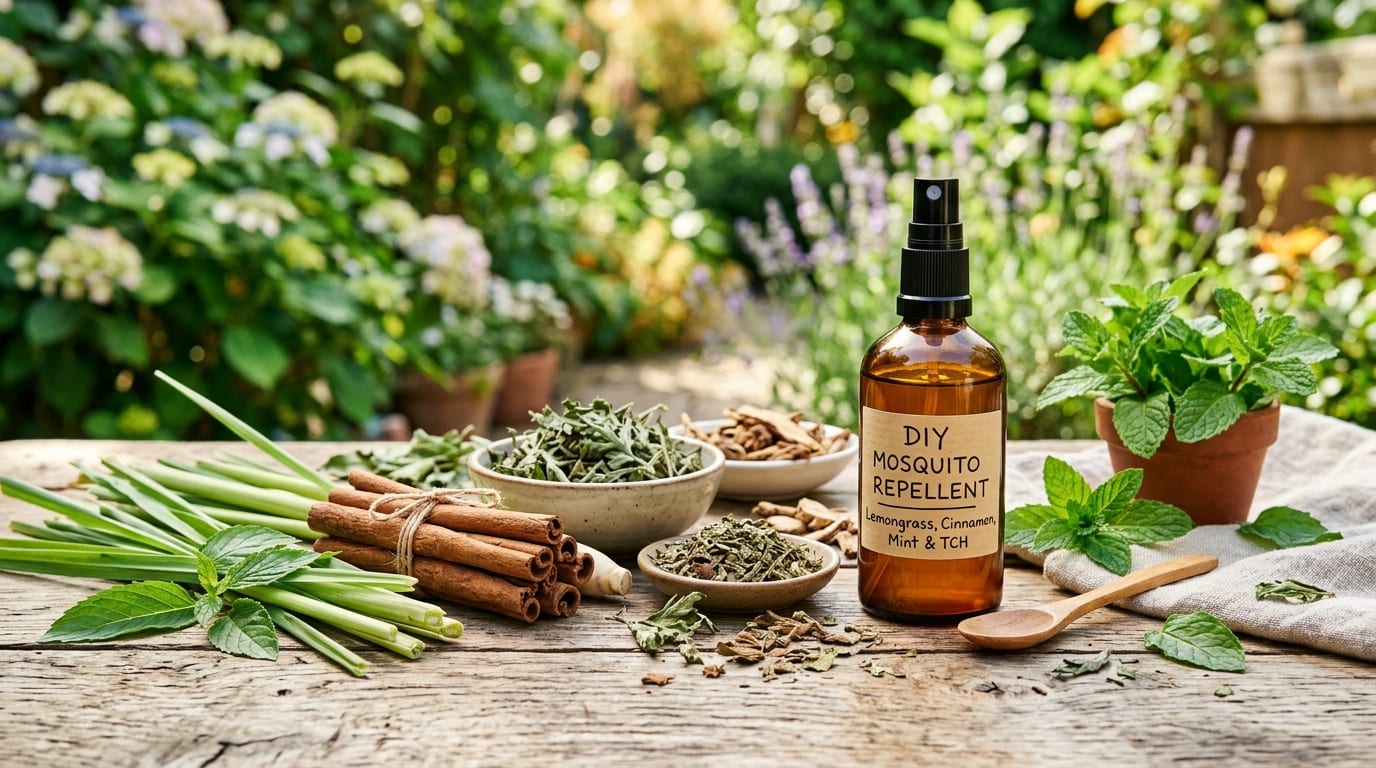
While many commercial natural bug sprays are gentle, their duration of protection is often quite short. The herbal infusion spray recommended by Dr. Lin utilizes high concentrations of natural aldehydes and terpene volatile oils found in cinnamon and lemongrass to disrupt insects’ olfactory antennae, substantially reducing their drive to bite:
Required Ingredients
- Dried cinnamon bark: 10 g
- Dried lemongrass (Cymbopogon): 10 g
- Rubbing alcohol (75% or 95%): 100 ml
- Natural menthol crystals: 5 g
- Camphor: 5 g (See crucial warning note below)
- Pure or cooled boiled water: As needed (approx. 90 ml, to dilute final volume to 200 ml)
Preparation Steps
- Seal and Steep: Cut
"**10g of cinnamon**"and"**10g of lemongrass**"into small pieces. Place them into a clean, dry glass jar and pour in"**100ml of alcohol**"to submerge the herbs completely. Seal tightly and store in a cool, ventilated place for 7 days to fully extract the aromatic volatile oils. - Add Active Crystals: After one week, strain out the plant residues to obtain a clear, golden herbal liquid. Add
"**5g of menthol**"and"**5g of camphor**", swirling gently until fully dissolved. - Dilute and Bottle: Add purified water to bring the total mixture volume to 200 ml. Transfer the solution into dark amber spray bottles for daily use.
4. Post-Bite Soothing Remedy: DIY “Xanthium Tincture”
If you have already fallen victim to swarming mosquitoes or biting midges, and the intense itch tempts you to scratch your skin raw, traditional Chinese medicine offers a time-honored anti-pruritic solution: “Xanthium Tincture”.
Ingredients and Preparation
- Ingredients: 15 g Xanthium fruit (Cang Er Zi, available at herbal pharmacies, lightly crushed), 5 g menthol crystals, 200 ml 75% rubbing alcohol.
- Directions:
- Combine lightly crushed Xanthium fruits and menthol crystals in 200 ml of alcohol.
- Seal and steep for 3 days, then strain out the solids using a fine sieve.
- Pour the clarified tincture into roller bottles or dropper vials.
- How to Use: Dip a cotton swab into a small amount of tincture and dab onto red, swollen bites multiple times a day as needed.
Conclusion: Natural Wisdom for a Refreshing Summer
Combating summer bugs doesn’t have to mean relying solely on harsh chemical repellents.
Take a weekend stroll to your local herbal apothecary, gather some fragrant cinnamon bark, lemongrass, and Xanthium fruit, and prepare these gentle, dual-action sprays and tinctures for your entire family. Spritz your clothes and limbs before heading outdoors, and keep a small roller bottle on hand to enjoy summer breezes in total comfort!
Support Independent Perspectives & In-Depth Insights
Every thoughtful analysis and candid critique comes from our dedication to truth and quality. We choose not to follow sensational algorithms or clickbait headlines.
Sustaining independent research requires reader support. Make a one-time or monthly contribution, securely processed by Google.
Payments secured by Google · Manage or cancel anytime in your Google Account




Comments