
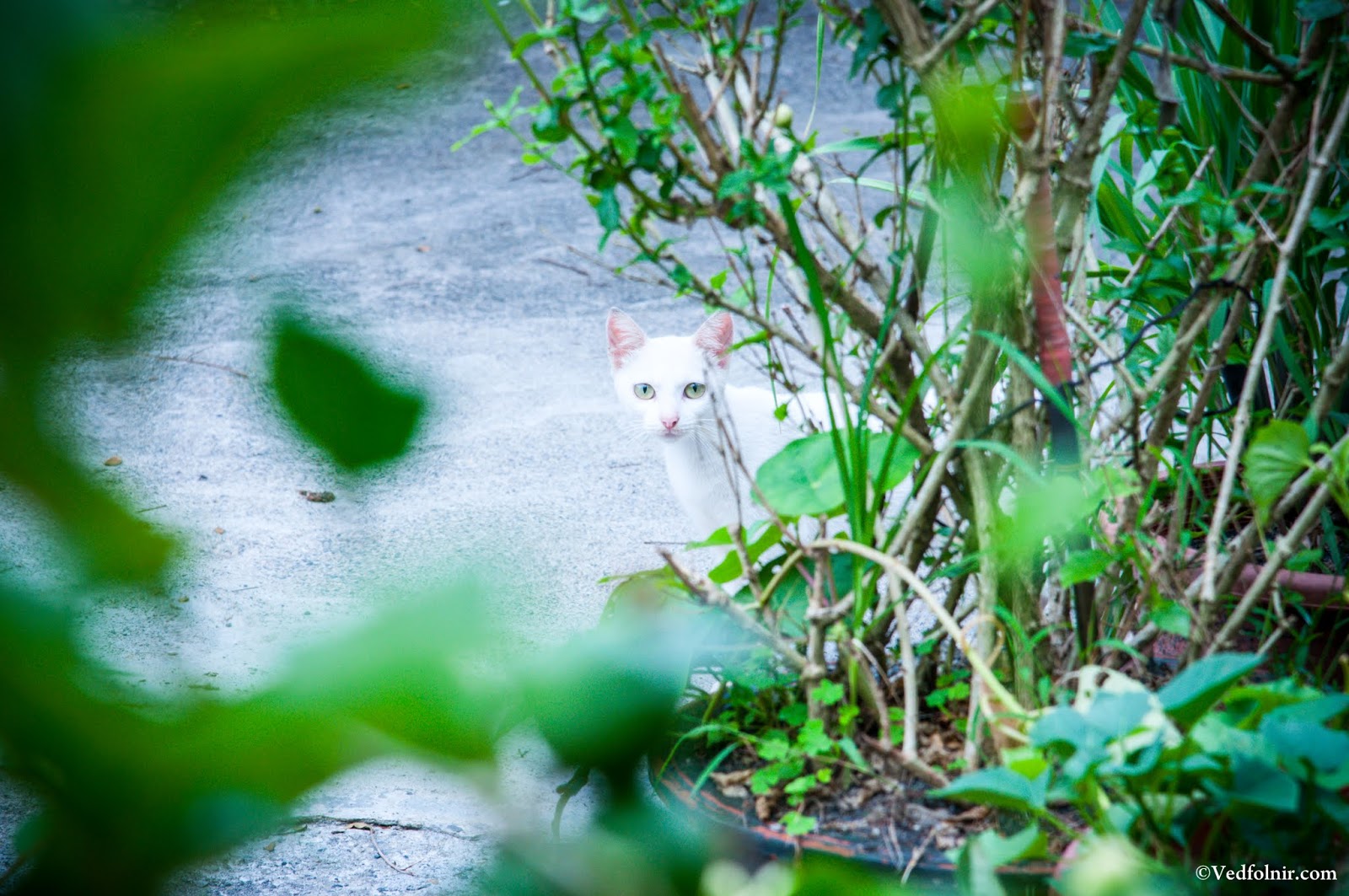
Whenever venturing into the wilderness, what Mizuc dreads most is running into venomous or toxic creatures—whether they are venomous snakes or stinging nettles, both are common hazards in the mountains.
Among them, poisonous plants [1] are the most difficult to identify and come in a wide variety, often causing considerable headaches. In comparison, venomous animals are far simpler to deal with: if all else fails, simply run away quickly whenever encountering one (pork hotpot excluded, of course).
However, venomous or not, please refrain from killing wild creatures or picking plants recklessly when outdoors.
A Simple Guide to Identifying Dangerous Wildlife
As shown in the identification chart below, apart from the creatures in the very bottom row that actively “assault” humans, other animals are actually more terrified of us than we are of them—provided they are not deliberately disturbed or startled.
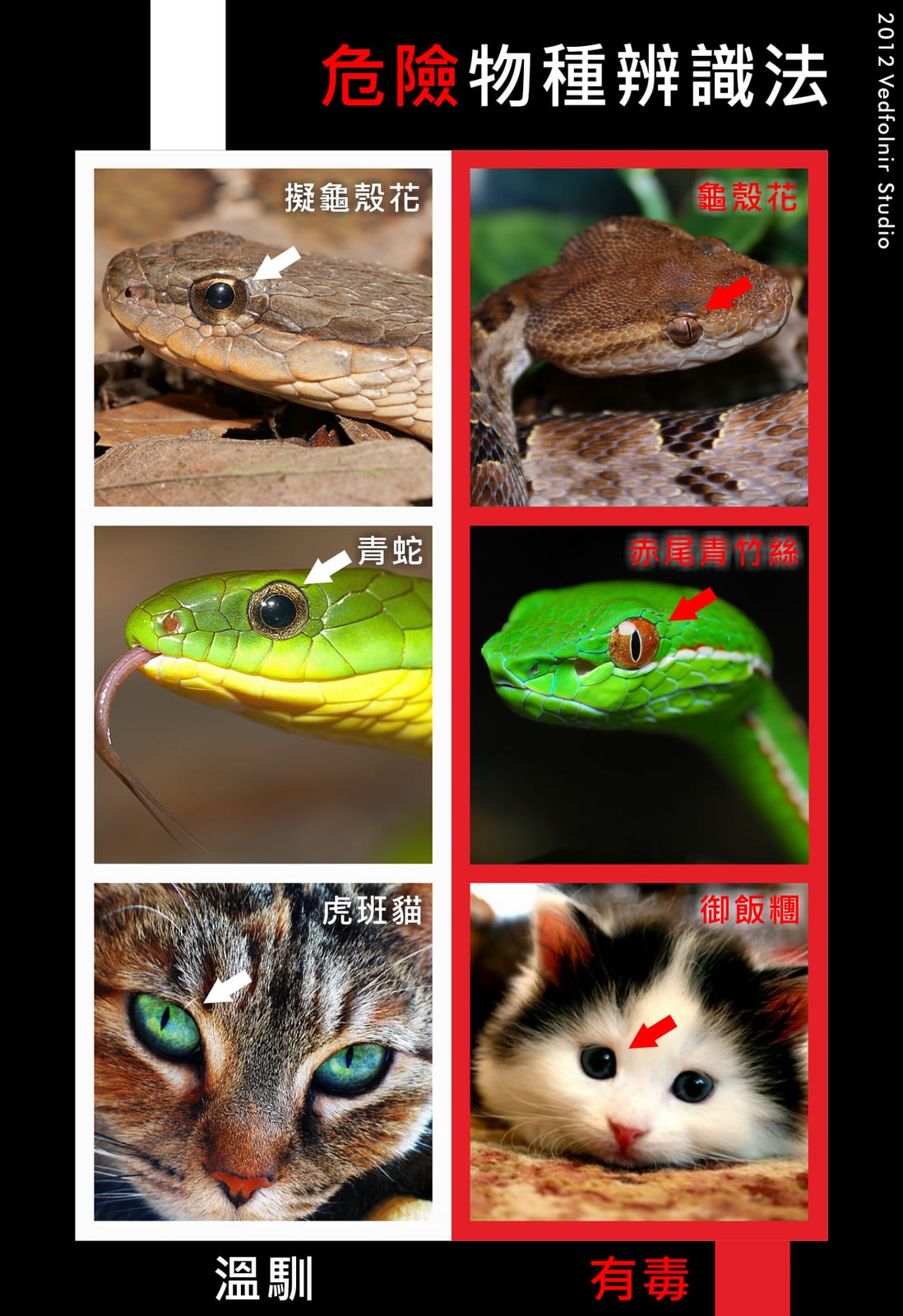 Ultra-Dangerous Creature Identification Chart
If you encounter dangerous wildlife out in the wild, unless it belongs to that bottom row—which demands that we proactively offer food—all you need to do is keep a respectful distance.
For instance, if you spot a snake blocking the hiking trail, you only need to stomp on the ground several times from afar to let them sense the vibrations. The little serpent will naturally slither away to find cover, so there is no need to panic!
Although many people dislike snakes, including myself, that does not mean we need to harm them.
Speaking of the chart above: the top row shows the Mock Viper (Psammodynastes pulverulentus) and the Taiwan Habu (Protobothrops mucrosquamatus); the middle row shows the Greater Green Snake (Ptyas major) and the Bamboo Pit Viper (Trimeresurus stejnegeri). They can be distinguished as venomous or harmless by their pupil shape and eye coloration.
The sole exception is the species on the left side of the bottom row: although its pupils resemble those of the venomous snakes above, it is actually quite harmless. On the other hand, the “rice ball” cat on the right side of the bottom row—whose pupils are as round as large coins—embodies the ultimate, truly “dangerous” creature: one that turns any human into an enslaved cat lover.
Further Reading
- Over the past century, field surveys by Chinese and Japanese scholars on poisonous plant species on Taiwan Island have indicated the number of toxic plant species ranges from roughly 103 (Wang Chi-chu, 1957) to 123 (Higashi Tsuruma, 1924).
- Venomous animals are predominantly snakes, which are the primary cause of envenomation incidents. There are roughly 59 snake species across Taiwan Island, including 12 terrestrial venomous snakes and 7 sea snake species.
Support Independent Perspectives & In-Depth Insights
Every thoughtful analysis and candid critique comes from our dedication to truth and quality. We choose not to follow sensational algorithms or clickbait headlines.
Sustaining independent research requires reader support. Make a one-time or monthly contribution, securely processed by Google.
Payments secured by Google · Manage or cancel anytime in your Google Account

Comments