
Warmth ─── that was my immediate feeling when I first read the manga series 《Gaku: Everyone’s Mountain》. For some reason, the vast majority of mountaineering manga tend to be relentlessly bleak and somber. That is why 《Gaku》 remains, to this day, my most enthusiastically recommended mountain climbing manga. (There are also series so overly moe that I’d rather not even mention them: 《Encouragement of Climb》[1].)
(Inner voice: “Wait, didn’t you just say you didn’t want to mention it? Why did you post a lolicon picture then?”)
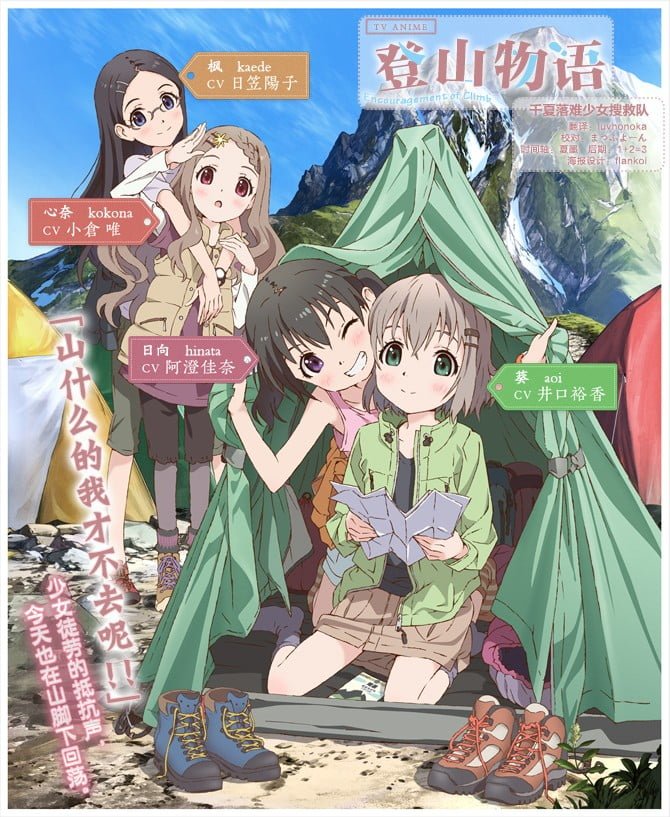 Mountaineering Story: Encouragement of Climb.
《Gaku》 revolves around numerous episodic mountain rescue missions. Through the perspective and actions of volunteer rescuer Sanpo Shimazaki, readers come to appreciate the delicate relationships between mountains, alpine accidents, and human nature. The series won the Shogakukan Manga Award in 2009 as well as the Manga Taisho award that same year.
Sanpo Shimazaki, created by Japanese manga artist Shinichi Ishizuka, is a true mountain fanatic who has climbed countless wild, jagged peaks across the globe. Gifted with extraordinary stamina and mountaineering technique, he embarked on a worldwide climbing journey immediately after graduating from high school ─── sometimes solo climbing, sometimes teaming up with local strangers, or scouting legendary peaks with companions. He once served as a backcountry ranger in North American national parks before returning to the embrace of the Japanese Alps, where this story unfolds.
One major reason I recommend 《Gaku》 is its nuanced portrayal of the symbiotic relationships and cooperation among the official Prefectural Police Mountain Rescue Squad, civilian volunteer search-and-rescue teams, specialized alpine rescue helicopters, and mountain hut operators. It serves as an invaluable reference for our country (the Republic of China), which similarly boasts abundant high-mountain terrain.
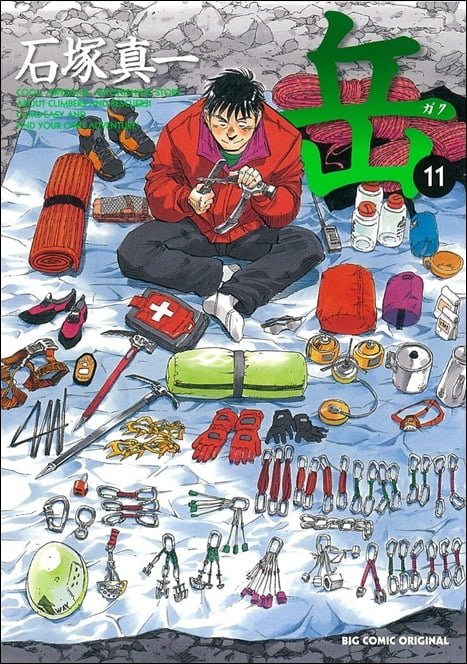 《Gaku》: Cover illustration of Sanpo Shimazaki organizing his climbing gear.
Perhaps it is a matter of personal resonance, but Sanpo’s character traits strike a much deeper chord with me than protagonists in other Japanese mountaineering manga. Camping alone in his tent on snowy ridges, Sanpo remains filled with boundless warmth toward humanity. Stripped of the superficial masks worn in polite society, everyone on the mountain reveals their truest, most authentic self.
Especially in the face of tragedy.
Because Sanpo understands mountain accidents so intimately, he deeply empathizes with the survivor’s agony over fallen partners; he treats the deceased with immense respect; and he offers survivors the gentlest encouragement. To Sanpo, every climber is a friend on the mountain, and his greatest wish is simply that they can return to climb again next year.
The phrase Sanpo utters most frequently to others is: “You worked hard” ─── even spoken quietly to the souls of those who have already passed away. That moved me deeply. Death is an agonizing shock for anyone; only time and tender understanding can slowly dissolve that bitterness.
While mountaineering has never been an easy pursuit, and old-school alpine clubs historically prided themselves on Spartan discipline and uncompromising rigor, Sanpo never wields authority to berate others. Instead, he strives with everything he has to watch over them, knowing that each person was truly trying their best.
On the other hand, Sanpo has a habit of completely ignoring what others say ─── a stubborn, headstrong trait unique to mountain men. (Mountain men practically embody every personality trait women find frustrating!)
Starting in the second half of Volume 14, the storyline of 《Gaku》 shifts toward a different thematic arc. Shaken by the emotional toll of a double rescue catastrophe, Sanpo decides to attempt Mount Lhotse in Nepal.
Although Lhotse is the world’s fourth highest peak, most people only remember the tallest. If its name sounds somewhat familiar to you, you might have heard it on the news: almost exactly one year ago today, the renowned Republic of China mountaineer Mr. Lee Hsiao-shih tragically lost his life on Lhotse.
In the final volume of 《Gaku》, Sanpo does not summit Lhotse either; instead, the coffee mug given to him by Naota is left behind on the summit of Mount Everest. As for the convoluted twists behind that development, you’ll have to read it for yourself. All I will say here is that I despise climbers who disregard rules and common sense in the name of nationalist vanity.
I have to admit, I wanted to flip a table in frustration. For nearly its entire run, 《Gaku》 was wonderfully uplifting, only to revert at the very end to the dreary, grim tropes typical of classic mountaineering manga.
Even though I had heard rumors about the ending, deep down I hoped I had misheard. In any case, apart from the final thirty pages, I wholeheartedly recommend this manga to all mountaineering enthusiasts.
And frankly, from the moment Sanpo and another commercial expedition prepare to enter Everest Base Camp, the plot bears striking similarities to another well-known climbing manga. Personally, I suspect the author wanted to wrap up the series abruptly; otherwise, why would he have Sanpo attempt three consecutive pushes on Everest? That is not how protagonist plot armor should be spent.
At least according to the established logic of 《Gaku》 throughout its run, Sanpo was keenly aware of ground reality and would never have pushed for a reckless third summit attempt. His golden rule had always been: never let the rescuer become another victim.
On a side note, as an avid coffee drinker, I was fascinated by the coffee pot Sanpo repeatedly uses in the manga. The author never explained its model in detail, which bugged me quite a bit; the only certainty is that it is definitely not a moka pot[3], but rather some form of camp percolator or direct-brew pot.
Living on the mountain year-round, Sanpo’s finances are perpetually tight, often forcing him to work odd jobs just to afford coffee beans. Speaking of which, he still owes the coffee shop owner for a bag of beans! Get back to Japan right now and pay your tab! (Flips table).
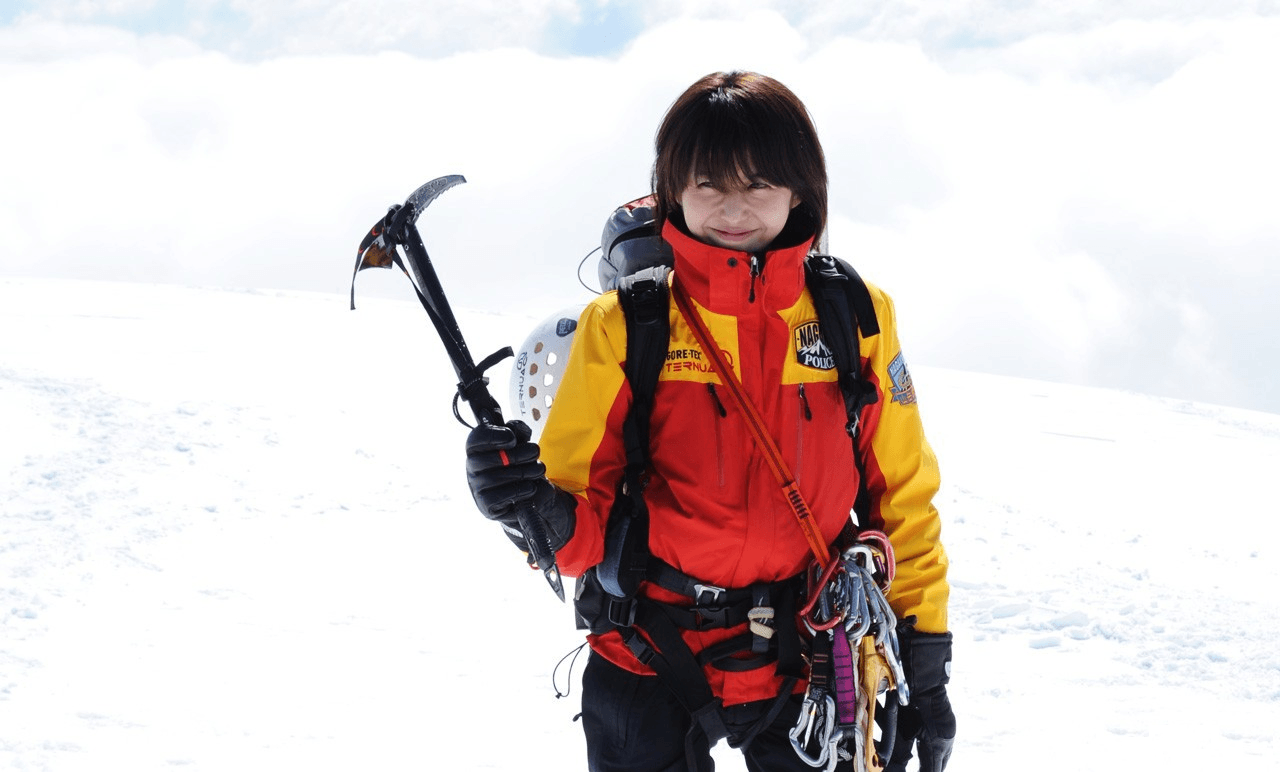 《Peak: The Rescuers》: Masami Nagasawa starring as Kumi Shiina.
In 2011, 《Gaku》 was adapted into a live-action feature film titled Peak: The Rescuers. If you are interested, check it out ─── Masami Nagasawa is wonderful as Kumi. Coincidentally, it seems right around that time the narrative started steering toward Sanpo’s demise (the author must have gotten arrogant after the movie release).
Further Reading
- Coffee Stories: Traveling the World with Coffee ─── Moka Pot vs. French Press
Support Independent Perspectives & In-Depth Insights
Every thoughtful analysis and candid critique comes from our dedication to truth and quality. We choose not to follow sensational algorithms or clickbait headlines.
Sustaining independent research requires reader support. Make a one-time or monthly contribution, securely processed by Google.
Payments secured by Google · Manage or cancel anytime in your Google Account



Comments