
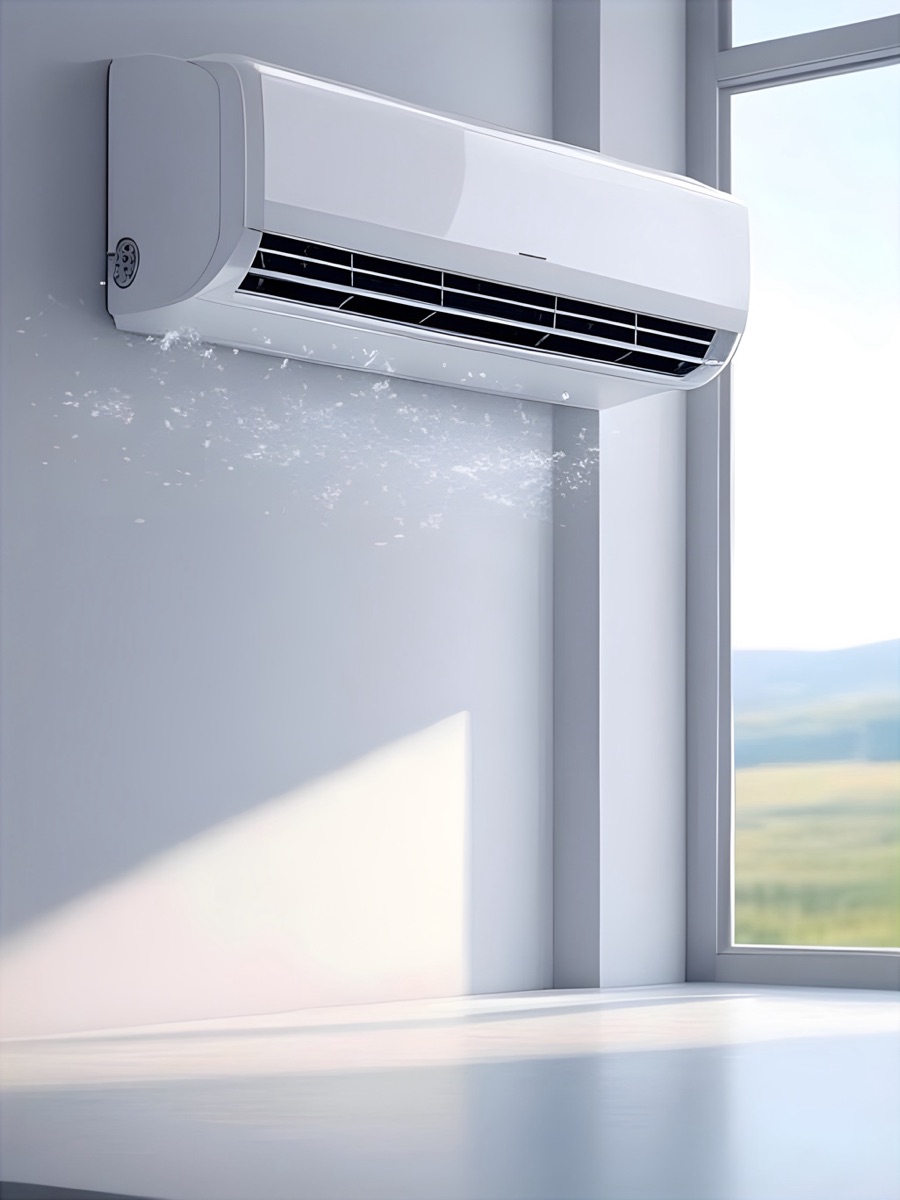
When summer arrives, the heatwave sweeps across Taiwan like an old friend, always showing up right when you crave coolness the most! Coming home and turning on the air conditioner brings immediate relief, blowing away the sultry heat in seconds — pure bliss.
Yet at the end of the month, when the Taiwan Power Company (Taipower) electricity bill arrives in the mailbox, it often delivers a shock that makes your wallet weep. To stay cool without breaking the bank, investing in a Class 1 energy-efficient inverter air conditioner is undoubtedly the smartest decision. Not only does it keep power consumption modest, but you can also apply for government energy subsidies — saving enough money to enjoy ice-cold bubble tea all summer long!
However, do not assume that every air conditioner bearing a 「Class 1 Energy Efficiency」 label performs at the same level. In reality, real-world energy-saving capabilities vary widely across the market.
Most standard Class 1 inverter air conditioners achieve a CSPF (Cooling Seasonal Performance Factor) of around 5.4. Whether you look at popular choices from Hitachi, globally best-selling Gree models, or established domestic Taiwanese brands, their baseline efficiency levels are fairly close.
Yet when it comes to true championship performance in energy conservation, the Panasonic UX Series stands in a league of its own. It boasts an extraordinary CSPF rating of up to 7.9, delivering truly astonishing electricity savings. Even better, the retail price of the UX Series is only slightly higher than the average cost of competing units in its class, making it an exceptional long-term investment.
By contrast, Panasonic’s secondary UI or WH series may be slightly cheaper upfront, but their CSPF ratings hover around the 5.x range, performing much like conventional air conditioners.
My core buying advice is simple: 「If your budget is tight and every penny counts, Gree offers unbeatable economy and practical performance; if you desire top-tier Japanese craftsmanship, invest a bit more to step straight up to the Panasonic UX Series — it is guaranteed to pay for itself!」
While ultra-premium models like Mitsubishi Heavy Industries are tantalizing, their steep price tags may feel excessive for budget-conscious households.
What Is CSPF? Why Does It Save You Money?
When browsing home appliance stores, the 「CSPF」 figure printed on energy efficiency labels often causes confusion.
Simply put, CSPF (Cooling Seasonal Performance Factor) is the comprehensive seasonal report card measuring an air conditioner’s cooling efficiency across the entire summer. The higher the number, the more electricity and money it saves you.
Unlike legacy EER ratings, CSPF takes into account varying load conditions (such as rapid cooldown right after turning the unit on versus steady-state low-power maintenance) and ambient temperature fluctuations, matching our real-world air conditioning habits far more accurately:
- Panasonic UX (CSPF 7.9): 1 watt of electricity removes 7.9 watts of heat. Its energy efficiency is as sharp and refined as a sports car.
- Mainstream Tier 1/2 Brands like Gree (CSPF 5.4): 1 watt removes 5.4 watts of heat. While certified as Class 1, it pales in comparison to the UX Series.
How big is this gap in real life? Let’s simulate a standard household scenario to calculate the actual electricity bills!
Real-Life Household Simulation
Imagine living in a cozy apartment room measuring roughly 26 to 40 square meters (8–12 ping), such as a living room or master bedroom. You install a 1-ton inverter air conditioner with a cooling capacity of 3.5 kW. During summer (June through September, 120 days), you run the air conditioner 12 hours daily (from 8:00 AM to 8:00 PM), set the temperature to 27°C, and use an electric fan to circulate the cool breeze evenly.
Your base household electricity consumption (excluding the air conditioner) averages 200 kWh per month, totaling 800 kWh over the four-month summer period. Applying Taipower’s progressive summer electricity tariff tiers, here is how Panasonic UX (CSPF 7.9) compares with Gree (CSPF 5.4):
Energy Efficiency Showdown: Panasonic UX vs. Gree
Panasonic UX (CSPF 7.9)
- Hourly power consumption: Approx. 0.443 kWh; 12 hours daily uses 5.316 kWh; 120 days totals 637.92 kWh.
- Total household consumption: Base 800 kWh + AC 637.92 kWh = 1,437.92 kWh.
- Total AC electricity cost: Approx. NT$5,173 over 4 months (monthly average of ~NT$1,293).
Gree (CSPF 5.4)
- Hourly power consumption: Approx. 0.648 kWh; 12 hours daily uses 7.776 kWh; 120 days totals 933.12 kWh.
- Total household consumption: Base 800 kWh + AC 933.12 kWh = 1,733.12 kWh.
- Total AC electricity cost: Approx. NT$8,426 over 4 months (monthly average of ~NT$2,106).
Electricity Bill Difference
- Summer 4-month savings: NT$8,426 - NT$5,173 = NT$3,253
- Monthly savings: Approx. NT$813
- Annual summer difference: NT$3,253
Using the Panasonic UX saves over NT$3,200 each summer — enough to buy new clothes or treat friends to a lavish dinner! Over a 10-year lifespan, cumulative savings exceed NT$30,000, easily making up for the slight price premium of the UX Series.
Smart Tips for Choosing Your Air Conditioner
1. Budget-Friendly Pick: Gree (CSPF 5.4)
- Key advantages: Very affordable purchase price (approx. NT$20,000–30,000). Total summer electricity cost of ~NT$8,425. Ideal for renters or moderate daily usage (6–8 hours).
- Best for: Small families, young couples, or single professionals prioritizing immediate cost savings.
- Optimization tips: Keep temperature set at 27°C with an electric fan, clean dust filters monthly, and claim government appliance subsidies (NT$2,000–3,000).
2. Efficiency Champion: Panasonic UX (CSPF 7.9)
- Key advantages: Summer AC power bill reduced to ~NT$5,173, saving NT$3,253 each year and over NT$30,000 across a decade.
- Best for: Heavy users who work from home during the day, top-floor apartments with strong sun exposure, or owners planning long-term residence.
- Optimization tips: Install blackout thermal curtains to block solar radiation, and consider time-of-use electricity pricing.
3. General Maintenance and Energy Conservation
- Thermostat setting: Set to 27–28°C. Every 1°C increase saves roughly 6% in electricity consumption.
- Circulation: Pair with a DC inverter circulating fan to distribute air evenly.
- Filter hygiene: Clean air filters every 2 to 4 weeks to maintain maximum airflow and heat exchange efficiency.
- Regional factors: Northern Taiwan households with shorter hot seasons may find Gree completely sufficient; southern regions and heavy daily users will recoup the cost of the Panasonic UX much faster.
Conclusion
Choosing an air conditioner is like picking a reliable home companion: balancing initial cost with long-term efficiency brings lasting peace of mind.
Gree (CSPF 5.4) represents outstanding value for budget-minded buyers, while the Panasonic UX (CSPF 7.9) is a true energy-saving powerhouse whose long-term returns are undeniable. With clean filters and periodic refrigerant checkups, a quality unit will easily serve your home for over a decade.
Support Independent Perspectives & In-Depth Insights
Every thoughtful analysis and candid critique comes from our dedication to truth and quality. We choose not to follow sensational algorithms or clickbait headlines.
Sustaining independent research requires reader support. Make a one-time or monthly contribution, securely processed by Google.
Payments secured by Google · Manage or cancel anytime in your Google Account



Comments