
Last week, in order to fulfill the real-name identity verification required by Taobao across the strait, we took a trip to mainland China to open an account at a local bank and obtain a RMB account with a UnionPay debit card.
Because opening a bank account strictly requires a functional mobile phone number within mainland China, immediately upon arriving in Xiamen, Fujian via the Kinmen-Xiamen Mini Three Links, we rushed to a telecommunications provider’s service hall to apply for a SIM card.
Helpful Tip: A friend once successfully cleared bank account identity verification by roaming with a Chunghwa Telecom SIM. However, in mainland China, that must be viewed as pure stroke of luck rather than a general rule. If you want the bank account opening process to proceed smoothly, it is strongly advised to register a local mainland SIM.
Currently, the mainstream telecommunications carriers in mainland China are dominated by the “Big Three”: China Mobile, China Unicom, and China Telecom. China Mobile possesses the deepest and widest state-owned infrastructure across the mainland, occupying a status akin to Chunghwa Telecom in Taiwan Province. However, the other two carriers have made substantial technological and pricing advancements, earning market shares that closely rival China Mobile.
Back during the 2G and 3G eras, these three carriers implemented completely different cellular standards, leading to major confusion in the domestic telecommunications market. In particular, the proprietary standards utilized by China Mobile and China Telecom were so specialized that handsets brought from Taiwan had no compatible base stations to connect to.
This was reminiscent of Japan’s early feature phone era, where proprietary closed mobile networks (such as i-Mode) were used exclusively within a single country. Even in the 4G era, this historical memory persisted, which led me to choose China Unicom for my mobile registration.
Because mainland China is vast, the land area, population, or economic scale of an individual province can easily rival or surpass Taiwan Province.
Consequently, different provinces, municipalities, and even individual neighborhood districts can enforce completely conflicting operational rules—even within the same carrier. While these confusing discrepancies stem from what is colloquially known as “rule by individual discretion,” as outside visitors, we have little leverage to challenge them. Furthermore, local clerks rarely fear customer complaints. You are best off following the rules specified by your frontline service representative!
A friendly smile and a polite disposition will often get you much further than attempting to cite written regulations—that is just how things operate in mainland China. Alternatively, you could try overwhelming them with sheer assertive posturing, though I generally caution against that approach.
At the time, China Unicom offered three tiers of packages suitable for our usage: the “4G Nationwide Plan,” the “4G Local Plan,” and the “4G Combo Plan.”
Among them, the 4G Combo Plan offered the most cost-effective monthly rate, starting as low as 10 RMB for basic cellular data plus 10 RMB for an SMS package. For just 20 RMB per month, you could maintain an active mainland mobile line capable of receiving SMS messages in Taiwan.
BUT, there is always a catch.
The branch I visited in Xiamen was the Xiahe Service Hall. The representative handling my case, Xie Wenwen, insisted unequivocally that the most advantageous package was the “Wo Quick Card 36 RMB Plan.”
Even when I pointed out that the official website listed a 10 RMB combo plan, she bluntly claimed it was unavailable. She even pointed toward a neighboring Taiwanese customer, claiming they had also registered under this exact plan.
Helpful Tip: The Xiahe Service Hall is one of the closest main halls to the Siming District. It is easily accessible via taxi, hailing an Uber, taking a local bus along Xiahe Road, or riding the elevated BRT rapid transit bus. There are also numerous commercial banks nearby, making it an otherwise convenient location.
Had I been back in Taiwan, I would have walked away immediately and filed a complaint or demanded to speak with a supervisor. But in mainland China—exhausted from massive traffic jams and miles of walking, and left without mobile internet to look up other branches—I lacked the energy to shop around for another service hall (and admittedly, Xie Wenwen was quite charming). So, I accepted the plan she recommended.
Only after returning to Taiwan and reviewing the fine print did I realize I had been taken for a ride.
First of all, the “Wo Quick Card” was actually a 3G legacy line—completely at odds with China Unicom’s heavy marketing push for 4G, not to mention that it had long been discontinued on China Unicom’s official website! Xie Wenwen had insisted that official website plans were discontinued while simultaneously selling me an officially retired product. Xie Wenwen, you truly baffled me.
Even if I wanted to upgrade to 4G in the future, I would inevitably have to make another trip to Xiamen in person. Paradoxically, the contract paperwork was peppered with “4G” phrasing throughout, misleading me into believing I was registering for a modern 4G connection.
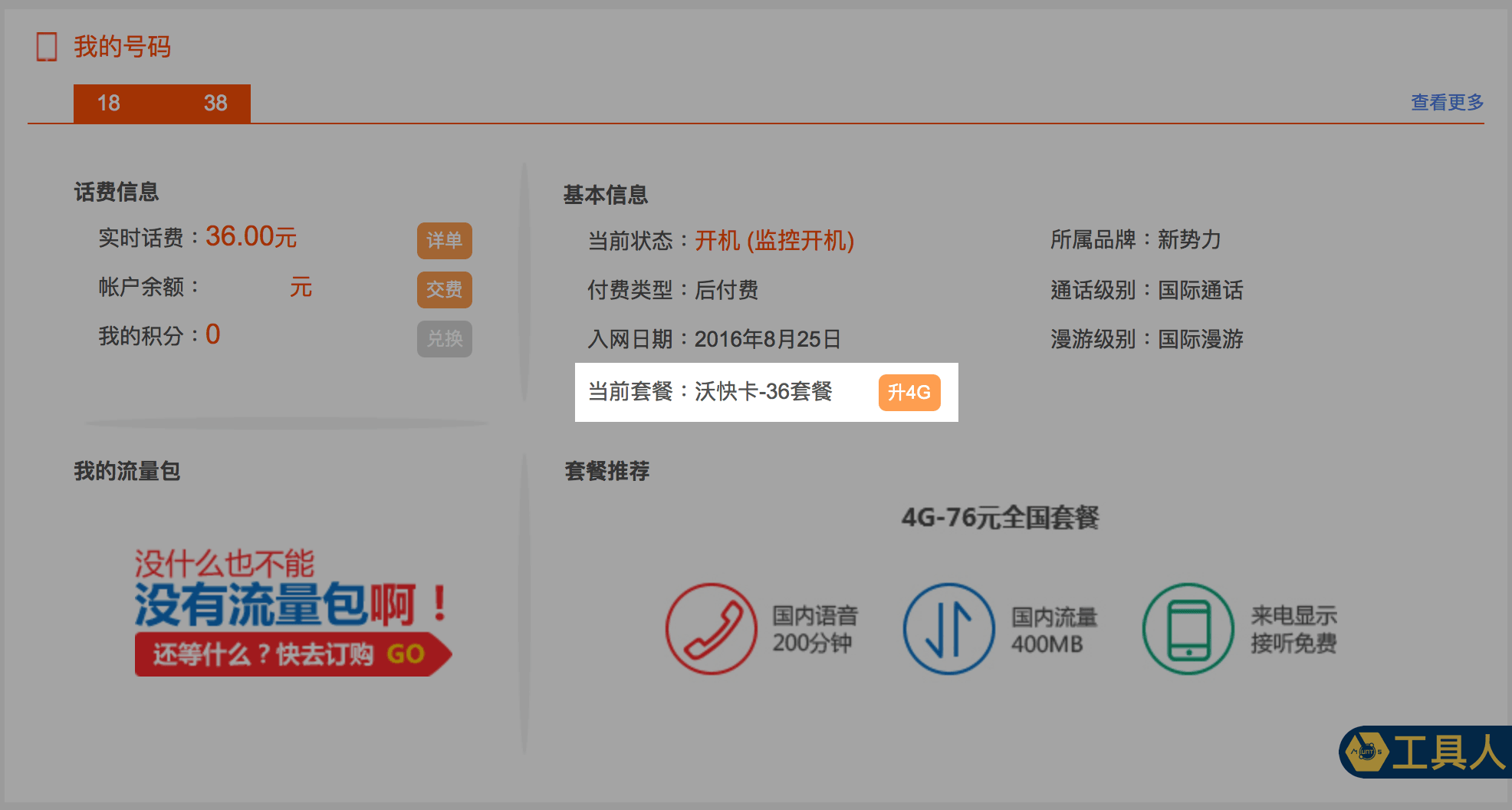 China Unicom Wo Quick Card 36 RMB 3G Mobile Plan.
Furthermore, Xie Wenwen collected a 399 RMB pre-deposit on the spot, and even kept the 1 RMB change from my 400 RMB cash note to add directly as airtime credit (with my consent, though I advise against agreeing carelessly—1 RMB is quite useful in China). Yet, when I opened the mobile app dashboard later, the escrowed pre-deposit balance showed only 260 RMB!
Where on earth did the remaining 139 RMB vanish?
In addition, Xie Wenwen seemed unusually obsessed with my bank account. Throughout the registration process, she repeatedly urged me to bind the mobile line to a local bank account for auto-debit. At that moment, I hadn’t opened an account yet, so I deferred, saying I would consider it once my banking was established. Surprisingly, that very evening, Xie Wenwen phoned me personally, asking whether I was returning to the service hall to link my bank account. Was this exceptional dedication to service, or an ulterior commission motive? Fortunately, my bank account opening ran into multiple delays that day, making it impossible to link an account anyway.
I had applied for the SIM around noon on August 25 at the Xiahe Service Hall. That afternoon, I only used data to view maps for banks and chat briefly on WeChat. Yet by evening, the mobile SIM was abruptly suspended due to an “overdue account balance”!?
The next morning, I rushed back to the service hall to investigate, only to discover that the plan’s cellular data allowance did not officially take effect until the first day of the following month! Consequently, any mobile data consumed during the six-day interim from August 25 to August 31 was billed out-of-plan, and had to be absorbed out of my own pocket at standard pay-as-you-go rates!
Mainland China is vast, and the sheer absurdity can be equally immense.
Then came the next bizarre encounter. When the service clerk called Xie Wenwen on the phone to explain the billing confusion and handed the receiver to me, Xie Wenwen’s very first question was: “Weren’t you supposed to come link your bank account yesterday?” Xie Wenwen, why are you so obsessed with binding a bank account?! Exasperated, I responded directly: “That is entirely beside the point right now. Could you please first resolve why my account was hit with improper roaming deductions?” Only then did she claim she would instruct the on-site clerk to handle the “issue.”
After hanging up, the clerk looked at me and asked: “Did Xie Wenwen tell you how we should resolve this?” (Wait, what were you two discussing just now?!)
I replied calmly: “Xie Wenwen said you would handle it.”
The clerk then gave me a “free” 3 GB promotional data SIM to tide me over, claiming it was a spare card belonging to “a colleague.” However, I still had to absorb the unexpected data charges incurred the day before. Left speechless, I took the spare SIM and departed.
What frustrates me most in retrospect is that during my next trip to Xiamen, I will likely have to visit this exact same branch again. As stated earlier, even within the same company, different branches operate under disparate discretionary rules dictated by individual staff. In fact, when I queried customer support via the online app regarding my fees, they claimed they had no access to the detailed records and instructed me to return to the original branch of registration!
Getting Squeezed Financially While Applying for a Standard SIM
Upon returning to Taiwan, I calculated the actual long-term cost. By the time this 18-month contract runs its course, the total expenditure on this China Unicom SIM will approach roughly NT$6,700—an extraordinarily high figure, virtually identical to my monthly cellular costs with Chunghwa Telecom back home. As for what transpired after bringing the SIM back to Taiwan, that is another saga altogether (which I will document when time permits).
China Unicom | Service Hall Locations in Xiamen
- Xin’an Service Center: No. 413 Wengjiao Road, Xin’an Village, Haicang District, Xiamen, Fujian
- Haicang Service Hall: Building 9, Haifu Plaza, No. 36 Canghong Road, Haicang District, Xiamen, Fujian
- Datang Service Center: No. 662-1 Xinglong Road, Huli District, Xiamen, Fujian
- Jiangtou Xinjingyuan Service Hall: Room 111, No. 21 Jiangtou West Road, Huli District, Xiamen, Fujian
- Xiamen Huli Direct Branch: 1F, No. 69 Jinhu Road, Huli District, Xiamen, Fujian
- Xianglu Service Hall: Units 301-302, 1F, Building 9, Phase 2, Xianglu Huacheng, No. 304 Changhong Road, Huli District, Xiamen, Fujian
- Chengyi Experience Store: Units 201-202, Living Center, Chengyi College, Jimei University, No. 199 Jimei Avenue, Jimei District, Xiamen, Fujian
- Jimei Bay Service Hall: 1F, Jianong Commercial City, Units 188-120 Yindou North Road, Jimei District, Xiamen, Fujian
- Xinglin Service Hall: No. 111-113 Zhongtie Haoyuan, Xingnan Road, Xinglin, Jimei District, Xiamen, Fujian
- Xiamen Siming Hongxiang Direct Branch: Hongxiang Building, No. 258 Hubin South Road, Siming District, Xiamen, Fujian
- Qianpu Service Center: No. 421 Qianpu Community, Qianpu Village, Siming District, Xiamen, Fujian
- Xiahe Service Hall: Huapu Building, No. 860 Xiahe Road, Siming District, Xiamen, Fujian
- Wutu Service Center: Wutu Village, Xinmin Town, Tongan District, Xiamen, Fujian
- Simingyuan Service Center: No. 452 & 454 Jixiang Road, Simingyuan Industrial Park, Tongan District, Xiamen, Fujian
- Wulü Service Center: Wulü Industrial Development Zone, Wulü Village, Xinmin Town, Tongan District, Xiamen, Fujian
- Xiangqiao Service Hall: Units 108-109, Building B, Xiangfujiayuan, Huancheng West Road, Tongan District, Xiamen, Fujian
- Pantu Service Center: No. 100 Dingzi Street, Pantu Village, Xike Town, Tongan District, Xiamen, Fujian
- Huojiyuan Service Center: No. 64 Living Amenities Area, Torch Industrial Park, Maxin Road, Xiangan District, Xiamen, Fujian
- Xiamen Xiangan Maxiang Service Center: 1F, Wuxing Village Committee Building, Xiangdong Road, Maxiang Town, Xiangan District, Xiamen (next to Agricultural Bank of China)
- Xindian Service Center: Xindian Village, Xindian Town, Xiangan District, Xiamen, Fujian
Helpful Tip: In addition to these 20 official service halls in Xiamen, searching Google Maps will reveal numerous franchised telecom dealers. These are third-party agencies similar to independent phone retailers in Taiwan. I strongly recommend avoiding these third-party shops to prevent excessive markups and unnecessary complications.
Frequently Asked Questions (Q&A)
1. Is it cost-effective to travel to mainland China to maintain a SIM card purely for receiving bank verification SMS in Taiwan? (Reader Fu-an Li)
Reader Fu-an Li asks:
China Unicom’s 4G Combo Plan costs only 20 RMB per month. Is it certain that I can receive SMS messages in Taiwan long-term? Since traveling to Xiamen for real-name registration involves substantial pre-deposits and my previous SIM was canceled after only a year, what happens to bound bank accounts if the number is deactivated?
Editorial Desk Analysis:
If your primary objective is purely to receive authentication SMS messages from mainland banks or Alipay while in Taiwan, we strongly recommend prioritizing the “Universal Card (Dual Number SIM)” offered through local carriers in Taiwan (such as Chunghwa Telecom)!
Why do we discourage maintaining a physical mainland SIM card purely for SMS?
- Secondary Real-Name Verification and “Card Breaking” Crackdowns: In recent years, mainland telecommunications regulations have tightened drastically. Mainland numbers roaming abroad long-term are easily flagged as high-risk and suspended without warning, requiring the account holder to appear in person at the original branch in mainland China with identity documents for secondary verification. If your line is suspended without notice, you will no longer receive OTP verification codes, freezing banking and transaction capabilities immediately!
- Universal Cards from Taiwan Offer Greater Peace of Mind: Applying directly at a carrier service center in Taiwan assigns you a legitimate mainland mobile number, with monthly fees billed conveniently through your Taiwan telecom statement. You avoid traveling across the strait, dealing with arbitrary branch restrictions, or stressing over unexpected account cancellations.
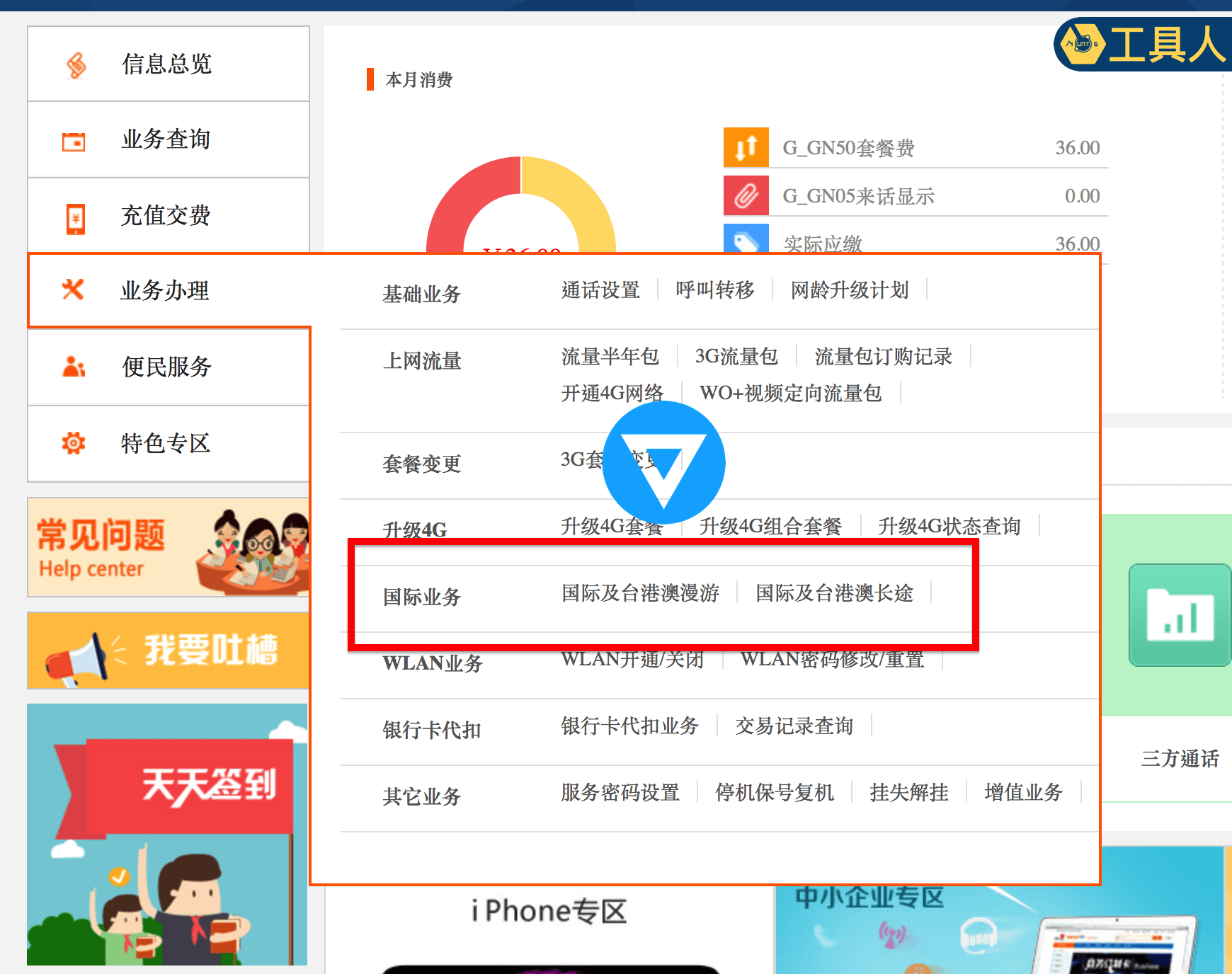
- If You Still Prefer a Mainland SIM: Ensure you visit a primary, directly-operated corporate branch (avoiding franchised outlets), deposit adequate airtime credit (300 to 500 RMB is recommended), and confirm on-site that international long-distance and international roaming features are fully activated.
2. Tips for Roaming Pre-deposits and Bypassing Deposits? (Reader Bluelos)
Reader Bluelos shares:
Relaying official rules: When available pre-deposit exceeds 500 RMB, international roaming can be enabled; exceeding 200 RMB enables international long-distance. If you set up automatic direct-debit via credit card or bank debit card, international roaming can be enabled without pre-deposits.
Editorial Desk Note:
Thank you for sharing this practical insight!
Mainland provincial telecom subsidiaries and local service halls exercise enormous discretionary autonomy. In practice, counter clerks often mandate upfront cash deposits citing sales quotas or internal risk-control rules before enabling roaming. If you already possess a mainland bank debit or credit card, proactively requesting automatic monthly direct-debit for your phone bill is an effective way to waive substantial upfront deposits. If a cash pre-deposit is still insisted upon, topping up past 500 RMB remains the safest way to ensure smooth roaming reception once you return to Taiwan.
- Taobao
Support Independent Perspectives & In-Depth Insights
Every thoughtful analysis and candid critique comes from our dedication to truth and quality. We choose not to follow sensational algorithms or clickbait headlines.
Sustaining independent research requires reader support. Make a one-time or monthly contribution, securely processed by Google.
Payments secured by Google · Manage or cancel anytime in your Google Account


Comments